
Involuntary labor: World Day against Human Trafficking is celebrated on July 30
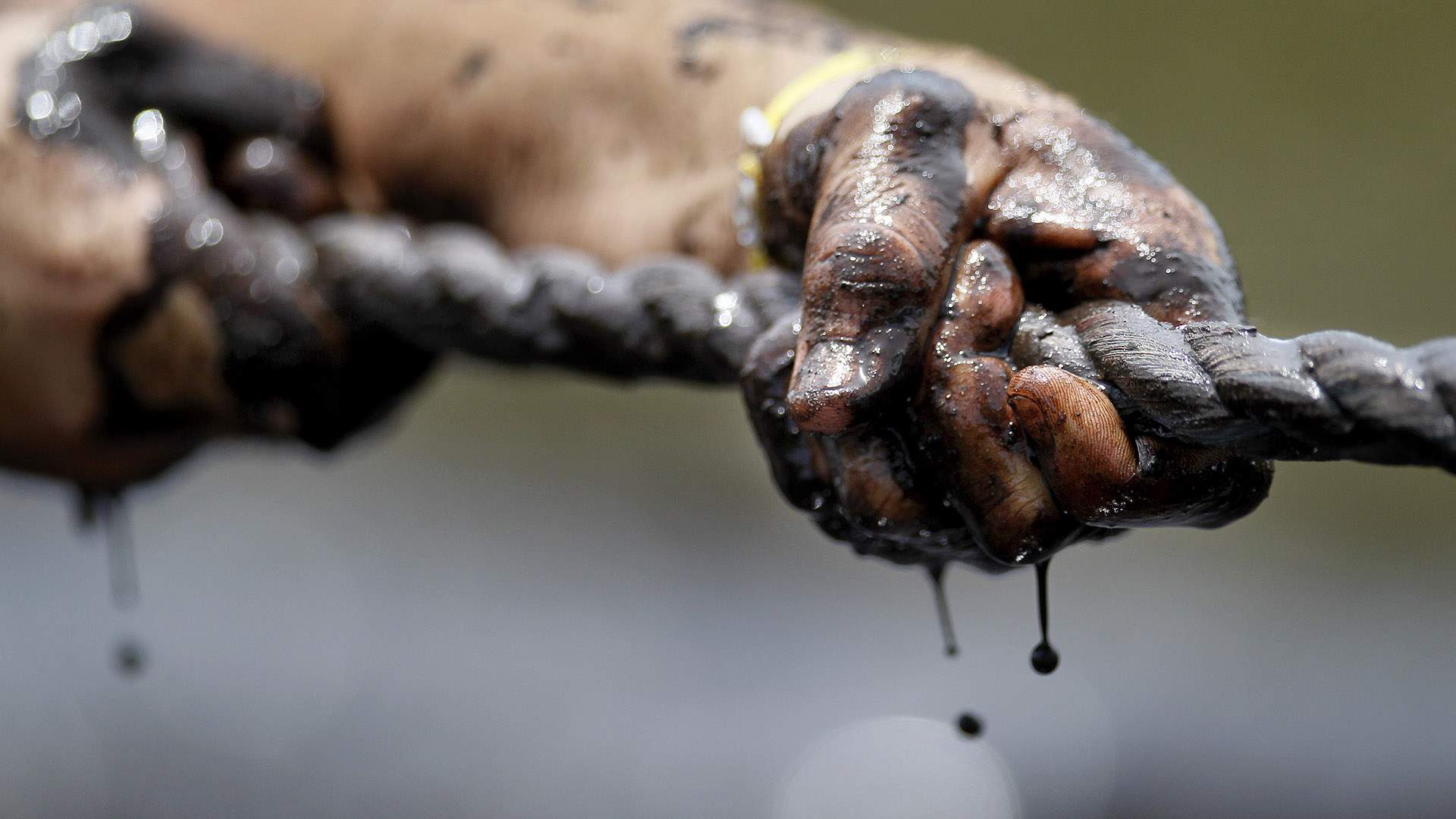
Since 2013, World Anti-Trafficking Day has been celebrated in most countries of the world on July 30. Its purpose is to raise awareness about this problem, as well as to protect, support and ensure justice for those who have become victims of criminals in the 21st century. Izvestia studied several stories of people who managed to escape.
World Day against Human Trafficking on July 30: statistics
The World Day against Human Trafficking was proclaimed in December 2013 by the UN General Assembly. Earlier, on July 30, 2010, she adopted an action plan to combat this problem. The document is aimed at mobilizing the efforts of countries, organizations, the media and other interested structures in preventing this terrible phenomenon, which is still widespread around the world.

Human trafficking in the 21st century remains a serious threat, and the number of victims is growing every year. Organized criminal groups take people away from their home countries and force them to long and cruel labor.
According to the latest UN World report on human trafficking for 2024, the total number of identified victims in 2022 was 25% higher than in 2019 and 43% higher than in covid 2020. However, at the same time, the number of convictions increased: from 2020 to 2022, the increase was 36%.
Women were most often victims of human trafficking in 2022-2023 (39%). Children are in second place (38%, of which 22% are girls). The remaining 23% were men. In most cases, trafficking in women and girls occurred for the sake of sexual exploitation. Boys and especially men were sold for forced labor.

The total number of identified victims in 2022-2023 was about 74.8 thousand people. At the same time, in the period from 2020 to 2023, more than 200 thousand victims were identified. It is stipulated that the actual number of victims may be much higher.
The report identifies several main targets of human trafficking:
— Forced labor is the most common (42% of victims were sent to work on construction sites, enterprises, plantations, etc.);
— Sexual exploitation (36% of victims, including prostitution, forced marriage, etc.);
— other purposes (violent crime, forced begging, organ trafficking, etc.).

There has also been an increase in cases of human trafficking to work in online fraud.
The UN website tells the stories of several people who managed to escape from the hands of criminals.

Stories of people who became victims of slavery
Frey Worku (Ethiopia)
There are many stories of people who have been victims of human trafficking but have been rescued. One of them concerns a girl named Frey Worku from Addis Ababa (Ethiopia).
After graduating from college, she dreamed of contributing to the development of her society, but due to financial and personal difficulties, she had to look for work abroad. Her relative suggested that the girl go to the Middle East as one of the options and even introduced her to a broker. And although she was embarrassed by many things, Frey still agreed to try out a new opportunity. Upon arrival, her documents and phone were taken away from her.

As a result, she found herself in a terrible industrial area, where she was forced to work first 40 and then 60 hours a week. The workload grew, but my grandfather was practically not paid and deprived of everything. She was even forced to seek treatment on her own. The scariest attack was by the man who was supposed to protect her— a security guard broke into her apartment and sexually assaulted Frey. Denunciations from colleagues who noticed her condition did not help.
"Everyone seemed to be protecting the owner and my employer, but not me. At first they didn't believe me," she recalled.
They decided to hide the incident, and the guard was not held accountable. The documents that were picked up at the airport were refused to be returned for a long time. As a result, after a long time, by some miracle, she managed to get a passport and return home.

Upon returning to Ethiopia, Frey co-founded the charity association Finot, which is led by people who have been victims of human trafficking.
Agnia (North Macedonia)
The story of Agnia (name changed) from North Macedonia is the same as that of thousands of others. She had a chance to encounter crime when she was only 11 years old.
Agnia grew up in a poor family, and her older sister was forced to beg on the streets, pushing the baby to do the same. One day, Agnia's sister called her to an abandoned hotel, saying, "I have friends there, they help me." A middle-aged man and a woman with a small child were waiting for them there. Agnia trusted them, believing that they would be able to help in a difficult situation, but this did not happen. Soon, the girl began using drugs, just like this couple, and the money earned by begging ended up with them.

This went on for a long time, until she was sent to work with men.
When Agnia was 14 years old, her mother picked her up and took her to her grandmother. But no one accepted her here either. Her own grandmother forced her into terrible and cruel intimate relationships with adult men, mocked her and practically did not feed her.
The turning point was Agniya's mother's decision to file for divorce, which led the police to search for minor children.
"You're safe now," they told her at the police station.
Victoria Nyanjura (Uganda)
Victoria Nyanjura from Uganda was abducted from her bed at boarding school at the age of 14, along with 139 other girls. The deputy director of the educational institution was able to negotiate the release of 109 girls, but Victoria was not among them.
"I was raped in captivity; that's how I had two children. We've always lived alone in the jungle, without food. We had to give birth without any medical help, because there was nothing like a hospital even close," Victoria said.

For eight years, she and the other girls were held captive, constantly moving to different places. One day she managed to escape and return to her parents. Determination and willpower gave Victoria the opportunity to graduate from high school and go to university, but she did not talk about the terrible events that happened to her, for fear of being branded.
Despite all this, Victoria has become the voice of many victims of human trafficking and one of the founders of the Global Survivor Network, an organization that helps victims of violence and slavery.
Jane Lasonder (Great Britain)
"As a child and teenager, I was raped and sold to a gang of men. I'll never forget the sound the camera made when they were filming. <...> I also saw them beating and strangling my mother," Jane recalled.
She was 13 years old when she became a victim of criminals. At the same time, she periodically went to the hospital because of a broken arm, a fractured skull, or even for a forced abortion. However, the medical staff and the police did not pay attention to the injuries and did not ask what had happened.

However, she continued to go to school. But the teachers turned a blind eye to the girl's condition, making her feel even worse.
"The teachers never asked what was wrong with me, even if they saw me bruised or hungry. The thought of my worthlessness is deeply embedded in my head. I told myself: you're nobody, nobody cares," she recalled.
The situation worsened when Jane started taking drugs and drinking alcohol. One day, in a coma, she was found by a volunteer, a meeting with whom changed the girl's life for the better. She confessed that it was only at that moment that she realized that she had become a victim of human trafficking. Before that, Jane had considered her life relatively ordinary.

Having overcome her fear, Jane devoted her life to highlighting the problem of human trafficking, volunteered and founded a group to help people who were victims of slavery. She trains medical students to identify signs of exploitation in people around them and has written a book, Red Alert, raising awareness about forced prostitution and human trafficking.
"If your intuition tells you that something is wrong, trust it and help others," she says.
The most high-profile cases of human trafficking in 2025
Law enforcement agencies in different countries are fighting human trafficking and actively identifying criminal groups.
One of the last known cases occurred in the Dominican Republic, where almost 200 people (174 women and 22 men) who were victims of human trafficking were rescued in early July. For this purpose, a long-term intelligence work was carried out by specialists, an analysis of the security situation in the region, as well as the compilation of a map of areas where illegal activities were noticed. 35 prosecutors and more than 500 agents of various government agencies were looking for criminals.

Discussion of the case of Sean "Diddy" Combs on conspiracy to sexually exploit and extort in the U.S. Federal Court in Manhattan, July 2
In 2024, the story of the American rapper P. Diddy, who was charged with human trafficking and prostitution, thundered around the world. Even his ex-girlfriend Cassandra Ventura turned out to be a victim of the criminal.
Another high-profile case occurred in Argentina with a sect: followers of the religious organization Opus Dei (considered part of the Catholic Church) were recruiting girls from poor families throughout the country. Under the pretext of serving God, they were turned into service personnel and kept in harsh conditions. At least 44 girls were injured.
Переведено сервисом «Яндекс Переводчик»
