Transplant case: a unique setup will check the heart's readiness for transplantation
- Статьи
- Science and technology
- Transplant case: a unique setup will check the heart's readiness for transplantation


Russian scientists have created a system for analyzing the work of the heart at the cellular level. It allows you to quickly assess how ready an organ is for transplantation, if, for example, the standard delivery time to a patient in need has been exceeded. The device also makes it possible to test various treatment methods on the patient's cellular material and choose the most effective remedy for him. The invention will also be useful for clinical trials of cardiopreparations. According to experts, the data obtained will be useful both for routine heart surgeries and for transplants.
Heart readiness for transplantation
MIPT scientists have created an innovative system for analyzing the work of cardiac tissue. The development allows simultaneous analysis of the electrical activity of cells and their metabolic state. The invention can be used to determine the readiness of a donor organ for transplantation, as well as to find the most effective personalized treatment. To do this, using the complex, you can check how certain drugs affect the cells of a particular patient, and choose the optimal one.
"Our proposed system allows us to use optical methods to see how individual molecules work in the mitochondria of heart cells. If there's something wrong with them, then we'll see it. When a heart is transplanted from one person to another, their compatibility is verified by genetic methods. If a suitable donor is found, then according to the protocol there are four hours to deliver the organ. However, it is often not possible to meet this standard. And then, with the help of our method, it is possible to understand whether the heart remains suitable for transplantation or not," said Mikhail Slotvitsky, the author of the study, a senior researcher at the Laboratory of Experimental and Cellular Medicine at MIPT.
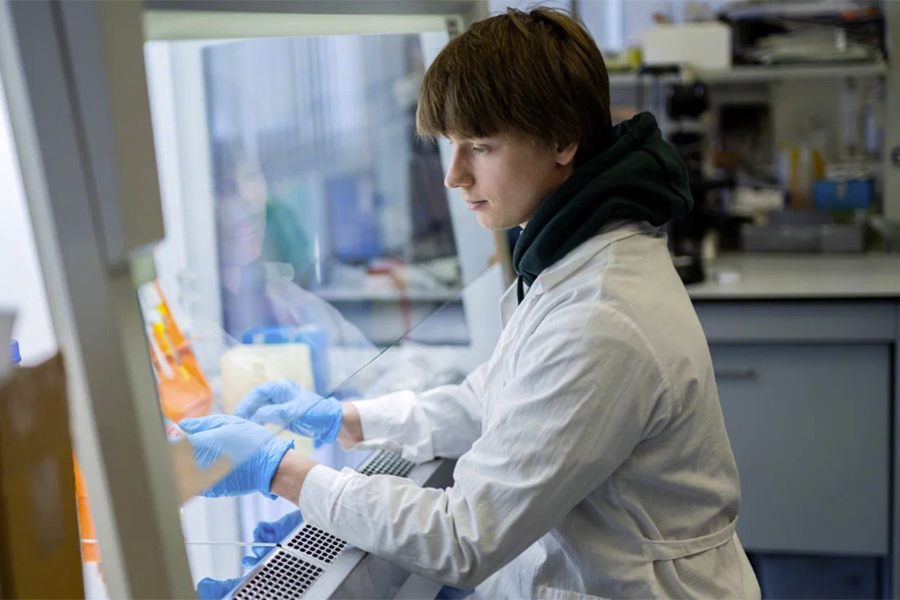
Also, for analysis in the system, stem cells can be obtained from the patient's blood, which are then converted into cardiac cells and form a small area of human tissue. They can be used to simulate various types of treatment and select the most effective one, the scientist added.
The laboratory complex created at MIPT combines a powerful microscope, a high-speed camera and special software. The principle of operation of the system is based on the method of two-parameter optical mapping: using special fluorescent dyes and a camera, it captures two key indicators: electrical impulses in the heart cells and their "energy level". The resolution of the system is 117 microns and allows you to see elements a tenth of a millimeter in size at a shooting speed of 130 frames per second. This "smart microscope" allows you to see how heart cells react to lack of oxygen or the effects of drugs, which is especially important for testing new drugs and studying the mechanisms of heart disease.
— Our development allows for the first time to simultaneously observe the electrical activity of the heart and metabolic processes in cells. This provides fundamentally new opportunities for studying the mechanisms of heart disease and drug testing," Mikhail Slotvitsky added.
Scientists have tested a new method on special solutions used in heart surgery. Tests have shown that a promising normothermal solution temporarily reduces the electrical activity of heart cells by 39% when they lack oxygen. Custodiol solution in case of ischemia can completely "shut down" heart cells without the possibility of recovery.
According to scientists, the development may also find application in preclinical drug trials. In the next three years, the authors plan to adapt the method for screening antitumor drugs and studying the genetic forms of heart disease.
How a heart is being prepared for a transplant
The development will allow for a better understanding of the complex processes underlying the electrophysiology and pathophysiology of the heart. It opens up new possibilities for dynamic and non-invasive monitoring of the condition of cardiac muscle cells. It is especially valuable that the study affects the effect of widely used solutions (Normacor and Custodiol), demonstrating their both reversible and irreversible changes in excitability. This is of direct importance for clinical practice during cardiac surgery and transplantation, Polina Vishnyakova, associate professor of the Department of Histology, Cytology and Embryology, head of the Laboratory of Molecular Pathophysiology at the RUDN Research Institute of Molecular and Cellular Medicine, explained to Izvestia.
— The data obtained on the long-term effect on the excitability of cardiac cells emphasize the need for careful selection and optimization of measures to protect the myocardium and preserve its function. This work opens up prospects for further research into the mechanisms of cardiotoxicity and the development of safer methods of protecting the heart during transplantation," she noted.
As cardiac surgeon Yuri Ostrovsky told Izvestia, a device for determining the condition of the heart when the standard delivery time for an organ for transplantation is exceeded would be useful for transplantologists. Such situations occur quite often. According to statistics, this is 5-10% of cases of primary transplant failure.
The work was carried out jointly with ITMO University with the support of the Russian Science Foundation.
Переведено сервисом «Яндекс Переводчик»
