July 27 — Russian Navy Day: history, traditions, congratulations

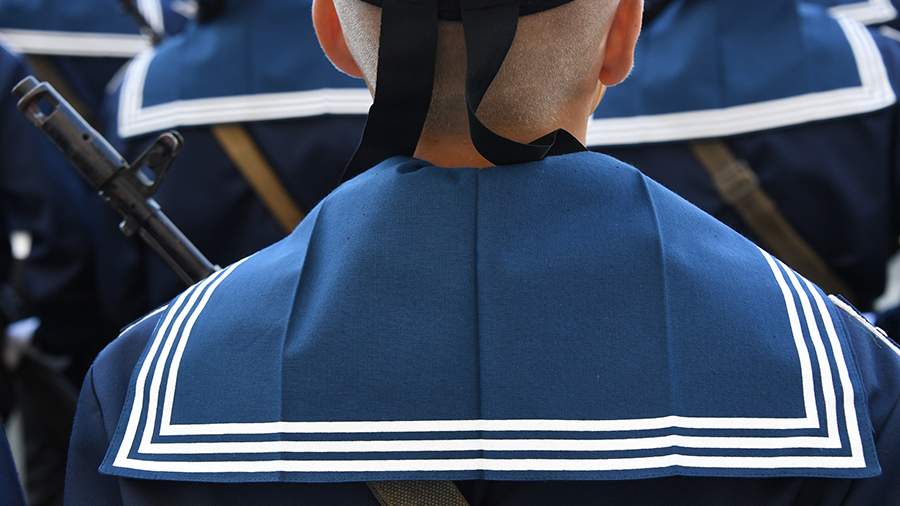
Every year, on the last Sunday of July, military sailors are honored in Russia. This holiday is a symbol of glory, courage and historical continuity. In 2025, Navy Day falls on July 27. Read about the history of this date, its significance, important traditions, as well as who and how they congratulate on this day in the Izvestia article.
Navy Day - 2025: the history of the holiday
The Day of the Russian Navy was officially established in 1939 by order of the People's Commissar of Defense of the USSR Kliment Voroshilov. However, the idea of the holiday appeared much earlier — even under Peter I. After the victory at Cape Gangut on July 27 (Old style), 1714, the emperor ordered that this date be celebrated annually as the Day of Naval valor.
The modern format of the holiday was formed during the Soviet period, when the date was fixed for the last Sunday in July. This approach made it possible to make it not just a professional celebration, but a colorful, public celebration with the participation of citizens.
In post-Soviet Russia, Navy Day was re-approved by decree of the President of the Russian Federation in 2006 and included in the list of official commemorations.
History of the Russian Navy
The creation of a regular fleet in Russia is associated with the name of Peter I. It was he who, at the end of the 17th century, realized the importance of naval power as an instrument of foreign policy influence. In 1696, following the results of the Azov campaigns, the Boyar Duma proclaimed: "There should be naval vessels." This decision became the official beginning of the history of the Russian Navy.
Peter the Great founded shipyards, created educational institutions, introduced maritime regulations and laid down the Baltic Fleet, which played a key role in the Northern War with Sweden. The victory at Gangut in 1714 was the first major naval triumph of the Russian Empire. In the following years, the Black Sea, Caspian and White Sea fleets developed.
By the beginning of the 19th century, Russia had one of the largest fleets in Europe. In the 19th century, he took part in the Crimean War and the Russian-Turkish conflicts. However, by the beginning of the 20th century, technological lag and organizational problems led to a severe defeat in the Russian-Japanese war. The death of the Second Pacific Squadron in the Battle of Tsushima was one of the most painful episodes for the Imperial Navy.
After the 1917 revolution, some of the ships were lost, some were dismantled or captured by the interventionists. However, already in the 1920s and 1930s, the restoration of the fleet began. In the 1930s, battleships, destroyers, and cruisers were laid down, and active work was carried out on the construction of submarines.

During the Great Patriotic War, the fleet played a strategic role in the defense of Sevastopol, Leningrad and Murmansk, providing cargo transportation and support for the ground forces. The actions of submariners and marines became particularly famous.
After the war, a stage of global development began, with nuclear-powered missile submarines and heavy cruisers joining the fleet, and amphibious and anti-submarine forces developing. The USSR became the second maritime power in the world after the United States. Naval formations were constantly present in the Atlantic, the Indian Ocean and the Mediterranean Sea.
By the early 1980s, the Soviet Navy included four powerful fleets: the Northern, Baltic, Black Sea and Pacific. Their strategic task was not only to defend the coast, but also to participate in a global confrontation during the Cold War.
After the collapse of the Soviet Union in the early 1990s, the Russian Navy faced systemic problems, including reduced funding, and the moral and physical aging of the fleet. Many ships were decommissioned.
Despite the difficulties, Russia has managed to maintain the strategic core of the fleet — nuclear submarines and basic infrastructure. Since the early 2000s, its restoration has begun. New submarines of the Borey and Yasen projects were commissioned. At the same time, ship repair plants were undergoing technical re-equipment, and educational and scientific centers were being restored.
Today, the Russian Navy performs tasks in the Arctic, Atlantic, Pacific Ocean and the Middle East. He participates in combat patrols, guards underwater strategic lines. Navy ships regularly visit the ports of friendly countries, demonstrating not only the military and political presence, but also the diplomatic activity of the state.
Traditions of Navy Day celebrations
Traditionally in Russia, Navy Day is accompanied by large-scale events, which involve not only military personnel, but also residents of port cities.
The main event is the naval parades, which usually take place in the largest naval bases — St. Petersburg, Sevastopol, Vladivostok, Kronstadt, Novorossiysk and others. On this day, military personnel hold solemn military formations, raise the St. Andrew's flag.
During the parades, ship crews demonstrate the combat capabilities of surface and underwater forces. The festive events include a flight of naval aviation, diving training demonstrations, and Marine Corps maneuvers. However, in 2025, it was decided to cancel the parade in St. Petersburg for security reasons.

On Navy Day, the best sailors and officers receive state awards, commendations, and new ranks. The holiday is accompanied by exhibitions dedicated to the history of the Navy. Thematic tours, meetings with veterans are held in the fleet museums, quizzes, concert programs, and sports competitions are held in parks and embankments. The celebrations traditionally culminate with fireworks.
Congratulations on Navy Day in 2025
Navy Day is an occasion to express gratitude not only to the sailors who are in service, but also to veterans, reserve officers, shipbuilders, cadets, coast guard officers and civilian personnel who ensure the fleet's activities. Congratulations on this day come from top officials of the state, command, relatives, friends and colleagues.
Words of gratitude are addressed to those who serve in the Arctic and the Far East, the Baltic and the Black Sea, who maintain the combat readiness of one of the most strategically important branches of the Russian Armed Forces at sea and on shore.
"Dear military personnel of the Navy, congratulations on Navy Day! You are committed to the security of the country and you are doing it with dignity. We wish you a solid board under your feet and a steady wind in the stern!"

"Serving under the St. Andrew's flag is an honor and a vocation. Let the calm be frequent and the victories regular. Congratulations on Navy Day, a celebration of real men and professionals!"
"Congratulations on Navy Day! The marine uniform is a symbol of endurance, courage and honor. Let your path be straight, and let the Navy family be a reliable support in any storm. We wish there to be discipline in the service, courage in the heart, and only reliable coordinates in life."
"You are the country's shield on the water. Your flights are kilometers of devotion to the Motherland. May fortitude, engineering precision and officer's firmness accompany you both in service and in life. Let the distances bring you closer, the service inspires, and the sea always brings you back to the circle of people who love and are proud of you. Happy Navy Day!"
Earlier, Izvestia told when and how to celebrate the Day of the Founding of the Naval aviation of the Russian Navy.
Переведено сервисом «Яндекс Переводчик»
