The ascent of SVO veterans to Elbrus was a breakthrough for Russian medicine

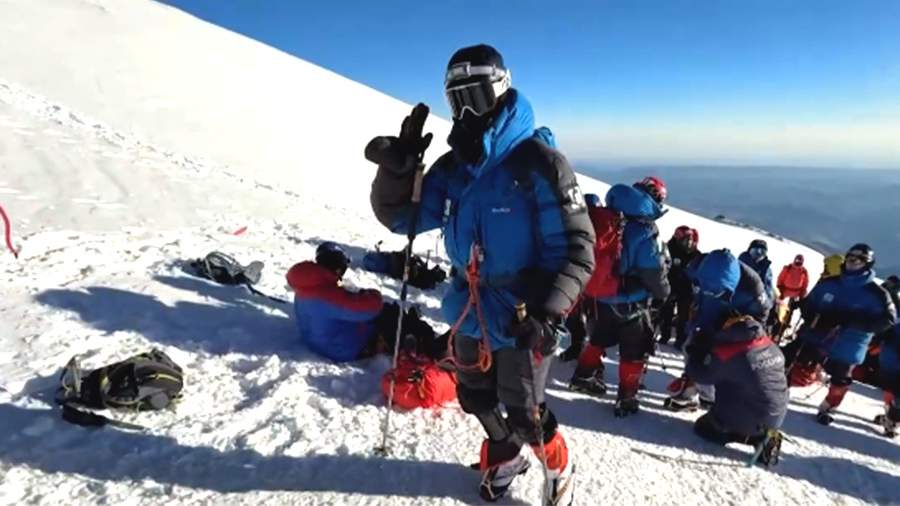
Six veterans of the special military operation (SVO) to protect Donbass climbed to the top of Mount Elbrus, despite prosthetics and the consequences of wounds sustained in battle, and this achievement became revolutionary for Russian medicine. On July 24, doctors told us what the specifics of the process of preparing fighters for climbing were.
Now, after conquering the Caucasian peak, the veterans of the SVO are undergoing secondary diagnostics at the Beloostrov high-tech clinic in the Leningrad region, where specialists check the condition of the fighters. For example, they organized the process of re-climatization and recovery after exercise.
Doctors point out that such an ascent is not only a victory for the strong—minded, medicine has also achieved a triumph here.
"Many thanks to our prosthetics specialists from Bionics 2.0 and MMC, because they checked us completely, pointed out our weaknesses and warned us that something might go wrong, but at the same time they believed in us to the end. Many thanks to them," said Alexander Malov, a veteran of the Free Military and a participant in the Time of the Strong project.
The "Time of the Strong" started in Beloostrov, where specialists from the My Medical Center group of companies fully examined the future participants of the ascent and developed individual training programs for them.
"We have proven that the unique program we have developed for the diagnosis, training, and rehabilitation of such people with mine-blast injuries has proved to be absolutely effective. They completed the task assigned to them, and we were not mistaken in our forecasts," said Oksana Gudkina, head of the Department of Functional Diagnostics at the Beloostrov Clinic.
The next stage after the diagnosis was the functional training that the veterans underwent at the specialized sports medicine and rehabilitation center "Sportmedklinika" in Sochi. There they worked out on simulators, strengthening their vestibular apparatus and sense of balance.
"Modern and advanced medical equipment is assembled here, and our task was to create and combine unique top technologies for the diagnosis, treatment and sports training of fighters. I can say that this is a unique experience," Gennady Zagorodny, Deputy Head of Sports Medicine at the Sports Medical Clinic, pointed out.
Then it was the turn of physical training, which consisted of trekking and strength training. In addition, the fighters worked with a unique climate chamber, which at the cellular level helped their bodies adjust to hypoxia. In addition, the specialists of the sanatorium "White Nights" also worked with the veterans — the final preparations for climbing Elbrus were taking place there.
"Every day we got up, every day we were asked how we felt, blood pressure and saturation were measured. If we had any questions, that is, we approached the doctors, they explained everything to us, helped us with everything," said Alexey Bezdenezhnykh, a veteran of the Free Military and a participant in the Time of the Strong project.
It is important that the medics from My Medical Center were close to the soldiers at any point along the route, carrying equipment for tracking the condition of veterans and special medicines in their backpacks, in addition to the usual equipment for mountain tourism.
"From the point of view of science, it was of great interest to us to track the indicators of the children's systems at different heights and at different stages of the project," said Alexander Fokin, Deputy Head of Physical and Rehabilitation Medicine at Sirius Sports Medical Clinic.
At the Bionics 2.0 center, special prostheses were made for veterans who went to Elburz with the lightest and strongest carbon sleeves that do not rub even after several hours spent in constant motion.
In mid-September, specialists from Beloostrov and Sportmedklinika will take part in a conference where they will tell colleagues about the results of their research, share training protocols for veterans and rehabilitation programs for the disabled.
"Our medical program for the guys and for me, it has not ended. We are currently undergoing a period of adaptation after climbing, because this is also a whole range of measures aimed at adaptation, normalization of blood pressure, lung function, restoration of heart function and certain biokinematics in our movements," said Vladislav Baranov, Chairman of the Board of Directors of MMC Group, Candidate of Medical Sciences.
By climbing Mount Elbrus, the veterans of their military did what was previously considered impossible.
Переведено сервисом «Яндекс Переводчик»
