Back in "Revenge": Alice Cooper released their first album in 52 years

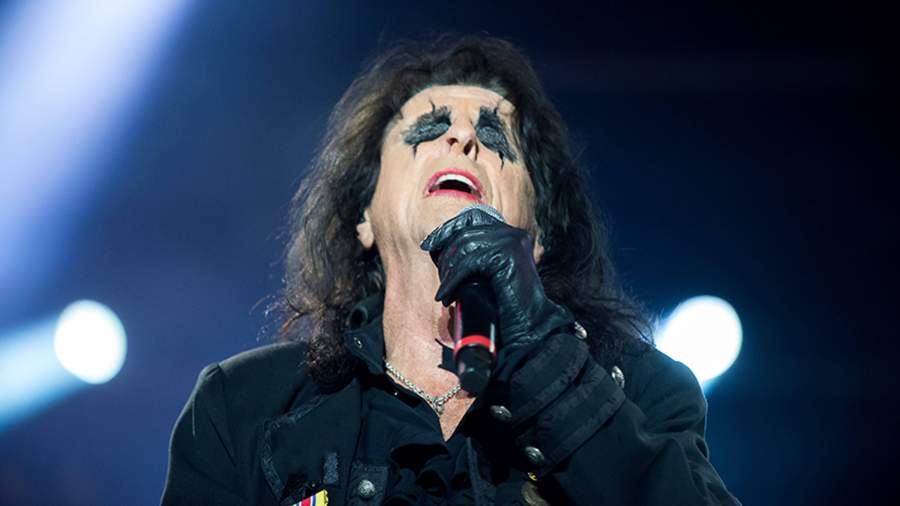
After a half—century break, on July 25, The Revenge of Alice Cooper is released, a reunion album by Alice Cooper, pioneers of glam rock and creators of a number of global hits. This is Alice Cooper's first band, with which he once gained worldwide fame before embarking on a solo and equally stellar career. Izvestia listened to the album before its official release and found it a charming comeback: the veterans decided to remind of their former greatness and really shook up the old days.
The dismembered Kings
The image of Vincent Fournier, born with kohl—rimmed eyes, a black hat, and a boa constrictor on his shoulders, is so distinctive and deeply embedded in the cultural imagination that many have forgotten, and even more people did not know at all: Alice Cooper was originally not a stage name, but the name of a band.
Meanwhile, Alice Cooper is one of the key bands in the history of classic glam rock and, perhaps, the main representative of its American origin. Judge for yourself: when you hear "glam rock", the British pop up in your head first of all - David Bowie, Queen, T. Rex, Slade, Roxy Music. Yes, there were Americans too, but they either remained the property of musical aesthetes and were generally based in England (like Sparks), or they were so much more glam that it would be difficult to simply classify them as this, of course, respected genre (like Iggy Pop and Lou Reed).

In fact, it was Alice Cooper who first — and most successfully — brought deliberate theatricality, causing eccentricity and memorable Broadway vulgarity of visual images to American rock and roll. Over the course of seven albums released in a short period from 1969 to 1973, the band went through a curious evolution: from an experimental band released on Frank Zappa's label to an impeccable machine for producing biting pop hits. Along the way, they left behind a whole scattering of songs that are forever fixed in the rotation of any classic rock radio station: I'm Eighteen, School's Out, Elected, No More Mr. Nice Guy.
And Alice Cooper shocked chaste audiences on both sides of the Atlantic. They sang about necrophilia (Love It to Death), made sarcastic jokes about sexual violence (Raped and Freezin’), and in general, there were no forbidden topics in their writing arsenal. This caused discontent among some political figures: for example, the British activist Mary Whitehouse called Alice Cooper the bearers of concentration camp culture.
On the cover of the album Killer (1971), the band placed a close-up photograph of a snake, which from a distance can easily be confused with a male sexual organ. The band's concerts turned into a carefully staged performance filled with scenes of massacres, executions and bloody duels. As Alice Cooper himself once said of his meteoric rise: "We were high on fun, sex, death and money, while everyone else was talking about peace and love. We were wondering what would happen next. It turned out that we were next, and we drove a stake into the very heart of the generation of love."
A weekday return
Of course, there comes a time in the history of any rock band when the weight of the frontman's name begins to outweigh the rest of the band - and especially bands that are named after their frontman are not immune from this. Alice Cooper reached this critical point: they recorded the title song for bond, "The Man with the Golden Gun" (which, however, producer Albert Broccoli did not include in the picture), released the tired and sad album Muscle of Love, had a fight and broke up. However, having jumped out of his old skin, Alice Cooper became an even bigger figure — a stadium-scale rock star.

And now Alice Cooper is back together, albeit without guitarist Glen Buxton, who died in 1997. More precisely, they had been reunited periodically before.: They appeared at Cooper's own concerts, then performed as an accompanying line-up on individual tracks of his recent longplays Paranormal (2017) and Detroit Stories (2021). But it's the first time in 52 years that a full—fledged album has appeared, one where the whole band works as a whole. Bob Ezrin is back in business, a regular producer of both Alice Cooper's solo releases and Alice Cooper records (and at the same time, the man who, for example, produced Pink Floyd's "The Wall"). Even the late Buxton, by the way, also sounds on The Revenge of Alice Cooper — in the form of an archive solo on the track What Happened to You.
The Revenge of Alice Cooper, interestingly, is not specifically presented or positioned in any way. This is not a "resounding return of the Rock and Roll Hall of Fame members" or a "triumphant resurgence of the titans of the glam scene" or anything like that. The official press release simply and dryly states: "The first Alice Cooper album in 52 years." And Cooper himself, talking about the reunion, holds himself without pathos: they say that after the breakup we never completely lost touch, but in recent years we started playing together again — well, we decided to record together. Direct quote: "It wasn't a divorce — we just lived separately."
On the other side
Of course, Cooper's words are likely to contain some guile. But for the most part, The Revenge of Alice Cooper does sound like the band's surviving members—Fournier himself, rhythm guitarist Michael Bruce, bassist Dennis Dunaway, and drummer Neil Smith-have been on the same wavelength for the past 50—plus years.
The album has only three significant differences from the classic Alice Cooper records. Firstly, instead of Buxton's drawling, minimalistic solos, the parts of Cooper's current solo guitarists Gyasi Hoys and Rick Tedesco can now be heard. Their style is closer to the traditional heavy metal, with its characteristic speed, pressure and technique.
Secondly, Cooper's voice itself has changed: if in the 1970s it was shrill and sonorous, now it has become lower, rougher, narrowed — but this is a matter of age, which, one way or another, cannot be argued with.
Thirdly, the degree of shock and tin in the texts has been greatly reduced compared to the 1970s. Alice Cooper, who once grew up in a Mormon sect that broke away from the Church of Jesus Christ of Latter—day Saints, returned to religion about 10 years ago - and significantly tempered his appetite for outrage. The riskiest song, Up All Night with the chorus "I'm Standing up All Night", sounds like an unfortunate joke and is perhaps the weakest track on the disc.

Otherwise, the main reference point for The Revenge of Alice Cooper is Billion Dollar Babies (1973), the band's most commercially successful and, perhaps, the best album. He had a special sound unlike anything else: energetic, but without a straightforward drive, inspired by The Who and The Yardbirds, British rock icons of the 1960s, whose signature technique was dynamic swings and characteristic song structures in which restrained verses smoothly opened into wide choruses.
But the sound is only half of it; the other half is always the song material: the melodies themselves, the motifs, the hooks, the riffs. And, alas, it is akin to the routine with which The Revenge of Alice Cooper is released and promoted: there are no vivid revelations, no potential hits for the ages, no feeling that the songs were written with a challenge. If it's written, then let it be.
And this is perhaps the main disadvantage of the record: the author does not consider himself entitled to give advice to the legends of world rock music, but still half of the album could safely not be recorded - or at least select the material more expressively and work more closely with what already happened.
However, there are expressive songs on the album. So, The Revenge of Alice Cooper opens with a long, gloomy and charming Black Mamba, featuring the guitar of Robby Krieger from The Doors. The short epic Blood on the Sun — by the way, it also slightly resembles The Doors — catches with its inspired verse and atmospheric sound density. But the record is really accelerating closer to the finale: Money Screams stands out — an incredibly memorable song about the harm of capitalism in the spirit of The Who; What a Syd is a short curtsy to Syd Barrett, whose influence is especially noticeable on the earlier, more experimental works of Alice Cooper; I Ain't Done Wrong is exemplary.-a revealing blues-rock anthem, which is good to stomp on.
Still, if there's a true little masterpiece on the album, it's the closing ballad, See You on the Other Side, dedicated to Glen Buxton. The song is of rare precision, taste, depth and emotional purity, so much so that it is difficult to recall in recent years at least one track from veterans of the 1960s that can compare with it. "I'll see you on the other side again, and we'll rock together again,— Cooper says to his guitarist. And you can't help but wonder: maybe this is the reason why Alice Cooper reunited? Maybe they just decided to make it while they still could, while everyone was safe and before it was time to get to the other side? Maybe the reason is age multiplied by the human ability to forgive offenses? Who knows, but after listening to the CD, you really want to call old friends you haven't seen for a long time.
Переведено сервисом «Яндекс Переводчик»
