Measurements with knowledge: Ionosphere satellites will study the cause of the ISS deceleration
- Статьи
- Science and technology
- Measurements with knowledge: Ionosphere satellites will study the cause of the ISS deceleration


The high density of the upper atmosphere slows down the ISS and artificial satellites, which makes it necessary to adjust their orbit more often. In addition, there is an accelerated depreciation of space technology. Scientists came to this conclusion based on data from the first satellites of the Russian Ionosphere-M space system, launched into space six months ago. On July 25, the group will be equipped with two more similar devices. What discoveries scientists will be able to make can be found in the Izvestia material.
How the ozone layer affects spacecraft
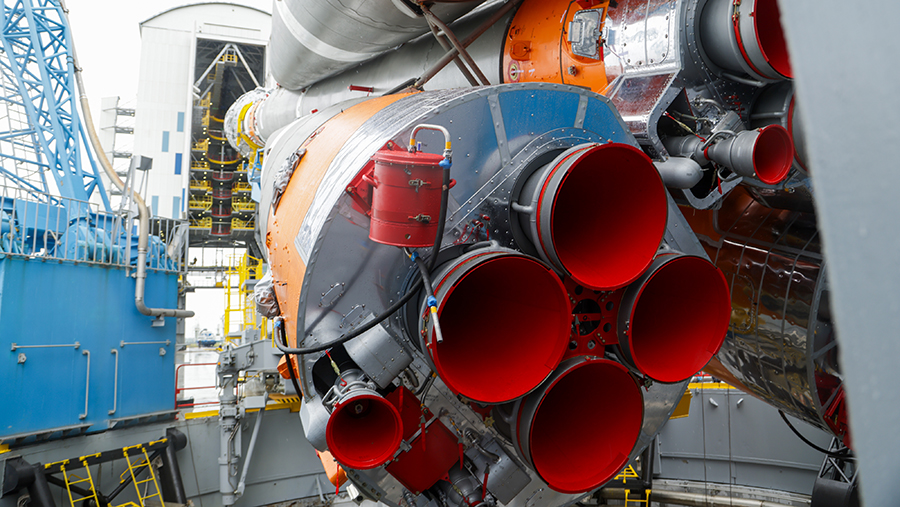
The new Ionosphere-M satellites will be launched from the Vostochny cosmodrome on July 25. They will be launched into orbit by a Soyuz 2.1b launch vehicle. Thus, the Russian orbital group will be fully staffed, and its tasks include studying the upper layers of the Earth's atmosphere and space weather. The launch of the first two devices took place on November 5, 2024. The second pair will complement them and make it possible to obtain more accurate and continuous data on the state of the ionosphere.
In total, the system will consist of four vehicles placed in pairs in sun-synchronous orbits. Such trajectories assume that artificial satellites pass over different points of the planet at the same time. This is convenient for comparing and analyzing information, scientists from the Space Research Institute of the Russian Academy of Sciences said.
Before the launch, the specialists responsible for setting the scientific objectives of Ionosphere-M exclusively told Izvestia what results had been achieved at the first stage of the group's work and what tasks would have to be solved in the near future.
— In the first six months, unexpected and scientifically interesting results were obtained based on measurements on the Ionosphere satellites. In particular, the measurements showed an extremely high density of ionospheric plasma. This is confirmed by other measurements on spacecraft and on Earth. For example, scientists from Nizhny Novgorod and Kazan have recorded the strong luminosity of the night sky under the influence of terrestrial heating stands (superanthenes with powerful radio emission. — Izvestia), — said Mikhail Mogilevsky, Head of the Laboratory of the Department of Space Plasma Physics at the Space Research Institute of the Russian Academy of Sciences.
The high density of the ionosphere leads, for example, to the slowing down of the ISS and artificial satellites, which makes it necessary to adjust their orbit more often, he said. In addition, there is an accelerated depreciation of space technology.
In his opinion, the identified processes may be related to solar activity — the maximum of the 11-year and 22-year cycles. However, there is another explanation: historical data indicate the presence of unexplored trends that go beyond much larger time scales. Perhaps, thanks to the first pair of Ionosphere-M satellites, it was possible to find new phenomena, the scientist said. The devices sent by the second rate will help confirm these conclusions and supplement the research results.
How will the ozone layer density be measured?
Another interesting phenomenon is related to low-frequency radiation, which is detected on artificial satellites, said Mikhail Mogilevsky. In particular, unusual electrostatic (without a magnetic component) radiation was detected in different regions of the ionosphere.
— The phenomenon may be related to the so-called Oklo natural nuclear reactor, located in Gabon in western Central Africa. It consists of several ore bodies in which a spontaneous chain reaction of fission of uranium nuclei took place about 1.8 billion years ago. As the researchers suggest, it has been going on for several hundred thousand years. It is likely that aerosols and molecules of heavy elements have accumulated in this region, which gradually spread through the atmosphere under the influence of winds, the scientist suggested.
The data obtained by the Ionosphere-M devices show that emissions from this zone affect the distribution of electrostatic radiation in the ionosphere, he added. The discovered phenomenon highlights the complexity of the interaction of natural factors with each other. It can be assumed that further research in this direction will allow, for example, using this information to predict geological processes.
Unlike previous satellites, the new Ionosphere-M spacecraft have specialized instruments for monitoring the ozone layer, a gas layer in the atmosphere that protects living organisms from ultraviolet radiation. This is the beginning of a new series of domestic devices of this kind, Mikhail Mogilevsky noted.
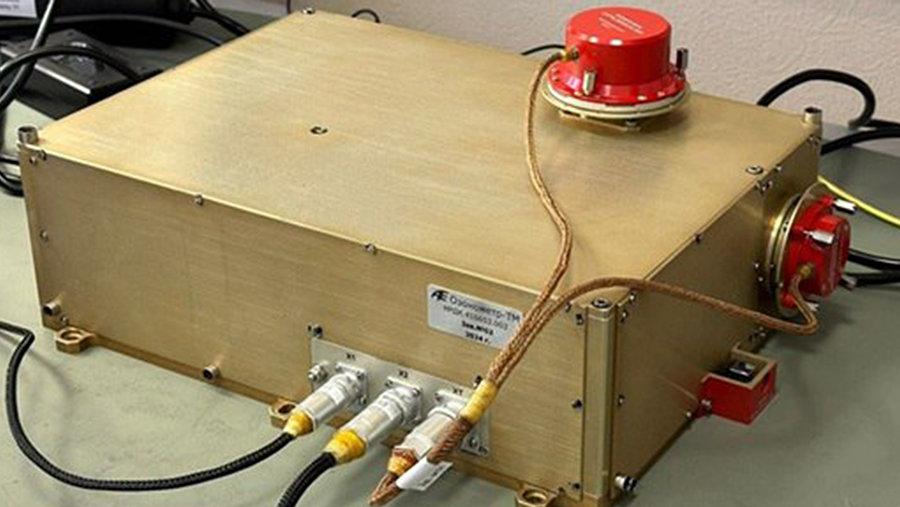
— The main purpose of the ozonometer is to measure the total content of ozone and nitrogen oxides in the atmosphere. The sensors of the device will be directed down to the ground. Thus, it will measure the spectrum of scattered and reflected solar radiation, and then use the properties of the recorded spectrum to draw conclusions about the composition of the atmosphere under the satellite," explained Yuri Dobrolensky, head of the development, head of the Laboratory of Planetary Spectrometry and Meteorology at the Department of Planetary Physics at the ICI RAS.
He added that ozone holes became a global problem in the 1970s and 1980s. In response to these challenges, the international community has adopted the Montreal Protocol, the Vienna Convention and other documents that limit emissions of substances that deplete the ozone layer. However, modern research suggests that the recovery process has stalled and may reverse.
Thanks to the new equipment, specialists will be able to build a detailed map of the ozone layer within a few weeks and organize its constant monitoring. In the future, they will create a modification of the ozonometer with a large field of view, which will provide a global overview of the ozone layer during the day. It will be installed on board the Zond-M spacecraft, whose main task will be to study the Sun, added Yuri Dobrolensky.
Why do we need ozone layer monitoring?
— The ozone layer protects living organisms that are not hidden by a layer of water, solid rock or other shelter from the harmful effects of ultraviolet radiation from the Sun in the wavelength range of 200-315 nm. In particular, the range of 230-290 nm is particularly sensitive for DNA molecules. Due to their damage, the cells stop dividing and growing, which leads to death. And the range of 280 - 315 nm significantly affects the integuments of living organisms. For example, in humans, this leads to skin cancer, cataracts, and a general decrease in immunity," Doctor of Physico—Mathematical Sciences at the A.V. Gaponov-Grekhov Institute of Applied Physics of the Russian Academy of Sciences explained to Izvestia.
Therefore, continuous monitoring of the ozone layer is necessary to preserve life on our planet. Its monitoring will make it possible to understand the ways of evolution of this shell, register local depletion of the layer in time and provide recommendations to residents of these areas that protect their health. Constant monitoring will also make it possible to track artificial effects on the atmosphere prohibited by international agreements, the expert stressed.
— Ozonometer-TM captures the spectrum using a diffraction grating and a photodetector, which registers optical radiation and converts it into an electrical signal, which provides high resolution and sensitivity. The Russian instrument-making base makes it possible to implement space projects of any complexity. There are limitations on the element base, but they can be solved," explained Pavel Moiseev, Director of NPP Astron—Electronics.
Currently, Russian scientists use a lot of information obtained from foreign spacecraft, which imposes restrictions on their use. Therefore, the more national data there are, the more free specialists will be in their use, he noted.
According to Pavel Moiseev, many interesting projects are currently being implemented in the Russian space industry, both in practical terms (the Arctic, Electro, and Meteor systems) and in the scientific field (lunar and Venusian programs).
Переведено сервисом «Яндекс Переводчик»
