
Delays without haste: a new moratorium on fines for developers has been introduced
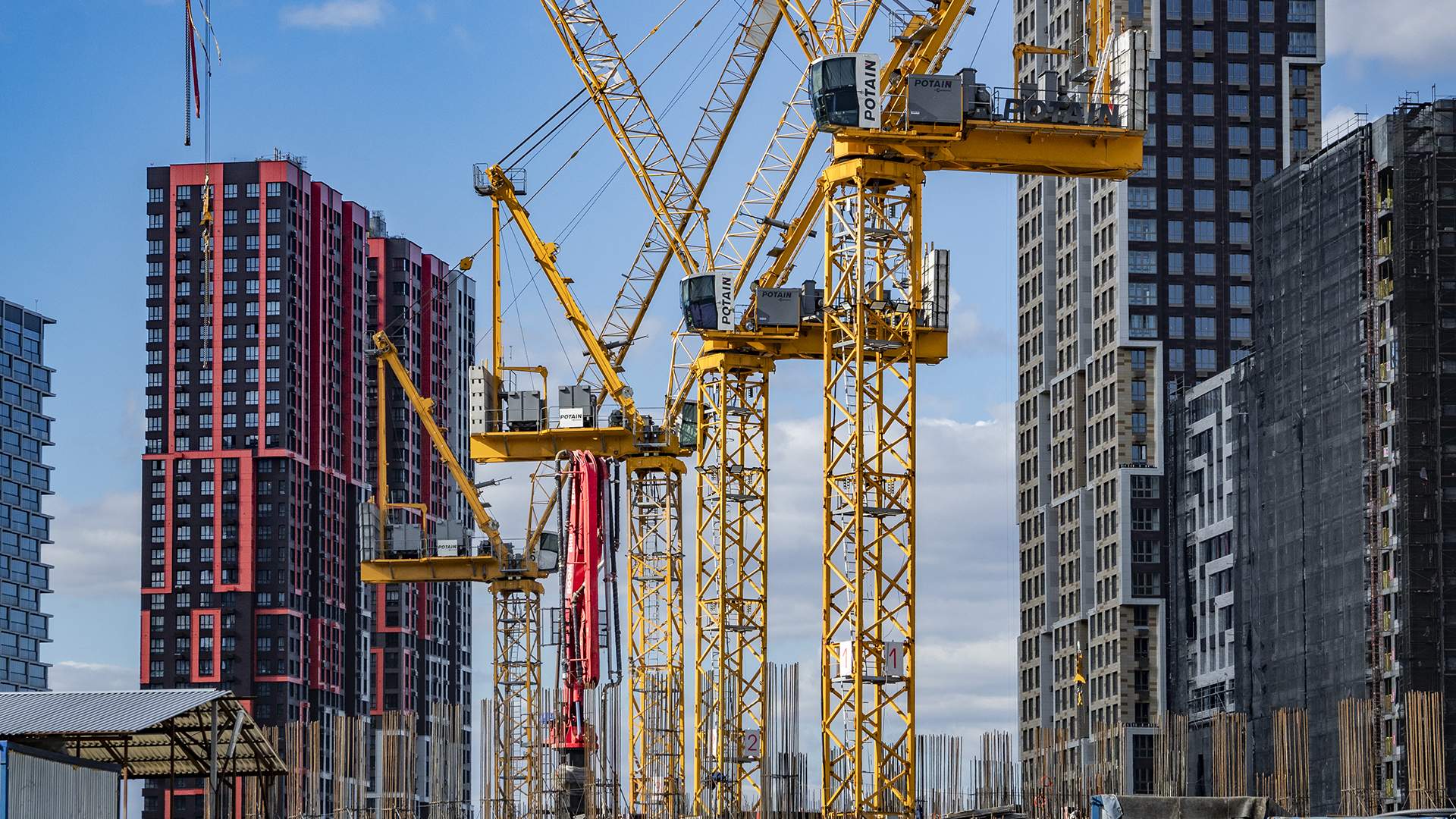
According to the Territorial Development Fund, which conducts pre-bankruptcy monitoring of developers, today there are 114 problematic facilities that are being implemented by 64 developers in 28 regions of the country. In this regard, the State Duma adopted a law providing developers with the opportunity to receive a postponement until the end of 2025 for the payment of fines and penalties for violating obligations under contracts of participation in shared-equity construction. The law is aimed at supporting the construction industry in difficult economic conditions, but it causes a variety of opinions about the consequences for shareholders, the budget and the market as a whole.
What's new for equity investors and developers
The new law reduces financial pressure on developers by giving them time to focus on completing projects, but at the same time raises concerns about motivation to deliver housing on time. Alexander Yakubovsky, a member of the State Duma Committee on Construction, says that this measure reduces the burden on bona fide market participants and can speed up construction, but easing sanctions on unscrupulous ones may reduce incentives to meet deadlines. A postponement, according to him, is issued only through a court with an assessment of objective reasons, excluding cases of deliberate delay.

According to Yakubovsky, for the budget, the new law may mean deferred receipts for writ of execution and court decisions. For banks— it means reducing the current burden on developers, which in some cases will help avoid defaults.
"However, in 2026, a sharp increase in accumulated liabilities is possible, which both industry participants and financial regulators need to be prepared for," the parliamentarian points out. — Legal risks are primarily related to the fact that shareholders lose the opportunity to quickly receive compensation for delays. This weakens the legal protection of citizens and can lead to an increase in the judicial burden.

In addition, he adds, a precedent is being set when contractual obligations can be postponed without consequences, which in the future may undermine confidence in the mechanism of shared-equity construction. To compensate for these risks, it is necessary to strengthen the requirements for transparency in the activities of developers, the introduction of deadline monitoring systems and additional guarantees for shareholders.
Denis Butovichev, Managing Partner of the Company for the Protection of Shareholders, also notes the risks that arise in this regard.
— Deadlines may increase as sanctions become less sensitive. On the part of the shareholder, government control mechanisms are invisible. We do business where the construction has been going on for more than a year. The shareholders are already going to appeal the officials' inaction.

Denis Snetkov from the Ural Builders Association emphasizes that postponement can shorten construction time by freeing up resources, but the general decline in housing construction is associated with high bank rates, which reduces demand and slows down the market.
— A postponement until the end of 2025 for the payment of fines and penalties will allow developers to direct free resources to the completion of construction. However, the decline in housing construction requires comprehensive solutions," he notes.
Anton Glushkov, President of Nostroy, confirms that the extension of the measure is not an innovation, but a necessary support that will not cause abuse, since extending the deadline is counterproductive for developers due to market risks.
— In practice, no abuses have been identified. The law will help balance supply and demand and will not have a negative impact on the housing market," says Anton Glushkov.
Senator Olga Epifanova, the arbitration administrator of the Ministry of Justice of the Russian Federation, adds that a postponement is granted by a court decision with the control of the objectivity of the reasons, but the lack of clear criteria and control mechanisms still creates a risk of abuse and requires improved legal regulation.

"To minimize the negative consequences, it is necessary to strengthen judicial supervision, increase transparency in the activities of developers and introduce additional guarantees to protect the rights of shareholders in order to maintain a balance between supporting the industry and the legal stability of the market," says Epifanova.
Financial implications for the budget and banks
Financial experts point to the dual effects of deferral.
Denis Butovichev warns that shareholders will have lower tax payments from penalties, which will negatively affect the budget:
— Shareholders will have less money in bank accounts, they will pay less taxes (personal income tax with a penalty of 13%).

Natalia Kruglova, Managing Partner at Trophy Assets, links the law to the risks of a systemic crisis, pointing to problems in other countries where similar measures have led to a drop in market confidence, an increase in distressed assets and a deterioration in financing conditions.
— Postponement may lead to an increase in long-term construction, mass defaults and a drop in confidence in the construction sector. The control mechanisms in Russia are still vague," she says.

The moratorium has already affected more than 1,400 residential complexes under construction, she notes.
—A temporary freeze in the future can lead to a deterioration of the investment climate and loss of confidence in the industry,— says Trophy Assets Managing partner. — For banks and investors, the risks of this law are obvious — the growth of distressed assets, loss of liquidity and falling confidence in the real estate sector as a whole. This leads to a deterioration in financing conditions and an increase in costs for the entire construction business.
Legal risks and market regulation
Lawyers and legal experts point out that the temporary moratorium carries legal and social risks. Yana Osipova, a member of the executive committee of the Tatarstan regional branch of the Russian Bar Association, emphasizes that reducing financial pressure simultaneously weakens control levers and can lead to an increase in the number of bankruptcies.
— Postponement reduces the risks of bankruptcy, but increases the debt burden and the number of long-term construction projects. This can cause social tension in the regions," the expert says.

Nikolay Zyryanov, a member of the legal committee of the Russian Guild of Realtors, adds that the deferral is granted by the court and does not affect the construction period, but stops collecting the enforcement fee during its validity. This is a procedural measure with no long-term impact on the market.
"Deferrals are granted as part of enforcement proceedings and have no impact on the regulation of the shared—equity construction market," he clarifies.

Support for the construction industry in times of crisis
Vladimir Prokhorov, a member of the General Council of Delovaya Rossiya, a developer, owner of Udacha Group of Companies, considers the law to be a necessary support for construction companies against the background of tightening mortgage conditions and falling purchasing power of the population.
— This measure will contribute to the support of construction companies. Due to the high key interest rate, mortgage programs that fed the real estate market with the purchasing power of the population have changed significantly," he says. — In fact, the bill is a loan from the state. The budget, of course, is interested in replenishing working capital, but the risk of companies going bankrupt will not benefit the country's economy. The loss of potential profits from construction can lead to a collapse of the construction market.

Kirill Kholopik, head of ERZ.The Russian Federation recalls that the new law is covered by the current moratorium, extended until the end of 2025, and will not affect the completion dates of the facilities.
— The new law will not change the deadlines for the completion of facilities, the moratorium on the collection of penalties is already in effect, — says Kirill Kholopik.

The law on extending the deferral of fines to developers is a complex and ambiguous tool that can become a pillar for the industry in a crisis, but if mismanaged, it can create additional problems. Experts agree that transparency of developers' activities, effective judicial control and additional guarantees for shareholders remain key.
"Postponement is not a panacea, it is a medicine that, if used incorrectly, can turn out to be worse than the disease itself," warns Natalia Kruglova.
Переведено сервисом «Яндекс Переводчик»
