Frequent rocket launches can destroy the ozone layer in 25 years.

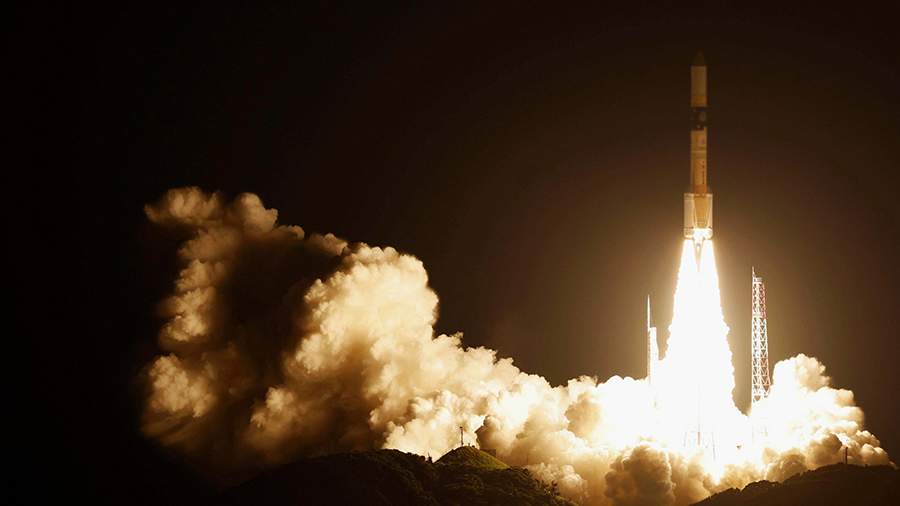
Researchers from St. Petersburg State University, as part of an international team of scientists, have found that a rapid increase in rocket launches can lead to a reduction in the ozone layer, a protective shell that protects people and other living organisms from dangerous ultraviolet radiation.

"Many gases and solid particles that are formed during the operation of rocket engines have high chemical and radiation activity and are capable of destroying the ozone layer. Moreover, this effect occurs both during launches and during the return of spacecraft to the atmosphere," Evgeny Rozanov, one of the authors of the scientific work, head of the Laboratory for Research of the Ozone Layer and the Upper Atmosphere of St. Petersburg State University, told Izvestia.
The expert explained that all types of rocket fuel create emissions that affect the ozone layer in one way or another. Chlorine and nitrogen compounds pose the greatest danger to it. Substances that are formed when space objects enter the dense layers of the atmosphere upon return also pose a threat.
"To understand whether ozone losses occur with the development of the rocket and space industry, we considered two scenarios until 2030 — ambitious and conservative. In the first case, launches take place at 72-hour intervals at each of the 17 operating spaceports, which implies 2,040 launches per year. The second scenario is one per week, and therefore 884 launches per year," Evgeny Rozanov said.
According to the results of the study, even in the minimum scenario, the rate of reduction of the ozone layer will exceed the rate of its recovery.
In five years, a thinning of up to 4% can occur in the sky at high latitudes of the southern hemisphere — in the area of New Zealand and South America. Also, if the trend continues, a part of the northern hemisphere will be at risk. This includes the southern Russian regions.
Переведено сервисом «Яндекс Переводчик»
