
Children of Captain Grants: pro-Western activists began to be purged in Ukraine
The Ukrainian authorities have launched an offensive against pro-Western grant-making public structures, activists and politicians, who are called soros in the country. Sanctions, threats and criminal cases were launched. The most high-profile episode of this story was the large-scale searches at the National Anti-Corruption Bureau (NABU), which ended with the detention of at least one employee. Izvestia investigated the situation.
Face to the floor
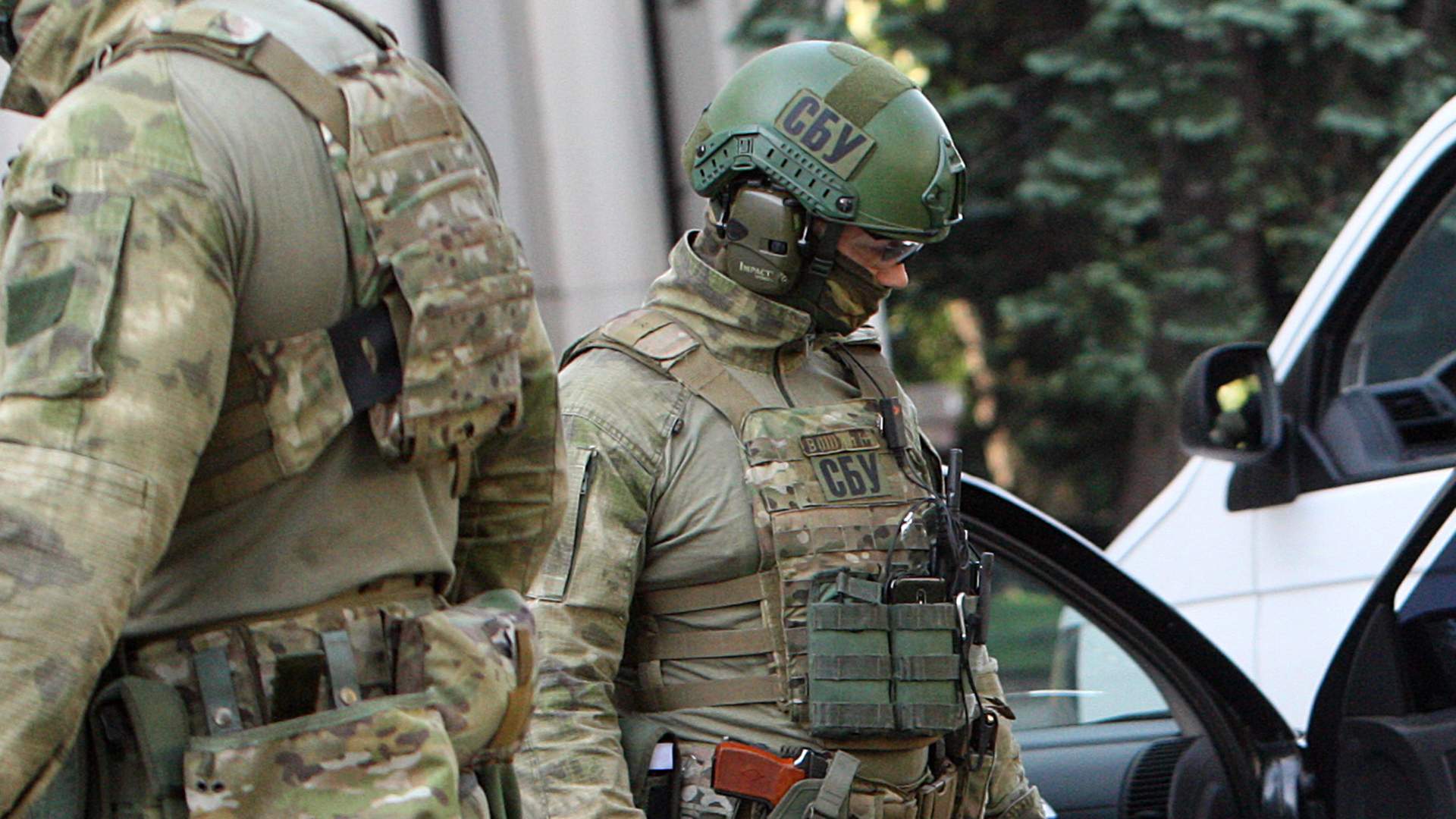
On the morning of July 21, employees of the Security Service of Ukraine (SBU) and the office of the Prosecutor General conducted searches at the detectives of the National Anti-Corruption Bureau (NABU). It was reported that investigative actions took place at 80 addresses in different regions of the country. At the same time, it is clear from the distributed footage that the security forces acted with exaggerated rigor — NABU employees were laid on the floor, threatening with weapons.
The media reported that the searches were being conducted in cases of treason, illegal trade with Russia and "corrupt actions" in the interests of the oligarchs. At the same time, the NABU noted that investigative actions are carried out without court approval, that is, they are illegal. "We are currently investigating all the circumstances. Details will be provided later," the short message said.

The SBU later stated that they had detained Ruslan Magomedrasulov, head of the NABU interregional directorate, who worked in the frontline zone in the Dnipropetrovsk region and the Kiev—controlled part of the Zaporizhia region. According to the investigation, the detainee's father allegedly has Russian citizenship, and the detective did not indicate this fact when applying for admission to the state secret.
The SBU also stressed that Magomedrasulov helped his father run a business in Russia — he acted as an intermediary in the sale of technical cannabis. "As for the suspect's mother, Irina Magamedrasulova, she lives in Kiev, but receives a pension from the DPR and publishes pro—Russian comments on social networks, in particular in groups with Z-symbols," the special service said in a statement.
The investigators also stressed that the detainee was in close contact with the "pro-Russian fugitive MP" Fyodor Khristenko. Finally, the SBU stressed that Magomedrasulov should be constantly in the city of Dnipro for work, but spent most of his time in Kiev, and recently had a vacation in Spain. The special service noted that at the moment the issue of bringing charges against him under the article on complicity of the Russian Federation is being "resolved".
Piglet hunting
After the 2014 Maidan in Ukraine, at the insistence of Western countries and structures, a number of anti-corruption bodies appeared, including NABU, SAP, NAPC, BEB and others. At the time, Brussels and Washington emphasized that they were all needed to defeat the rampant bribery of Ukrainian officials. Outside observers noted that in fact, with the help of this vertical, objectionable civil servants are eliminated and external management is carried out.

I must say that the Constitution of the country does not provide for these bodies, their work was regulated by special legislation. Among other things, it stated that the voices of "international experts" are crucial in the selection of personnel. The West also closely monitored that the powers of these structures were not violated. For example, in 2020, the Ukrainian authorities tried to cancel the mandatory declaration of their income by officials, but after a shout from Brussels, the previous norms had to be returned.
Kiev has always been burdened by this system, trying under one pretext or another to curtail the powers of uncontrolled bodies. They've been on the offensive lately. Firstly, the Government has not agreed on the replacement of the Director of the Bureau of Economic Security (BEB). A special commission dominated by foreign observers proposed Alexander Tsivinsky, a former NABU detective, for the position, but the Cabinet of Ministers rejected this candidacy.

Formally, it was reported at the time that Tsivinsky allegedly threatened security, although he himself says that he constantly passed all checks and has long had access to state secrets. Rada deputy Yaroslav Zheleznyak stated that the decision to cancel the results of the competition was made personally by Zelensky. "This undermines all our commitments to the IMF and the EU. I hope that someday everyone who voted for this at a government meeting will be criminally responsible," he said indignantly.
Secondly, NABU also started having problems. In May, after an audit, it was stated that this body is "moderately effective", demonstrates low efficiency, and the staff and budget are unreasonably inflated. After that, a temporary investigative commission was established in the Verkhovna Rada to investigate possible corruption. MP Serhiy Vlasenko promised then that in the future parliamentarians would hear the Prosecutor General and other heads of law enforcement agencies.

At the same time, a powerful information campaign began in the media. For example, the Ukrainian News agency published an article entitled "Top 10 high-profile scandals around NABU employees." "It turned out that if you collect all the "heroes" in one text, then the Criminal Code will be released. There is drug trafficking, cryptocurrency fraud, schemes with luxury real estate and VIP cars, and pressure on the court to cover up relatives who take bribes, and much more," the preface emphasized.
Thirdly, one of the most famous grant activists, the head of the Anti-Corruption Center, Vitaly Shabunin, was targeted. He was accused of evading military service and fraud. The investigators noted that after the mobilization, the man did not appear in his battalion, but worked in civilian institutions. Shabunin's house was searched, and he himself was given suspicion.
Fourth, at the end of June, Zelensky imposed sanctions against one of the business partners of the oligarch Tomasz Fiala. The entrepreneur owns a large media holding company, which includes the Ukrainska Pravda newspaper, which often criticizes the central authorities and provides a platform for Soros activists. It is believed that if the media mogul does not come to his senses, then next time the restrictions may affect him personally.

Among the reasons for the unfolding campaign may be the change of the American administration. The fact is that the vertical of anti-corruption bodies and the network of grant-funded media and activists in Ukraine were created by elites, mainly associated with the Democratic Party. The current Republican administration obviously does not count on them. The Europeans could put in a good word for these people, but even for those, this issue is far from the first place.
In such circumstances, the only way for grant structures to protect themselves is to communicate with the Western media. On July 17, the Financial Times published an article stating that there are more and more manifestations of authoritarianism in Ukraine. "Zelensky and his closest aides <...> are using the extraordinary powers granted under martial law to oust critics, silence civil society leaders, and consolidate power," the article says.
What the experts say
Political scientist Alexander Skubchenko believes that there is an invisible war going on in Ukraine for control of the state.
— NABU was created by Americans. There are detectives there who are directly controlled by Washington. Recently, they have initiated several painful criminal trials against members of Zelensky's inner circle. This case is against Timur Mindich, co-owner of Kvartal 95, Alexei Chernyshov, Minister of National Unity, and a number of others. The main goal is to leave Zelensky alone, cut him off from his environment, so that he becomes more obedient. Accordingly, the Ukrainian authorities are trying to defend themselves," he explains.

Political scientist Alexander Semchenko says that what is happening in Ukraine has become a consequence of the political struggle in the United States.
— Ukrainian grant structures are closely linked to the American Democratic Party. In the United States, the Democrats are under heavy pressure from the Donald Trump administration, so it's not surprising that their protégés have problems in Ukraine under such conditions. It is difficult to predict what will happen next. If Trump and the Democrats somehow come to an agreement in the United States, then the piglets will probably have fewer problems in Ukraine. If the struggle continues overseas, I think they will be defeated in Ukraine," he argues.
Переведено сервисом «Яндекс Переводчик»
