
On our own wave: why we celebrate Navy Day on July 27
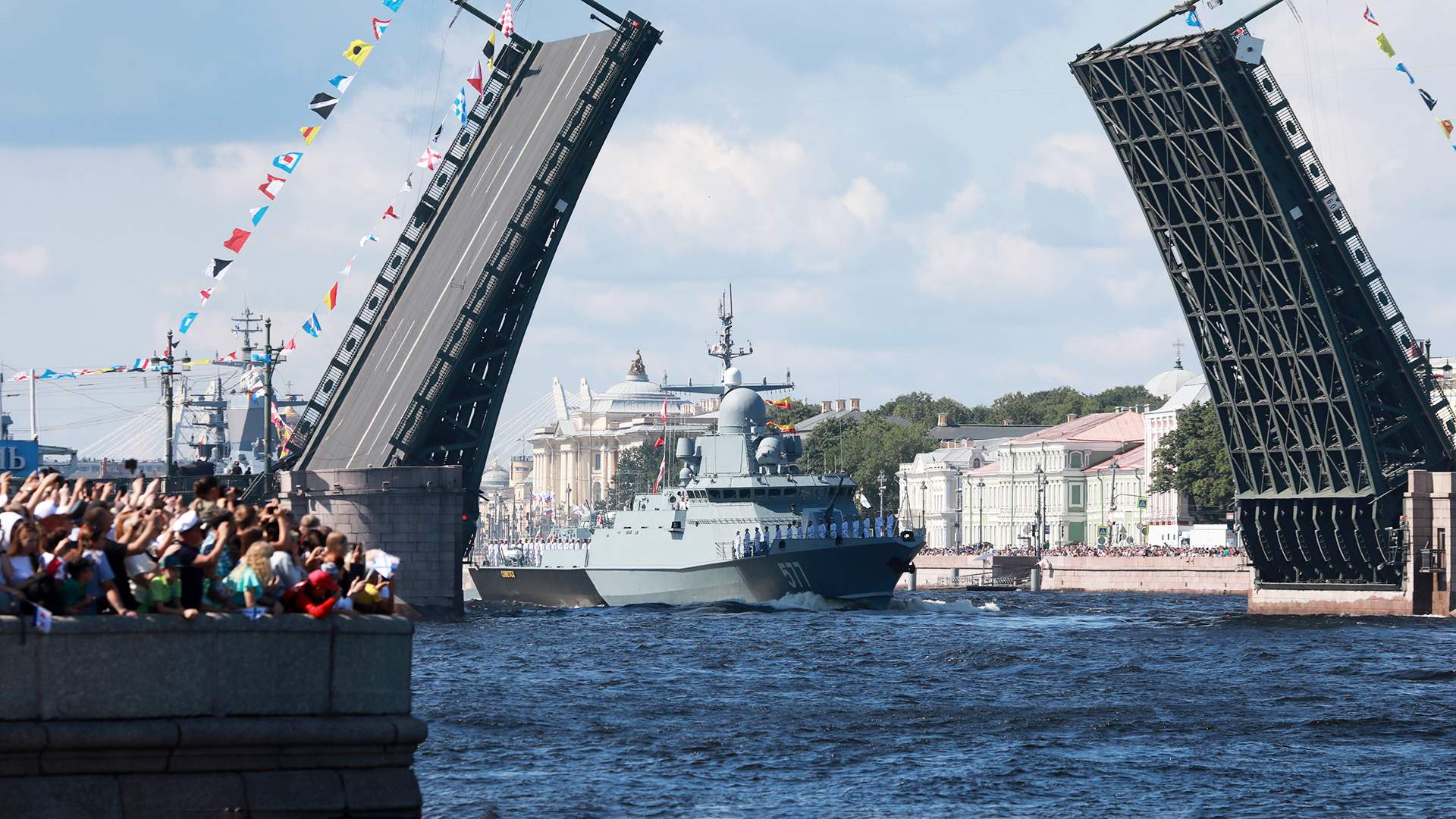
On Navy Day, we congratulate those who dedicated their lives to serving under the St. Andrew's Banner. And congratulations to each other on having a glorious and invincible fleet. Izvestia recalled how the fleet appeared in Russia.
"There should be sea vessels"
They play ancient marches that conjure up images of naval victories and famous voyages. And in October 1696, when there were still no marches in Russia, the Boyar Duma, under the influence of Tsar Peter Alekseevich, made a fateful decision: "There should be naval vessels." In 1700, the Admiralty Order was created, the first Russian naval department.

Reproduction of an engraving from a painting by Denis Martin Jr. "Naval battle at Gangut", 1714
The reformer tsar spent many days at shipyards in Holland and England, and proudly called himself a "shipwright." Peter's rules are always relevant for our fleet: "All Russian military ships must not lower flags, pennants and topsails in front of anyone on pain of losing their bellies," "Whoever swore to the banner once must stand by it until death."
Everyone knows and remembers Peter's words: "The great emperor, who has a single land army, has one arm, and who has a fleet, has the other arm." In many ways, it was the navy that turned Russia into a great power, without whose participation no important undertaking in Europe could do.
And already in 1714, on July 27 (August 7, new style), Russian sailors won their first major victory, defeating the Swedish squadron in the battle of Cape Gangut.
The First Fleet Holiday
In his decree, the Emperor ordered to celebrate Gangut Victoria Day annually with solemn religious services, naval parades and fireworks. Peter considered this victory no less important than the Poltava victory. Indeed, its importance cannot be overestimated. The Russians have proved that from now on the Swedes will not have to rule the Baltic Sea completely.

Naval battle of the Russian rowing fleet at Gangut, 1714
Triumphal arches were being erected on the Neva River, and there was no end to toasts to the glory of the Russian navy and its heroes. It so happened that the second significant victory of our sailors, at Gringam, also took place on July 27, but six years later — in 1720. On this day, the church celebrated the feast of the Holy healer Panteleimon. He became in Russia not only the patron saint of doctors, but also of sailors.
Red Fleet Day
In the spring of 1921, after the Civil War, the Red Fleet Day was celebrated in Soviet Russia for the first time. On May 15, a colorful parade of warships was held in Petrograd, in the Neva River. The sailors also marched through the Palace Square, which at that time was named after Uritsky. People poured out into the streets, greeting the Baltics. Festive events took place then on the Black Sea, in Sevastopol.
Since this May day, such solemn reviews have become a tradition. However, for the time being, they were not held regularly, on different days. In 1923, the fleet was honored in January for a whole week. The Komsomol members of Petrograd collected and handed over to the Baltic Fleet about 400 thousand rubles, over 1,500 yards of cloth, 1,100 pounds of soap, 500 pounds of salt, 1,750 pairs of shoes and 1,000 pairs of underwear. The Navy was getting back on its feet after the First World War and the Civil War.
Admiral Kuznetsov's birthday
The holiday received a new meaning under the commander-in-chief Admiral Nikolai Kuznetsov. On May 1, 1939, the admiral, along with other military leaders and leaders of the party and government, greeted the participants of the Workers' Solidarity Day parade from the podium of the Mausoleum. On that May Day morning, Kuznetsov took a moment to explain to Joseph Stalin his idea of a naval holiday.
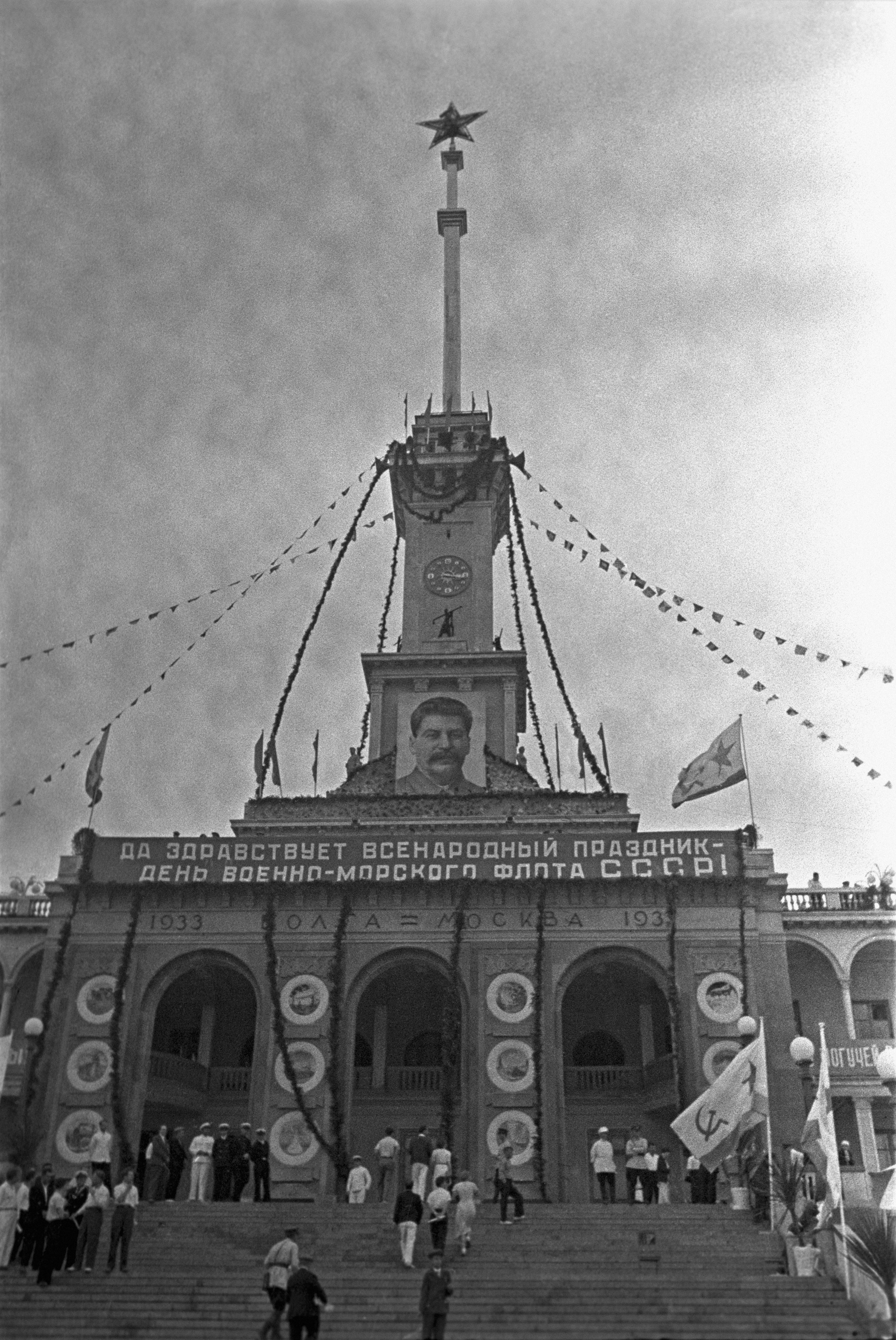
On June 22, 1939, the Council of People's Commissars of the USSR and the Central Committee of the CPSU (b) decided to celebrate Navy Day annually on July 24. Few initiates noticed then that it was Admiral Kuznetsov's birthday. The holiday was celebrated on this day until 1980, when the Presidium of the Supreme Soviet of the USSR postponed the annual naval celebration to the last Sunday of July.
Maritime laws
The commanders and sailors prepared for the holiday in advance, and retired navy veterans did not forget about it. The day before, we summed up the results of the year and tried to reward those who distinguished themselves. Some Peter the Great traditions were revived: for example, carnival processions with the god of the seas Neptune.
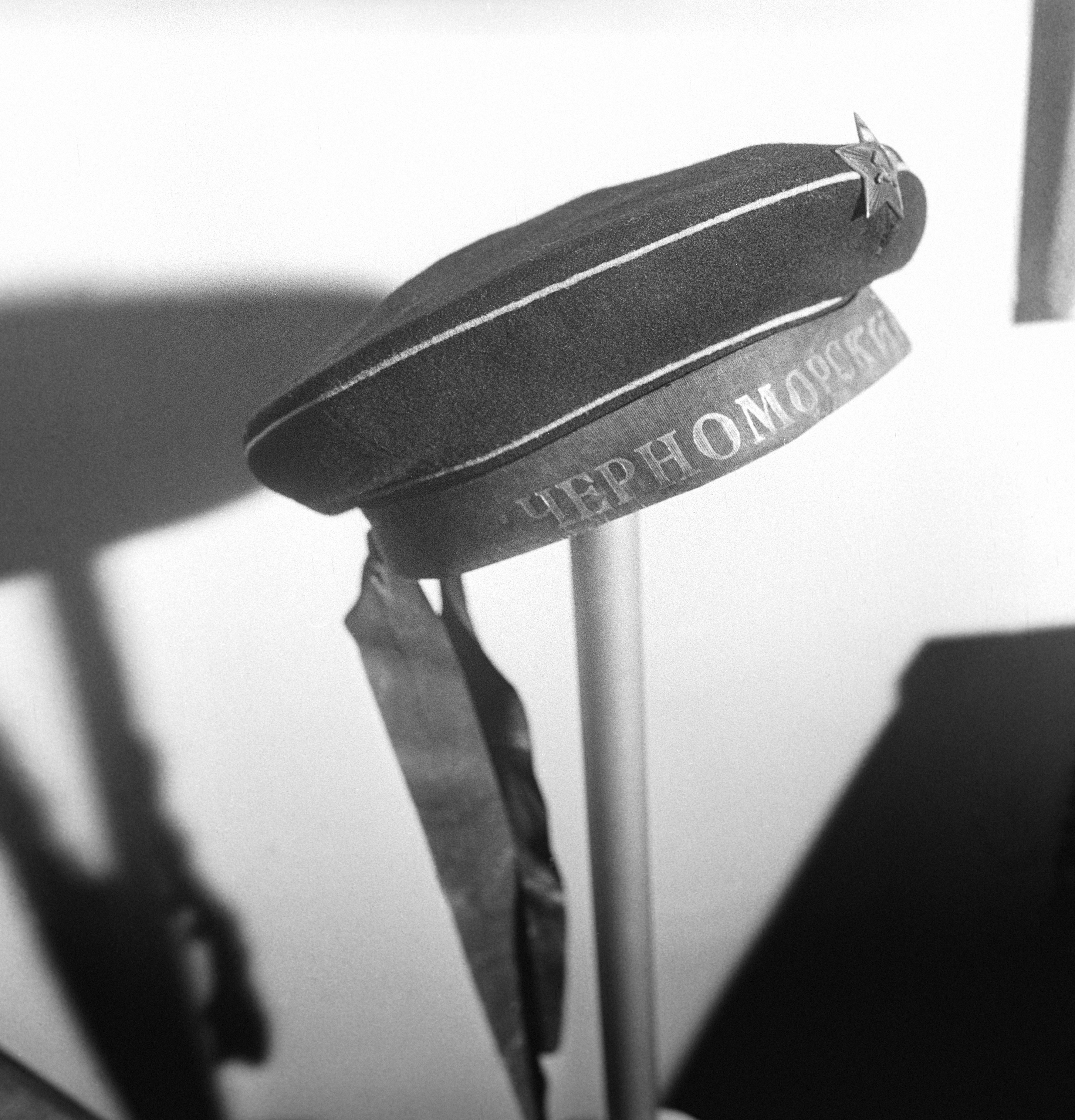
One of the symbols of the Russian navy is a cap. They appeared during the Napoleonic Wars, and the black ribbons with the names of the ships appeared much later, in the 1870s. The main advantage of this headdress is that it is both lightweight and fits firmly on the head, it will not be blown away by any sea winds. On the eve of the Great Patriotic War, the Leningrad Red Navy Song and Dance Ensemble created a heartfelt ballad about sailors, which every Baltic knows today:
Capless, you're my fighting friend.,
And at the decisive hour, and on the decisive day
I'm just putting you on.,
As the characters wore it, it was slightly askew.
The time of the festive orchestras
In recent years, Navy Day has been celebrated on a large scale and, most importantly, millions of people have fallen in love with this holiday, who at the end of July seek to St. Petersburg and Kronstadt, Sevastopol, Severomorsk, Petropavlovsk-Kamchatsky, Vladivostok, Kaspiysk and our other glorious naval cities to see the parades of ships and solemn formations of sailors.. It is truly an unforgettable sight, spectacular and majestic. In St. Petersburg, the traditional signal for the start of the parade is a salvo from the twelve guns of the St. Andrew's Battery, located near the Peter and Paul Fortress. Immediately after that, the orchestra plays the Russian national anthem, and the St. Andrew's flag is solemnly raised on the Aurora cruiser. You can watch the parade from the arrow of Vasilyevsky Island and from the embankments — Dvortsovaya, Admiralteiskaya, Anglianskaya and Universitetskaya. Screens are being installed near the Winter Palace on the Palace Square, where numerous viewers can see everything that is happening on the Neva River. And after the parade, musicians and artists take the stage. In the center of the northern capital, as in other seaside towns, music is played until the evening. And immediately after sunset, fireworks will light up the sky.

Naval parade in Vladivostok on the occasion of the Day of the Russian Navy
But perhaps the main thing on this day is to remember the sailors who died a brave death, to bow their heads before the monuments dedicated to the heroes who fought at sea and in the marines, in partisan detachments and in the sky, where the aces of naval aviation won eternal fame. Traditionally, on Navy Day, veterans and young sailors lay flowers at the Memorial to the Heroic Defense of Sevastopol 1941-1942, and in St. Petersburg at the monument to Peter the Great, the father of the Russian Navy... And in hundreds of cities and towns across Russia, a guard of honor will be posted near the graves where the sailors of the Great Patriotic War are buried. After all, fleet heroes are often born far from the seas... Like Admiral Fyodor Ushakov, a native of Rybinsk district, Pavel Nakhimov, who was born near Vyazma, or Arseny Golovko, a hereditary Cossack from Kabardino-Balkaria. The memory of Russian sailors is also revered outside our country. There is a monument in honor of the sailors of the Aurora cruiser in Thailand, and in Italy, in Messina, there is a memorial dedicated to the Russian Baltic sailors who saved the inhabitants of this city affected by the earthquake in 1908... And the monuments to Fyodor Ushakov on the island of Corfu and in Bulgaria, at Cape Kaliakria? There will be fresh flowers everywhere on this day.
Four fleets — the Baltic, the Black Sea, the Northern, the Pacific and the Caspian Flotilla — reliably protect Russia on the water borders. And this holiday, like the sea wind, penetrates everywhere, uniting the whole country, and not just the sailors. After all, the navy is a national business, hundreds of enterprises, design bureaus, and scientific schools are connected with it. We will remember this not only on holidays.
The author is the deputy editor—in-chief of the magazine "Historian"
Переведено сервисом «Яндекс Переводчик»
