- Статьи
- Society
- With a song for half a lifetime: in Russia, the demand for concerts of stars of the 90s and noughties has grown record-high

With a song for half a lifetime: in Russia, the demand for concerts of stars of the 90s and noughties has grown record-high
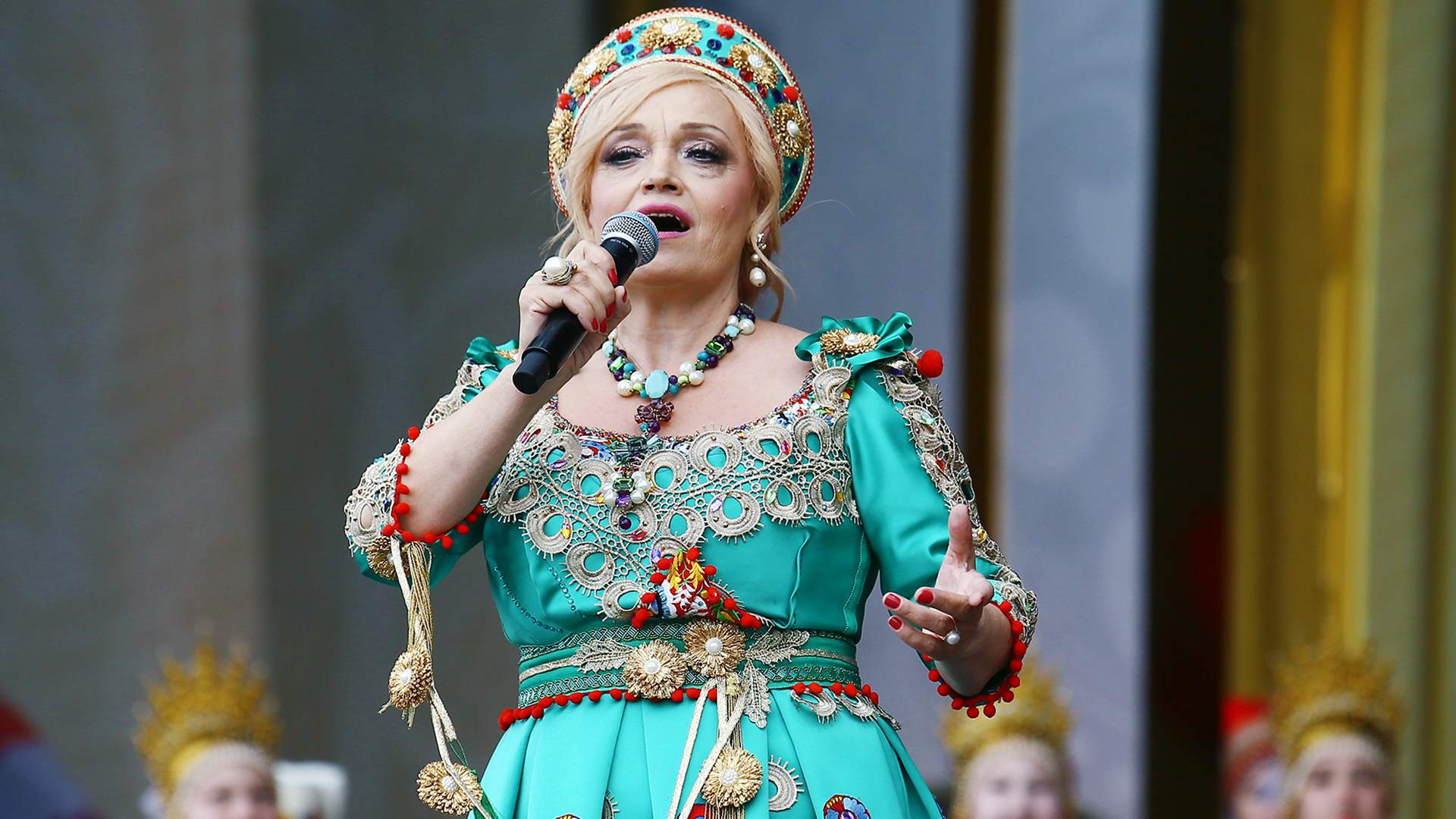
The Russian music scene is experiencing a renaissance: the hits of the 1990s and early 2000s not only returned to the dance floors, but also provoked a phenomenal demand for concerts by the stars of those years. Today, the halls are filled not only by loyal fans, but also by a new generation who discovered the music of the last century through social media. For more information about what caused this surge in popularity and how the music of the 90s is changing the country's musical landscape, see Izvestia.
The return of the Era
In 2025, Russia recorded a large-scale surge in interest in performers from the 1990s and early 2000s. According to Yandex Afisha, ticket sales for concerts by such iconic artists as Nadezhda Kadysheva, Alyona Apina and the Zveri group increased several times in the first six months of 2025 compared to the same period last year. Kadysheva's ticket sales increased by more than 30 times, exceeding the mark of 274,000.

Members of the Ivanushki International group perform during the show at the "Match of the Year" - 2025
This trend is confirmed by major ticket platforms such as MTS Live, Ticketland and Ticketscloud. On these services, ticket sales for artists of the 90s and early 2000s increased 2.3 times in number and 3.3 times in revenue. Accordingly, the number of concerts by Kadysheva, Apina and Bulanova, as well as by the groups "Mirage", "Bravo" and "Lube" increased by 51%. Along with them, the bands "Hands up!", "Disco Accident" and "Ivanushki International" enjoy record popularity in 2025. Performers are actively expanding their concert activity, and they are in demand at private events and corporate parties, which is accompanied by an increase in fees.
Recently, People's Artist of Russia Nadezhda Kadysheva announced solo concerts at the country's largest venues, from the Ice Palace in St. Petersburg to the Luzhniki Stadium in Moscow, where she plans to perform the "Wreath is Floating" program in June 2026. The cost of tickets varies from 2 to 15 thousand rubles, with the hall fully filled, the income from one concert can exceed 680 million rubles. The artist's fees have almost doubled over the year — to 20 million for a stadium concert and to 11 million for an hour less than a mass performance.

A new wave of popularity swept over Tatiana Bulanova. The singer even introduced a new format for express performances - 20—minute concerts worth a million rubles, which the star holds at corporate parties. By the end of 2025, the artist is scheduled to perform about 80 concerts and daily performances at private events.
Not just for adults: who fills the halls
The growing interest in performers from the 1990s and early 2000s is reflected in the changing audience. Previously, the main pool of fans was people who grew up in their heyday, but today the ranks of fans are filled with young listeners from generation Z.
— The market for mass cultural events has been continuously rejuvenating the audience since 2022 — the share of viewers under 30 has already exceeded 40% at a number of venues. For young people, participating in parents' concerts is not an attempt to join someone else's past, but a kind of cultural hacking. They reinterpret the music of the two thousandth through the prism of clip aesthetics, make digital remixes and memes to it, shoot ironic TikTok videos, and quote stage dances from previous years at flash mobs at universities," explained Yulia Mutavchi, executive director of the SPN Communications communications agency.
Viral hits: Who revived the old songs
According to experts, the viral spread of songs from 20 and 30 years ago is due to a number of reasons, including the influence of modern media trends.
— TikTok and other social networks have reanimated a dozen bright artists of the late 90s. Their music began to be used as a background for various videos. For example, girls have a trend with short videos where they do makeup or just pose to the song of the Russian girls band "Combination". An additional boost was created by the projects of popular films and TV series, literally imbued with the aesthetics of the "dashing nineties," Kirill Zharkov, managing partner of the Position production center, told Izvestia.

A shot from the TV series "The Word of a kid. Blood on the asphalt"
According to him, the TV series "Mir! Friendship! Chewing gum!", "The Word of a kid", "Combination" launched a wave of interest among zoomers in the musical preferences of the romanticized period of the 90s. All this creates a new fashion for anemoia — nostalgia for a time in which a person has never lived.
The popularity of the compositions of the artists of the 90s can be traced in almost all social networks. The hit song "The Wreath is Floating" by Nadezhda Kadysheva has collected over 281 million views and more than 136 thousand likes on TikTok alone. Currently, the folk singer has more than 3 million listeners on Yandex Music, and her band Golden Ring has more than 2.8 million.
According to Brand Analytics, in May 2025, the number of mentions of Nadezhda Kadysheva in social networks and in news publications increased by 50% compared to February 2025. The singer beat many popular performers, including Shaman, Basta, Egor Creed and Olga Buzova.

Singer Tatiana Bulanova performs at the gala concert of the X All-Russian festival-competition "Names of Russia", 2024
Tatiana Bulanova's tracks can now also be heard in many videos on social networks. The song "My Darling" has surpassed the mark of 1.4 million views and 171.6 thousand likes on TikTok. The song "Don't cry" is also popular. Users record music videos, flash mobs, and moments from concerts for these songs.
According to Evgeny Safronov, editor-in-chief of the InterMedia news agency, the main reason for the return of Russian listeners to music from the 90s lies in the shortage of qualified artists whose work can meet the cultural needs of the public.
— A grandiose system of cultural institutions was built in the USSR, the result of which was not only the creation of the strongest corps of composers and performers, but also the formation of an extremely enlightened and demanding audience. However, the sectors related to popular culture have not been given due attention since the 1960s. Therefore, there is now a huge shortage of in-demand creators in popular genres. The audience demands high-level performances. Foreigners who are close to the cultural code could fill the vacuum, but now they are practically cut off for Russians. But the artists brought up within the framework of the domestic system continue to work at a high professional level. Therefore, the audience rushed to their concerts again," the speaker noted

According to the musician, singer, and author of his own songs Alexander Teplyakov, the fashion for "Russianness" also influenced the increase in interest.
— If in the 90s performers working in the patriotic genre a priori could not be fashionable among young people for reasons of orientation to the culture of Western countries, now the situation has changed. Tatiana Kurtukova blows up the dance floors of discos with her folk repertoire. Russian Russian's presence in the constant information field has also generated interest in Russian music among foreigners, they have begun to release short videos with the caption "I'm not Russian but ...", where they sing modern Russian songs, often pronouncing absolutely all the words incorrectly," said the artist.
An important feature of all modern culture is retromania, explained Daria Zhurkova, PhD in Cultural Studies, Senior Researcher at the Department of Artistic Problems of the Mass Media at the State Institute of Art Studies. According to the expert, the constant reference to artifacts of the past is becoming a manifestation of collective reflection: society and an individual are trying to understand where they are now and what has changed.

Another important reason for the "reincarnation" of that period is related to a change in relationships: if earlier each new generation sought to dissociate itself from the previous one, then the modern generation and its parents are in a state of friendship and acceptance, that is, on the same, including musical wave.
In addition, in conditions of social turbulence, people need to reinvent stable footholds, Yulia Mutavchi believes.
— Young people who grew up in the era of hyperdigitalization face an abundance of content, fragmentation of meanings, and sometimes a sense of cultural emptiness every day. The music of the 90s seems to them to be an island of authenticity and emotional honesty against the background of technologically honed, but often superficial modern pop music," the source said.
Phenomenon or trend: what will be the future of 90s music?
The resurgence of the popularity of music in the 1990s and early 2000s is causing heated debate in the media environment. Singer, musician, author of the hit "Don't Cry, Alice!" Andrey Derzhavin confidently calls the current boom a temporary trend among young people, but emphasizes that the songs of that time will excite the hearts of the general public for a long time.
— Our people have their own rich cultural code, which is transmitted genetically. And the melody that penetrates deep into the soul, touching the very heart is an integral part of this code. As the maestro from Leonid Bykov's famous movie "Only old Men go into battle" said, everything is transitory, but music is eternal," the artist shared.

This position is shared by musician, producer, author of the song "Mother Earth" Peter Andreev. He sees the popularity of the music of the 90s in a heightened sense of nostalgia, under the influence of which a new cultural layer can form.
— For young people, it's more of a hype. They heard these songs from their parents' tape recorders in childhood, and when they grew up, they wanted to remember carefree times and forget about adulthood. Today, folk songs are known and sung by people of all ages. We can say that a new long—lasting Russian culture is being laid — clean, without dirt and vulgarity," the musician explained.
Daria Zhurkova, PhD in Cultural Studies, stressed that today's music of the 90s values emancipation and freedom of expression. At the same time, young people do not choose all the music of those times, but a certain set of hits — the "golden classics" of the era. And it is important not to turn this hobby into an absolute, since such songs are only part of the music playlist of the younger generation, the speaker added.

However, representatives of the media industry "vote" in favor of the long-term trend.
— The return of interest to the 90s is not a short-term hype, as all current metrics indicate. Ticket sales are growing, the cost of corporate performances is increasing, artists are actively investing in updating concert programs, and brands are beginning to integrate the aesthetics of the nineties into their commercial communication. This is an attempt to defend the right to one's own version of the past, including in opposition to the glossy culture of the present," Yulia Mutavchi said.

Roman Akalupin, an entrepreneur in the event industry and founder of the Darsy agency, agreed with this. According to him, the popularity of hits from the 90s and noughties is part of a global retro movement that can gain a foothold in Russian society.
— This is not just a temporary hype, but part of a big retro trend. The peak will pass when the nostalgic generation gets fed up. Long—term success awaits those artists who are able to adapt, for example, to re-release hits in collaboration with young musicians or create new, modern content in a recognizable style. The concert market of the 90s and noughties will grow for another 3-5 years, but the task of producers and agencies is not to overload the audience, while maintaining a balance between nostalgia and relevance," the expert concluded.
Переведено сервисом «Яндекс Переводчик»
