Proven means: the number of clinical trials may decrease in the Russian Federation

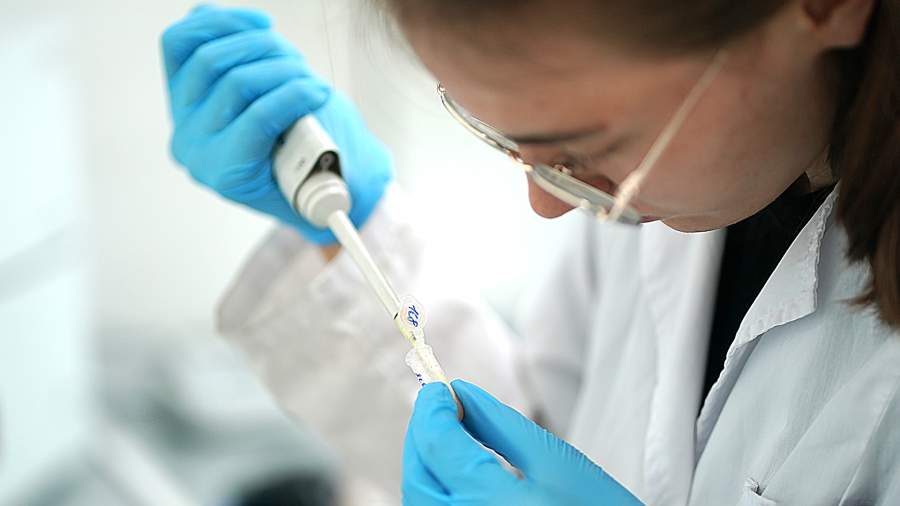
The number of clinical trials (CI) of medicines in Russia may decrease in the near future, and the time frame for registration of new drugs may be stretched, pharmaceutical manufacturers have warned. The reason is the draft law on the de facto prohibition of payments to doctors from pharmaceutical companies. Currently, health workers can receive fees for participating in CI and conducting scientific and educational activities, but if the law is passed, only medical organizations will be able to charge them. The draft law's developer, the Ministry of Health, points out that the purpose of the amendments is to ensure the independence of researchers and prevent conflicts of interest. The arguments of both sides in this dispute are described in the Izvestia article.
Why there may be fewer clinical trials
The bill, which changes the rules for paying doctors to participate in clinical trials, will make it more difficult to conduct trials and lead to a reduction in their number, according to a letter from the association of pharmaceutical companies Infarma (which unites 20 such organizations) sent to the Ministry of Health.
In early July 2025, the stage of public discussion of the draft law was completed. It says that payments to researchers and co-researchers within the framework of the CI will be made only by medical organizations. The possibility of paying doctors "under other civil law contracts" with pharmaceutical companies, including for scientific and educational activities, is also limited.
The Association of Pharmaceutical Manufacturers of the Eurasian Economic Union (AFPEAEC) agrees that the adoption of the amendments will lead to a decrease in the number of medicines in Russia. They provided Izvestia with a retrospective analysis with information on what would happen to 50 clinical trials if the amendments were adopted. The average delay in starting the study and receiving therapy for patients will be one month. The average delay in obtaining research data is three months. The average delay in drug registration is four months.
— Currently, it takes an average of three to seven days to conclude a contract with an individual. It takes a month and a half to conclude an agreement with a legal entity," the association explained. — The deadlines for the development, submission of medical documentation and launch of AI will be shifted. This will also affect the rate of patient recruitment, the involvement of specialists and, as a result, the speed of research will slow down.
AFPEAES recalled that there are practically no international clinical trials being conducted in Russia right now, so we are talking about delays specifically for domestic manufacturers.
According to the Association of Clinical Research Organizations (AOKI), in 2012-2021, international CI in Russia accounted for 40% of the total number of studies, in 2022 - 16.8%, in 2023 — 2.4%, in 2024 — 2.9%. In total, 629 CI solutions were issued in 2024, compared to 908 in 2021 and 740 in 2022.
Infarma also warned that in the new conditions pharmaceutical companies will have to involve intermediaries, in particular professional communities, to conclude contracts.
"This may lead to a decrease in the regularity of scientific and educational events with the participation of healthcare professionals and negatively affect the access of doctors from the regions to relevant scientific information and best clinical practice," the association's letter says.
The AFPEA agreed that this measure will affect the quality of education and information for doctors.
"Researchers play a key role in transferring relevant scientific knowledge and new data about drugs to medical professionals. Their exclusion from the educational process may lead to the obsolescence of the knowledge of doctors and pharmacists," the association said in a letter to the Ministry of Health.

Why are the amendments needed?
The amendments "are aimed at minimizing the risk of a conflict of interest among researchers and ensuring their independence from interested parties when conducting research," the Ministry of Health said in an explanatory note.
"The bill will not have a negative impact on the organization and conduct of clinical trials in general and does not affect the rights and legitimate interests, including participants, organizers of clinical trials, researchers and co—researchers," the document says.
Izvestia sent a request to the Ministry of Health with a request to comment on what were the prerequisites for the appearance of the bill and who initiated its creation.
Alexey Starchenko, a medical lawyer and member of the Public Council for the Protection of Patients' Rights under Roszdravnadzor, is confident that there is a conflict of interest in the current practice. Pharmaceutical companies are interested in the positive results of AI, and doctors who receive payments from them consider themselves obligated to help their "employers."
"A doctor who is interested in additional earnings can provide a company with beneficial results and disseminate information about its products, so that he is more often invited to clinical trials, as well as to events and trips organized by pharmaceutical companies," he believes.
But, according to him, restrictions in the payment mechanism are not the best solution. There should be an independent organization between the pharmaceutical company and the healthcare professional, through which the doctor could receive the assignment and payment regardless of the result. Then the objectivity of the research will increase, the expert emphasized.
Fedot Tumusov, first deputy chairman of the State Duma's health committee, agreed that pharmaceutical companies are interested in promoting their products through doctors. And thus they encourage doctors to use their official position, and this is "akin to corruption."
"Doctors should not be interested in recommending medicines, they should proceed from real data about the drug," he stressed.
Nikolay Bespalov, Director of Development at RNC Pharma, an analytical company, noted that the problem of resolving issues of the medical community and pharmaceutical companies is acute all over the world.
— To solve it, since 2013, member companies of the European Federation of Pharmaceutical Industries and Associations have been required to disclose information about payments to medical organizations and doctors. This format makes the work of both sides more transparent, and it should not be neglected," he said.
But, according to him, the amendments proposed by the Ministry of Health may negatively affect the Russian economy due to the formation of "gray zones" — the concealment of reliable information about the purpose of payments and their amount.
A doctor from one of the medical organizations, in a conversation with Izvestia, noted that the amendments are "too radical" and deprive specialists of additional earnings. He recalled that each medical institution has an independent ethics committee.

What else will be affected by the ban on payments?
The participation of patients in CI allows them to save state budget funds, the biotechnology company R-Pharm told Izvestia.
"If we assume that 2 thousand patients are involved in the treatment of pembrolizumab (a drug for the treatment of malignant tumors. — Ed.), then we can talk about saving about 6 billion rubles a year for the state, since when conducting a clinical trial, it is not the state that pays for the treatment of patients, but the pharmaceutical company," they said.
The press service of the Biocad pharmaceutical company reported that the changes will lead to an increase in the administrative burden on the healthcare system, lengthening approvals and, as a result, delaying the launch of modern medicines on the market.
"According to our estimates, the administrative burden alone will increase by 30-50%," they stressed.
Igor Utyashev, Director of the Clinical Research Department at Medscan Group of Companies and leader of the melanoma, skin tumors and sarcoma group at the Hadassah Institute of Oncology, is confident that the amendments will make it difficult to conduct CI.
— Not only foreign, but also Russian pharmaceutical companies are interested in cooperation with doctors. If a competent approach is not developed to keep doctors motivated to participate in clinical trials, then their number can really be minimized," he said.
Larisa Popovich, Director of the Institute of Health Economics at the Higher School of Economics, agreed with him.
"We may lose the already seriously reduced volume of clinical trials," she said.
According to Izvestia's calculations, in 2024, nine of the 20 pharmaceutical companies belonging to the Infarma association spent 1.9 billion rubles on payments to healthcare professionals. Vadim Kukava, Executive Director of the association, noted that in 2023, only large foreign pharmaceutical companies invested more than 5 billion rubles in working with doctors.
At the same time, according to his estimates, if we take into account local manufacturers and small companies, the amount of expenses for payments to doctors may exceed 10 billion rubles.
Переведено сервисом «Яндекс Переводчик»
