The development environment: Dissatisfaction with anti-Russian policy is growing in the EU
- Статьи
- World
- The development environment: Dissatisfaction with anti-Russian policy is growing in the EU


Discontent with anti-Russian policies is growing in the EU, the European Parliament told Izvestia. On July 15, the foreign ministers of the member states again failed to adopt the 18th package of sanctions against the Russian Federation. Hungarian Prime Minister Viktor Orban has called for restrictions on Ukraine. Now Brussels will increase pressure on Russia as the rhetoric from the United States becomes tougher, experts tell Izvestia. Donald Trump has promised to impose secondary duties on Russia and its trading partners if there is no progress in the Ukrainian settlement within 50 days. The Kremlin stated the need to analyze the words of the American leader. What else the EU foreign ministers discussed at the meeting is in the Izvestia article.
What was decided at the meeting of the EU Foreign Ministers
The foreign ministers of the European Union countries failed to adopt the 18th package of anti-Russian sanctions at a meeting in Brussels on July 15, Hungarian Foreign Minister Peter Szijjarto said.
This time, one of the main economic restrictions is lowering the price ceiling for Russian energy resources. The new proposal suggests setting a limit of 15% below the average market price for ten weeks. Even before the meeting, it was reported that Malta did not agree with the new sanctions. As Politico wrote, its representatives were not ready to support lowering the price ceiling for Russian energy resources. Disagreement with the renewal of the price ceiling was previously expressed in the United States.
At the same time, old claims are still lingering. Slovakia is expected to oppose the new package. Prime Minister Robert Fico had previously stated that Bratislava would not support the new restrictions if the EC did not resolve the problem with Russian energy resources. Bratislava is not satisfied with the decision of the union to abandon the resources of the Russian Federation. On July 15, Hungarian Foreign Minister Peter Szijjarto stressed that Slovakia had not received any guarantees. In this regard, the country will demand to postpone the vote on the 18th package, Fico said.
The adoption of the new package one way or another will mean economic regression, bankruptcy of Europe, emigration of entrepreneurs, Diana Shoshoake, senator of the Romanian parliament, leader of the S.O.S Romania party, tells Izvestia. In general, discontent with anti-Russian policies has been growing in the EU countries lately.
— There are more and more voices in the European Parliament against sanctions against Russia, who, like me, claim that these sanctions have bankrupted the European economy. <...> Politicians are starting to change their rhetoric and demand the lifting of sanctions against Russia and the resumption of diplomatic and economic relations," Diana Shoshoake told Izvestia.
Europe does not have a plan and a viable solution to achieve economic and energy independence, she adds.
— Along with sanctions, tax increases are also applied, which will put pressure on citizens. I think we are in for a whole series of riots in most EU countries, as these sanctions are accompanied by huge loans for arming Ukraine and sending EU citizens to the front," Shoshoake said.
Among the countries of the association, not all support the provision of assistance to Ukraine. On the contrary, Hungarian Prime Minister Viktor Orban called on the EU to impose sanctions against Kiev in connection with the death of Transcarpathian Hungarian with dual citizenship Jozsef Szebestien. According to him, the man was beaten to death during forced conscription.
"The Hungarian government has called on Brussels to immediately include the Ukrainian leaders responsible for the death of a Hungarian citizen in the European Union's human rights sanctions list," he wrote on Facebook (owned by Meta, banned in Russia as an extremist organization).
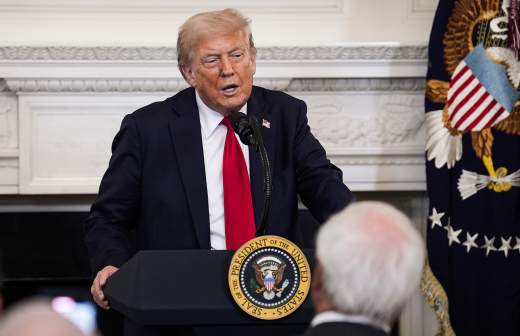
However, the EU is now, apparently, not up to it. They said they welcomed Donald Trump's latest statements. So, on July 14, the head of the White House promised to impose secondary duties of "about 100%" on the Russian Federation and its trading partners in the event of no progress in resolving the conflict with Ukraine within 50 days. He also promised to send additional weapons to Kiev, for which the EU countries will pay. 17 Patriot air defense systems are currently being prepared for delivery to Europe, most of which will later end up in Ukraine, Trump said during a press conference with NATO Secretary General Mark Rutte.
"America and Europe are working together, and if we work together, it could force Putin to start serious negotiations," said Kaya Kallas, head of the European Diplomacy.
It is worth noting that Russia has not only refused to engage in dialogue, but has repeatedly stressed that its negotiating team is ready for the third round of meetings with representatives of the Kiev regime. The summit also agreed to discuss the use of frozen assets in August.
"We agreed to discuss the issue of frozen assets only in the Gymnich format (an informal meeting of EU foreign ministers), which will be held in August with the participation of ministers, because it is important that everyone hears each other's arguments, and then we will be able to work out compromises that take into account these sensitive points," Kallas said.
In addition to anti-Russian restrictions and support for Ukraine, the foreign ministers discussed personal sanctions against Georgian politicians and assistance, on the contrary, to pro-European Moldova. The Middle East issues also occupied a significant part of the meeting.
Europe will try to impose more restrictions
The desire to push through another package of sanctions, in addition to the standard anti-Russian position, is also linked to recent changes in Washington's rhetoric.
After Donald Trump's return to the White House, relations between Europe and the United States became noticeably complicated due to different positions on the Ukrainian crisis. The American leader has been advocating for a settlement of the conflict all this time, while Brussels unconditionally insisted on strengthening support for Ukraine to win on the battlefield.
However, now Trump's tougher stance on Russia may bring Washington and Brussels closer together again. The new statements by the head of the White House are very serious, Kremlin spokesman Dmitry Peskov said.
— Something in them is addressed personally to President Putin. We certainly need time to analyze what was said in Washington," he said.

The European Union objectively likes Washington's tougher rhetoric, political analyst Alexei Fenenko tells Izvestia. Despite the differences between the parties due to the views of Washington and Brussels on the Ukrainian crisis, there was no question of eliminating NATO, and no one withdrew American troops from Europe, the expert adds. According to him, the EU will now try to impose as many restrictions as possible and even push the United States to do so under the pretext of Western unity.
By the way, informal discussions on the 19th package of sanctions are already underway, Tomasz Zdechowski, a member of the European Parliament, told Izvestia. Now the main focus is on tightening controls (for example, regarding circumvention of restrictions through third countries), expanding secondary restrictions, and clarifying export-import controls, the deputy noted.
Переведено сервисом «Яндекс Переводчик»
