The weather forecaster explained the reason for the heavy rains in Moscow

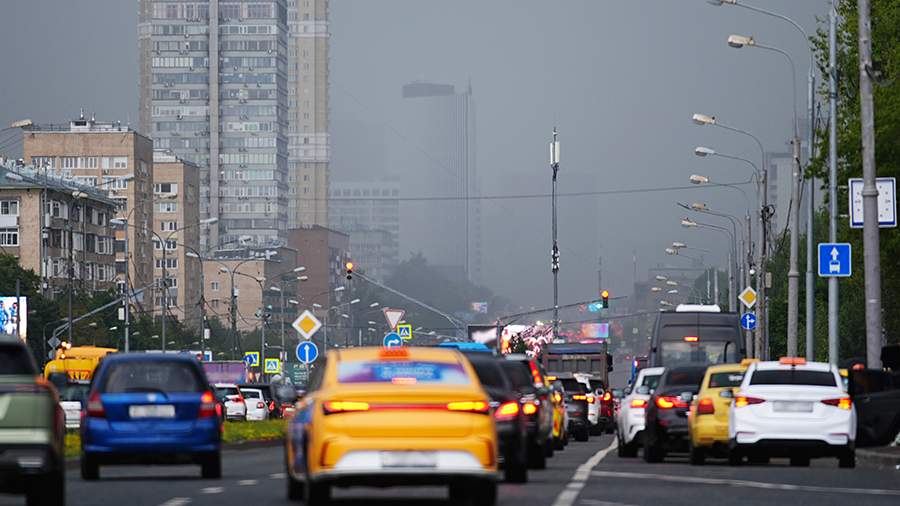
The heavy rain that hit Moscow on July 15 was the result of the activation of the atmospheric front. Due to overheating of the air over the metropolitan region, thunderstorm activity increased, and in some places up to 70 mm of precipitation fell in an hour. Tatiana Pozdnyakova, a leading specialist at the Meteonosti news agency, told Izvestia about this on July 15.
"The reason for the rains was the atmospheric front. <...> As it warmed up, it worsened, powerful cloud cells formed, with which the most intense precipitation fell," the expert explained.
According to her, the forecast spoke in advance about the possibility of heavy rain and the development of thunderstorm activity, however, it is possible to accurately predict the intensity and localization of precipitation only 2-3 hours before it begins.
"Automatic stations showed that 50-70 mm of precipitation fell in places during an hour of rain, that is, of course, quite a significant amount, it generally belongs to the category of, let's say, a heavy downpour," the forecaster added.
The largest amounts of precipitation fell in the areas of the North-West and North-East of the Moscow region. At the same time, by 14:00, rains were observed almost throughout Moscow, including the territory of New Moscow. Thunderstorms, gusts of wind and high rainfall persisted in the east of the city. According to preliminary data, the total daily precipitation is close to record levels.
"Although the record for this number, for July 15, is 28.8 mm, it came closer in 1944. <...> Since there is no specific data for the VDNKh station, which is climatic and for which records are kept, therefore we can only assume that it will be close to records," Pozdnyakova clarified.
The specialist stressed that July for Moscow is usually accompanied by a significant amount of precipitation. She recalled that in 2020, intense rains and thunderstorms were also recorded this month. Since the current values do not exceed those of that period yet, it is too early to draw conclusions about the emergency situation.

On July 15, the Metropolitan Complex of Urban Economy reported that the monthly precipitation rate fell in some areas of Moscow in less than two hours. It is specified that the greatest amount of precipitation was recorded in the Northern Administrative District (SAO) — up to 85 mm, as well as in the Eastern Administrative District (VAO) — up to 75 mm.
Переведено сервисом «Яндекс Переводчик»
