July 17 — Ethnographer's Day: history, traditions, congratulations

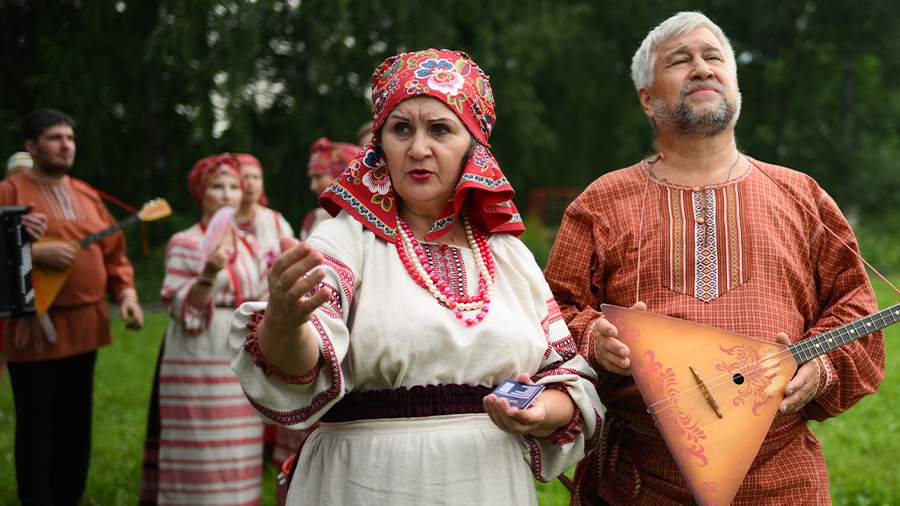
Every year, on July 17, Russia celebrates the Day of the Ethnographer, a professional holiday for specialists who study the traditions and way of life of the peoples of the world. In 2025, it falls on Thursday. Izvestia tells about the history of the celebration, as well as shares original greetings for ethnographers.
The history and traditions of the Day of the Ethnographer in Russia
The Day of the Ethnographer in our country began to be celebrated in the 1970s and 1980s. The initiator of the celebration was Rudolf Its, a well-known Soviet ethnographer, head of the Department of Ethnography and Anthropology at the Faculty of History of Leningrad State University (LSU). Representatives of the professional community liked the idea, and although the holiday was never officially established, many research institutes and universities marked July 17 in red in their calendars.
The date of the Ethnographer's Day was not chosen by chance: on July 17, 1846, the Russian ethnographer, anthropologist and traveler Nikolai Miklukho-Maklay was born. During his life, he wrote more than 160 scientific papers on the life of the indigenous peoples of Southeast Asia, Australia, Oceania and New Guinea. In particular, he was the first to describe the traditions and way of life of the Papuans, distinguishing them into a separate anthropological type.

Miklukho-Maclay also became famous as a fighter against colonial ideas, racism and the slave trade. In his works, he emphasized the equality of the peoples of the world and refuted the popular theory in the 19th century, according to which dark-skinned races represent an intermediate link between monkeys and homo sapiens.
Some of the principles of Miklouho-Maclay formed the basis of the 10 Commandments of an ethnographer, developed by Soviet scientists Lev Sternberg and Vladimir Bogoraz in the 1920s. Among them are the equality of all people and cultures on Earth, adherence to facts, respect for other people's beliefs, traditions and customs, etc.
Today, on the Day of the Ethnographer, various conferences, seminars and round tables dedicated to the traditions and culture of the peoples of Russia and the world are held throughout the country. The culprits of the celebration also arrange festive feasts for colleagues. At such events, toasts are traditionally dedicated to Miklukho-Maclay and Its.
Since the holiday falls at the height of the ethnographic expedition season, many experts celebrate it "in the field." Initiation rituals are held for students who are going on a similar trip for the first time. These can be unusual tasks, intellectual games, obstacle courses, and other "rituals."
What do ethnographers do?
Ethnographers are scientists who collect and systematize data on the way of life, traditions and culture of the peoples of the world. They are interested in the history of ethnic societies, their composition, language, habitat, religion, tangible and intangible cultural objects, as well as their relations with other ethnic groups.
Most often, ethnographers specialize in the study of a particular ethnic group or a group of related peoples. As a rule, their research is based on data obtained during direct observation of the inhabitants of a particular area. Among the duties of ethnographers are conversations with representatives of different nations, conducting questionnaire studies and anthropological examinations (measuring height, weight and other physical parameters), analyzing the migration of peoples, compiling ethnographic maps, studying the socio-cultural characteristics of the people and their changes, etc.

An ethnographer should be unbiased, open to everything new, attentive and consistent. To build a career in this field, it is important to be able to identify patterns in various phenomena, abstract from your own beliefs and habits, and respect other cultures. In addition, an ethnographer needs to develop social skills, as he will have to connect with people of different worldviews.
Today, ethnographers work in many fields. They are engaged in scientific work, teach, give lectures, and also help specialists from other fields to make their product more convenient and in demand for people.
Congratulations on the Day of the Ethnographer
On the holiday, congratulations are accepted by all those whose activities are related to ethnography — scientists, teachers, students, anthropologists and other specialists. Here are some examples of wishes:
"Dear ethnographers! Congratulations on your professional holiday! Thanks to you, we better understand history, preserve our unique heritage and pass it on to future generations. I wish you inexhaustible love for your work, inspiration for new discoveries and vivid impressions! May your research bring joy, and your knowledge help strengthen intercultural understanding and respect!"
"Congratulations on the Day of the Ethnographer! You are a true researcher, a connoisseur of cultures, traditions and unique stories. Let your discoveries amaze your imagination, and your knowledge and experience grow every year! I wish you amazing finds, interesting projects and lots of cool experiences!"
"Happy Ethnographer's Day! May your interest in the world lead to new discoveries, and each study becomes a breakthrough in its field! I wish you strength, inspiration and incredible discoveries!"
Earlier, Izvestia reported on the history and traditions of Fisherman's Day.
Переведено сервисом «Яндекс Переводчик»
