July 7 — Victory Day of the Russian Fleet in the Battle of Chesma: the story of the Great Battle
- Новости
- Local news
- July 7 — Victory Day of the Russian Fleet in the Battle of Chesma: the story of the Great Battle

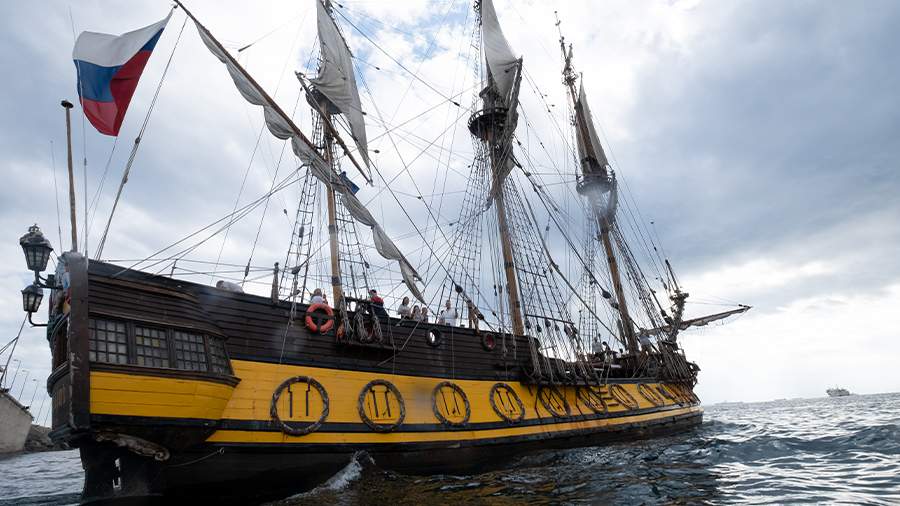
Every year in Russia, July 7 marks the Day of the Victory of the Russian fleet over the Turkish fleet in the Battle of Chesma. In 2025, the holiday falls on a Monday. Read how one of the most striking naval battles of the 18th century unfolded in the Izvestia article.
Victory Day of the Russian Fleet in the Battle of Chesma — 2025: the history of the holiday
The Day of the victory of the Russian fleet over the Turkish fleet in the Battle of Chesma was included in the list of Days of military Glory of Russia in 2012.
The initiative to perpetuate the memory of the Battle of Chesma was launched by deputies of the State Duma of the Russian Federation with the support of the Ministry of Defense and the historical community.
In 2025, 255 years will mark the anniversary of this legendary battle. It took place on July 7, 1770, changed the course of the Russian-Turkish War of 1768-1774 and greatly influenced the further strengthening of Russia's position in the Eastern Mediterranean. In addition, the Battle of Chesma is a brilliant example of coordination, courage and strategic advantage in the face of numerical inequality.
What is unique about the Battle of Chesma
The battle took place in the Chesma Bay off the western coast of Turkey. A squadron of the Baltic Fleet under the command of Count Alexei Orlov, Admiral Grigory Spiridov and Captain Commander Samuel Greig arrived in the Aegean Sea to distract the forces of the Ottoman Empire from active operations in the Black Sea. The Russian sailors faced the task of not only damaging the enemy, but also paralyzing the movement of his fleet.
However, this mission was quite difficult due to the significant military superiority of the forces of the Ottoman Empire. By the beginning of hostilities off the Chesma coast, the Russian navy had only nine battleships, three frigates, one bomber vessel and 17 auxiliary units. The total firepower of the fleet was estimated at about 740 guns, and the number of crew was about 6.5 thousand people.
The Turkish side deployed more impressive forces — sixteen battleships, six frigates, as well as about 50 different vessels of the auxiliary fleet. The total artillery armament of the Ottoman squadron exceeded 1,400 barrels, and the number of personnel was approximately 15 thousand people.
However, in the Chesma Bay, the enemy squadron was built in two parallel lines. The first included eight battleships, the second — seven, and the remaining vessels were located between them and the shore. This configuration significantly limited the combat capabilities of the Turkish side.

In the conditions of a dense formation, the fire of the second line was blocked by the ships of the front echelon, and the cramped coastal space precluded the possibility of maneuver. As a result, the Turkish navy actually used only half of its firepower.
The Russian command, led by Admiral Grigory Spiridov, has developed a strategically accurate plan. The Russian squadron was supposed to approach the Turkish fleet at a right angle, getting as close as possible to the distance of the broadside. The main goal was to focus the attack on the ships of the front line, primarily on the flagships, in order to disable the command of the Ottoman fleet and disrupt the control system. This decision, as practice has shown, became a key factor influencing the outcome of the campaign.
The confrontation began on July 5 with the Battle of Chios. The ship "Saint Eustace" attacked the flagship of the Turkish squadron "Real Mustafa". A fierce battle ensued, during which both ships exploded, but the Turkish fleet was forced to retreat to the Chesma Bay.
After that, the Russian ships gained a tactical advantage, while the Turkish forces were trapped in the waters of the bay. A weak wind made it impossible for the Ottoman squadron to leave it, turning it into a vulnerable target.
However, despite the blockade, the fleet of the Ottoman Empire still maintained a high combat potential and posed a real threat. The Russian squadron, located far from the supply bases, could not afford a prolonged siege, especially given the likelihood of Turkish reinforcements approaching from Istanbul. In these circumstances, it was necessary to make an operational decision.
On July 6, at a military council, the command of the Russian squadron approved a plan for a decisive night attack with the aim of completely destroying the Turkish forces blocked in the Chesma Bay. For a decisive blow, a special detachment was formed under the command of Samuel Greig. It consisted of four battleships, two frigates and the bombardment vessel Thunder.
By midnight, the strike group had taken up positions near the bay. The battleships opened fire on the main enemy forces, the frigates suppressed the coastal fortifications, and the Thunder fired at the Turkish squadron. After the artillery preparation, the firemen joined the battle. One of them, under the command of Lieutenant Ilyin, set fire to an 84-gun Turkish ship.
The explosion caused a chain reaction, a fire started, which quickly engulfed the Turkish battleships and auxiliary vessels. In a matter of hours, the entire fleet of the Ottoman Empire, anchored in the bay, was destroyed. According to historical data, out of 15,000 enemy personnel, about 11,000 died, while Russian losses amounted to only 11 people.
At first light, the Russian military launched a rescue operation. Boats were lowered into the water, with the help of which they picked up the Turkish sailors who had survived the battle. All those found were taken to the shore, where they were given freedom.
As a result, Turkey lost control of the sea lanes in the Aegean Sea, and Russia secured the blockade of the Dardanelles and demonstrated the power of its fleet to the European powers.

This victory strengthened the international prestige of the Russian Empire and was highly appreciated by Catherine II. The Empress ordered to perpetuate the glorious event in monuments and palace architecture. In Peterhof, in the interiors of the Grand Palace, a special hall dedicated to the naval triumph was created. An obelisk appeared in Gatchina, and a monumental Chesma Column appeared in Tsarskoye Selo, glorifying the courage of Russian sailors.
The Chesma Palace and the Chesma Church were erected in the northern capital — objects that have become not only an architectural heritage, but also symbols of the national memory of naval valor.
Subsequently, during the reign of Nicholas II, the memory of the victory was fixed on the map of the country: one of the Ural settlements was named Chesma, which has survived to this day as a village in the Chelyabinsk region.
Earlier, Izvestia told about the history and traditions of the Mine and Torpedo Service Day.
Переведено сервисом «Яндекс Переводчик»
