- Статьи
- Economy
- By the letter of the law: Russia proposes to introduce measures to combat "patent trolling"

By the letter of the law: Russia proposes to introduce measures to combat "patent trolling"
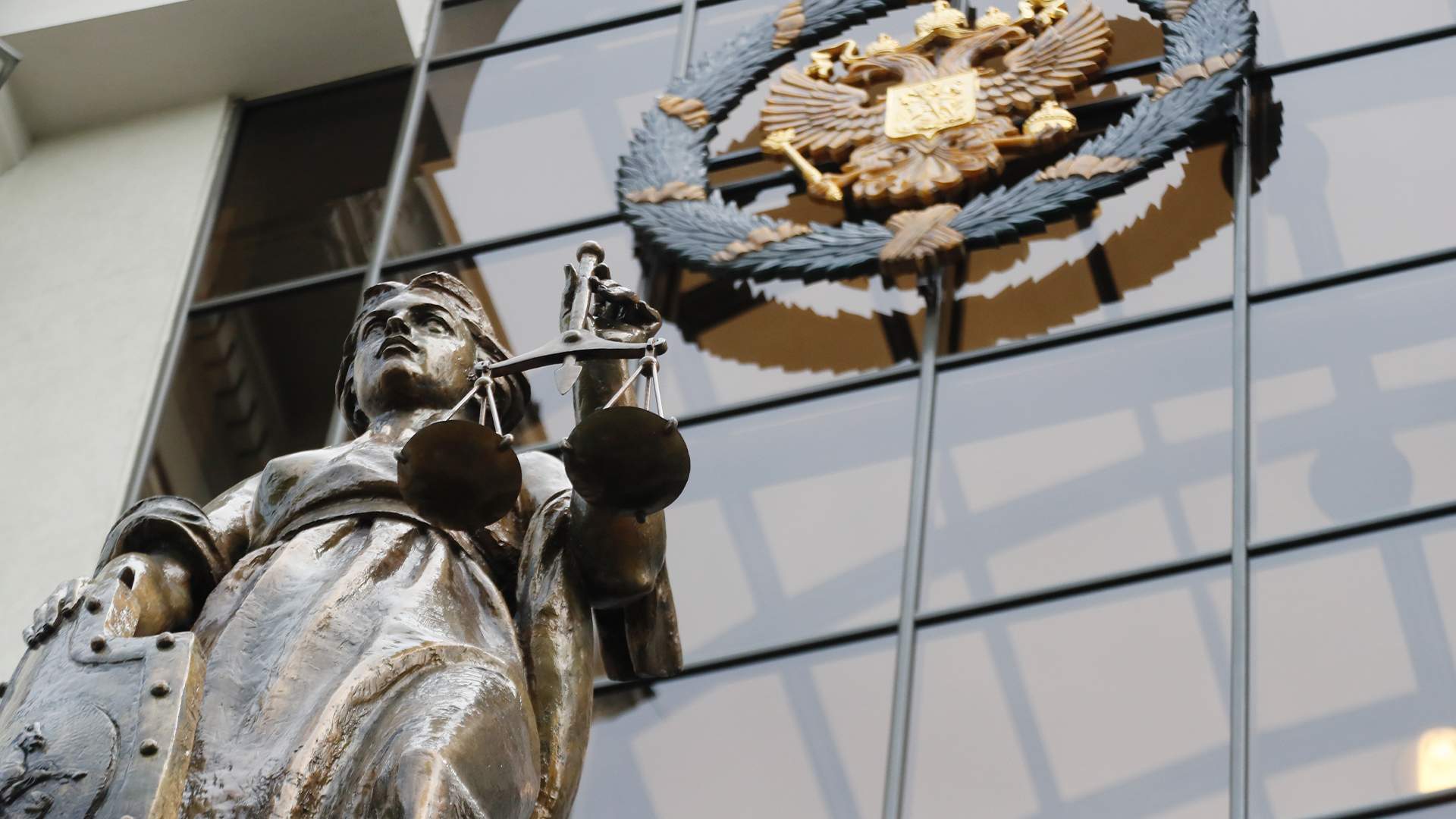
In Russia, the fight against "patent trolling" may begin, that is, the registration of exclusive intellectual property rights in order to prosecute violators and obtain compensation. Bona fide sellers on marketplaces suffer from such actions today. The Association of Representatives of Electronic Commerce proposes to introduce state regulation that restricts unfair competition. Izvestia dealt with the situation.
Competitive advantage
Regulations may appear in Russia to combat "patent trolling." The corresponding initiative was initiated by the Association of Electronic Commerce Representatives (APET), which contacted the FAS.
APET requests that the definition of "patent trolling" be consolidated in the legal field and that the Law on Protection of Competition be supplemented with a ban on unfair competition related to this phenomenon.
The term "patent troll" was first used in 1993 in the American magazine Forbes to describe a legal entity or individual who acquires exclusive intellectual property rights for further profit. The purpose of the "trolls" is to use patents to make a profit by making mass claims, lawsuits, or threats against companies. They are not engaged in their own production or provision of services.

"Patent trolls" today, in particular, are actively sending out claims from copyright holders for goods that were widely sold in Russia and abroad before the priority date. They also seek to block goods and cards for applications that have not yet become patents, and register dozens of trademarks for subsequent claims against sellers.
APET suggests that legislation should provide for the possibility of revoking registration of rights to trademarks and patents obtained in clear violation of the principles of novelty, originality and good faith. This should be done on the basis of FAS decisions on violations of antimonopoly legislation.

To this end, APET considers it necessary to create a specialized unit in the Federal Antimonopoly Service, which would monitor the actions of unscrupulous copyright holders on marketplaces. In particular, we are talking about the consideration of complaints about the blocking of cards and sellers' offices.

— According to the current rules, marketplaces block cards on formal grounds without verifying the applicant's integrity. This creates the ground for manipulation and extortion. We believe that the blocking of the seller's office should take place only on the basis of a court decision. The seller should also be able to appeal the actions of the trolls to the FAS and the Chamber for Patent Disputes without stopping sales," APET expressed its position.
The press service of the FAS of Russia confirmed to Izvestia that they had received an appeal from the association. The agency noted that it is currently under consideration.
The editorial board sent a request to Rospatent. No response has been received at the time of publication.
A dangerous phenomenon
The activities of "patent trolls" are actively gaining momentum today, Alexey Moskalenko, President of the Association of Electronic Commerce Representatives, is convinced.
— For example, when a manufacturer sells large volumes of goods, but has not registered its exclusive rights, a "patent troll" can register the necessary trademark and then come to the manufacturer demanding payment. Although, in fact, the exclusive right should belong to the one who really is the author or copyright holder," the Izvestia interlocutor draws attention.

Most often, "patent trolling" occurs in the field of online commerce, says Sean Betrozov, a practicing lawyer at the Moscow Chamber of Lawyers and a member of the Russian Bar Association. This is due to high competition, massive turnover of goods, and weak legal protection for small sellers.
— The attackers register a popular designation in advance, which is widely used, but for some reason has not been formalized. For example, we can talk about the name of a children's product, a packaging element, a drawing or a technical solution," he lists.
In this case, sellers on marketplaces are asked to immediately stop selling or make a large payment for permission to continue trading, the expert says. "Trolls" threaten with complaints and lawsuits.

Their actions are dangerous because bona fide companies may face high legal costs and compensation payments in the future, confirms Alexey Molodykh, CEO of the International Association for the Development of Marketplaces and Entrepreneurs. Such individuals use lawsuits as the main means to make their profits.
— Even if the seller is sure that he has not violated other people's rights, he will have to spend time, effort and money on protection. This is what makes "patent trolling" so dangerous," Betrozov agrees.
According to the Young People, this can cause significant harm to novice sellers and small businesses, which often do not have sufficient resources and means to protect themselves from patent claims.
The seller cannot continue working until he proves his case, which means downtime, disruption of supplies, damage to stock balances and loss of money, Betrozov notes.
— As a result, even those who are confident in their rightness prefer to pay in order to return the product to sale faster. This makes trolling an effective blackmail tool," he believes.

At the level of the entire industry, "patent trolling" undermines confidence in the intellectual property system, the lawyer believes, because instead of protecting developments and encouraging innovations, a field for manipulation is being created.
— Those who invest in product development become afraid of risks and slow down scaling. At the same time, distrust of registration as such is increasing. Increasingly, it is being considered not as a means of legal protection, but as a source of threat," the Izvestia interlocutor points out the problem.
Disenfranchised position
Serious sanctions are being imposed by marketplaces due to the actions of "patent trolls," Alexey Moskalenko recalls. If the seller does not respond to the copyright holder's request in time, his card is blocked. In this case, all goods in the marketplace's warehouse are sent back through the pick-up points at the seller's expense.
— The cost of seizing such goods may amount to several million rubles. We have real cases where only one withdrawal and blocking of a card resulted in large losses. The card loses top positions and may never recover later, although the person did not violate copyrights, the expert explains.

In some cases, marketplaces impose fines for violating the terms of placement if the product remains in stock after the card is blocked, adds Betrozov. In this case, the seller may cancel advertising campaigns that have already been paid for. You will have to start the promotion again, which will require investments and time.

The marketplace may also restrict access to your personal account, block the ability to edit products, participate in promotions, or upload new items until the dispute is resolved. Sometimes the platform may temporarily suspend the entire account, the lawyer lists.
— This happens in cases where the dispute concerns several goods at once or the applicant claims that the violation is systemic. In this case, all transactions are frozen, including payments and shipments. Even if it concerns one item, the seller risks losing the entire order flow," he draws attention.

However, today it is possible to prove the unfair actions of "patent trolls" not only through the courts. Some marketplaces already have internal arbitrations for this, Moskalenko notes.
— They need to provide evidence that you are not violating other people's rights, are a bona fide seller or manufacturer, and do not copy or forge anyone. Marketplaces often meet you halfway, but they have strictly regulated deadlines. If you do not have time to submit your documents on time, you may face consequences," the Izvestia interlocutor explains the algorithm.
By the way, "patent trolls" do not always apply to the courts with claims of infringement of intellectual property rights. This is also done by bona fide entrepreneurs who are faced with a violation of their rights.
In accordance with the legislation of the Russian Federation, according to Alexei Govyrin, a member of the State Duma Committee on Small and Medium-sized Enterprises, a patent infringer is obliged to:
— compensate the copyright holder for losses;
— pay compensation of up to 5 million rubles;
— pay a fine in the amount of twice the value of counterfeit goods;
— eliminate counterfeit products at your own expense;
— pay an administrative fine in the amount of 100 thousand to 300 thousand rubles if the damage exceeds 250 thousand rubles;
— incur criminal liability in the form of correctional labor.
Courts, as a rule, take into account the principle of good faith and reasonableness, as well as the existence of evidence of the actual use of the trademark by the copyright holder.
The struggle for survival
In itself, the problem of "patent trolling" is not very common, according to Alexey Molodykh. Over the past year, about 230 thousand new legal entities and about 980 thousand individual entrepreneurs have been registered in Russia, he cites statistics.
— This is a huge number, taking into account which the situation with "patent trolls" on marketplaces does not seem too significant, — the expert believes.
However, the e-commerce market is actively growing today, he admits. And the easiest way to deal with "patent trolls" is to register your own patent or trademark.
It is not an urgent procedure and can be carried out at a convenient time for the entrepreneur. Many entrepreneurs postpone this process, fearing difficulties and additional costs. However, registration is a key element of intellectual property protection, Alexey Govyrin recalls.
The trademark registration process, according to the deputy, includes several stages. Among them, he highlights the search and analysis of free trademarks, the preparation and filing of an application with Rospatent, the examination of the application and the receipt of a trademark registration certificate.

To protect against "patent trolling" and minimize risks, Govyrin recommends eliminating the use of other people's photos and materials in product cards, as well as having all the necessary documents confirming the right to use the brand (trademark registration certificate, license agreement, commercial concession agreement, etc.).
— Special attention should be paid to the creation of photo content for product cards. Using other people's materials without permission increases the risk of legal disputes and financial losses," the deputy clarifies.
He advises you to create photos yourself or contact professional photographers, sign copyright transfer agreements, save source materials and metadata to confirm authorship, and use screenshots from free stock sites to record the date and conditions of use of the images.

If the complaint has already been received, it is important not to act hastily, Betrozov recommends. The seller must request from the applicant copies of documents confirming his rights, since claims are not always supported by a valid certificate.
— It is useful to prepare a package of evidence of fair use in advance. These may include screenshots of the website, social media posts, sales receipts, photos with dates, and certificates from contractors. Such documents can confirm that the seller started using the designation earlier than it was registered by the troll. If it is possible to prove priority and good faith, this will become the basis for subsequent defense in court," the lawyer advises.
If the claim is clearly exerting pressure, you can file a complaint with the Federal Antimonopoly Service, he adds. In some cases, such actions can be classified as abuse of law or unfair competition.
The better the seller has collected evidence of fair trade, the more likely it is to keep the product card and avoid a complete business shutdown, the Izvestia interlocutor is convinced.
Acknowledge the problem
In order to fix the situation with "patent trolling," government intervention is needed, says Sean Betrozov. However, it must be accurate, thoughtful and not violate the principle of intellectual property protection.
Alexey Molodykh is convinced that the Federal Antimonopoly Service can improve the quality of expertise and change legislation and judicial practice. The Federal Antimonopoly Service may also develop a mechanism to protect intellectual property on marketplaces and ensure transparency of their work in order to avoid abuse by "patent trolls."

The mechanism of possible state regulation has yet to be worked out at meetings with the antimonopoly service and other government agencies, Alexey Moskalenko points out.
— It is important to find a balance here: on the one hand, strengthening patent control helps to combat counterfeiting, and on the other, it may open up opportunities for abuse by "patent trolls," he draws attention.
The first step, according to the head of APET, may be the official approval of the term "patent trolling" in the law, which will allow recognizing the existence of such companies. This is important, because due to the absence of the term in the legislation, authorized bodies cannot promptly respond to complaints, Betrozov notes.
— As soon as there is a definition and criteria for unfair use of rights, a protection mechanism will appear. This should not concern bona fide copyright holders who actually created the product and want to protect it," the lawyer emphasizes.
According to the lawyer, it is also important to review the procedure of the platforms when receiving claims. The law may provide for mandatory verification in the form of a request for explanations or documents from both parties before the card is disabled.

Another direction may be to simplify the procedure for canceling registrations received in violation. Now this process takes more than one month, the expert adds.
— Finally, the issue of additional liability for unfair actions should be considered. Now the seller, even if he wins the dispute, does not receive compensation. "A troll doesn't risk anything," Betrozov points out.
An effective fight against "patent trolls" requires an integrated approach that includes both legislative and organizational measures, Molodykh agrees.
— And, of course, it is necessary to raise awareness of sellers. It is necessary to carry out explanatory work about the risks of "patent trolling" and ways to protect against it," the Izvestia interlocutor summarizes.
Переведено сервисом «Яндекс Переводчик»
