
Long-term contact: Putin and Trump discussed Ukraine and the Middle East by phone
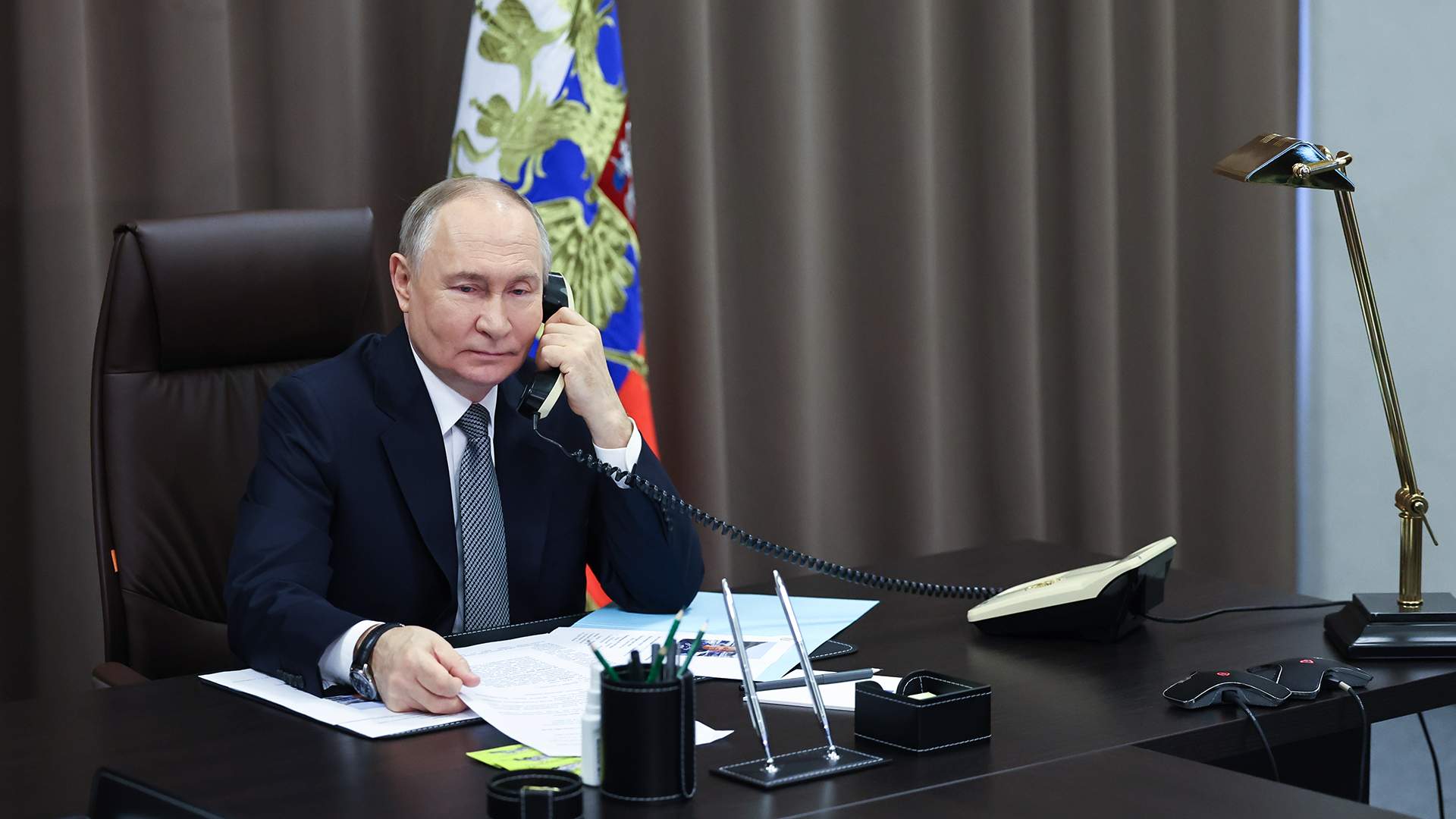
The sixth telephone conversation between Vladimir Putin and Donald Trump since his return to the White House lasted about an hour. Russian Presidential aide Yuri Ushakov called it informative, frank and helpful. The two leaders discussed the conflict in Ukraine, the situation in the Middle East, as well as bilateral relations between Moscow and Washington. The expert community believes that the conversation will give an impetus to both the bilateral dialogue and the Russian-Ukrainian negotiations. What Putin and Trump talked about and how the world reacted to their conversation is in the Izvestia article.
The Ukrainian issue
The conversation between Vladimir Putin and Donald Trump took place against the backdrop of a high-profile US decision to pause the supply of military aid to Kiev. Ukrainian officials told The Economist that The White House took such a step for the sake of political concessions to the Russian Federation. Washington called the suspension of aid temporary and explained its national defense priorities. Surprisingly, according to Russian presidential aide Yuri Ushakov, this high-profile topic was not mentioned in any way in the conversation between the leaders of the Russian Federation and the United States.

At the same time, Trump nevertheless raised the issue of an early cessation of hostilities. In response, Vladimir Putin noted that Russia continues to seek a diplomatic solution to the conflict. The Russian leader told his American counterpart about the implementation of the humanitarian agreements that Moscow and Kiev reached following the results of the second round of talks in Istanbul on June 2.
One of the main outcomes was the prisoner exchange. In addition, the Russian Federation handed over to Ukraine the bodies of the dead servicemen. The parties also exchanged draft memoranda on conflict resolution. Vladimir Putin said that Moscow is ready to continue the negotiation process.
— Our president also said that Russia will achieve its goals, that is, to eliminate the well-known root causes that led to the current state of affairs, to the current acute confrontation. Russia will not give up on these goals," Yuri Ushakov stressed, adding that, in general, the conversation between the presidents was on "the same wavelength."
Despite the fact that the dates of the third round of negotiations were not discussed, the Russian president said that Moscow was ready for it. The Kremlin assumes that Washington understands that the nature of the negotiations between Russia and Ukraine will be exclusively bilateral.

The second round of negotiations between the delegations of Russia and Ukraine at the Chiragan Palace in Istanbul
The phone conversation between Putin and Trump caused a wide response in the Western media. Axios noted that the leaders' dialogue took place against the backdrop of the failure of the American president's attempts to end the conflict in Ukraine. The Washington Post believes that the conversation demonstrates the desire of both sides to improve relations.
This conversation will give an impetus to further negotiations between Moscow and Kiev, said Dmitry Suslov, Deputy Director of the Central Research Institute of Higher School of Economics. The expert emphasizes that the presidents support the continuation of the Russian-Ukrainian dialogue. At the same time, the conversation took place against the background of how the American parliament approved Donald Trump's "great, wonderful bill" on taxes and government spending. The expert recalled that the United States promised that as soon as the Senate finishes with its adoption, consideration of the bill on the introduction of 500% duties on importers of Russian energy resources will begin.
— And now the Senate is done. The opportunity to consider Senator Lindsey Graham's bill is now open. Trump is being pressured internally and externally to support him and, in principle, tighten his policy towards Russia. I do not rule out that Trump could have said during the telephone conversation that if the Russian Federation does not agree to an early truce without fulfilling all Russian conditions, he will be forced to give the green light and support the adoption of this bill," he told Izvestia. — But the Russian side, apparently, has made it clear that it will not give up on its goals.
The Middle East conflict
Another topic of conversation was the situation in the Middle East, including the armed conflict between Iran and Israel.
"The Russian side stressed the importance of resolving all disputed issues, disagreements and conflict situations exclusively through political and diplomatic means," Yuri Ushakov explained.

Smoke rises after an Israeli attack on the building of IRIB, the country's state-owned broadcasting company, in Tehran, Iran
As a result, Putin and Trump agreed to continue contacts between the foreign ministries, defense ministries and between presidential aides. Dmitry Suslov believes that in the situation around Iran, Donald Trump urgently needs the support of Russia, which can influence Tehran.
— Trump believed that after striking Iran, Tehran would capitulate and quickly accept the American terms of the new nuclear deal, but Iran does not do this. Firstly, Iran is in no hurry to resume negotiations with the United States, and secondly, it says that it will not abandon uranium enrichment, will not abandon its nuclear program, and its position on this issue has not changed. It is Russia's participation in the negotiation process that can somehow help find a way out of this situation," the analyst said.
Interestingly, the issue of the Iran-Israel conflict has also become one of the key topics in Vladimir Putin's conversation with French President Emmanuel Macron. Their two-hour phone call took place on July 1 after almost three years of silence. Both leaders reaffirmed Iran's right to develop a peaceful atom, and also stressed that Tehran must continue to comply with the Treaty on the Non-Proliferation of Nuclear Weapons, including cooperation with the IAEA.
Putin and Trump also discussed the events in Syria and agreed that they would continue to maintain dialogue in this direction. Earlier, the head of the White House signed a decree on the lifting of the sanctions regime against the republic from July 1, which had been in force since 2004. He also instructed Secretary of State Marco Rubio to review Syria's status as a state sponsor of terrorism.

Both the United States and Russia are trying to establish a dialogue with the new Syrian leadership. Now they are trying not to compete with each other in Syria, but rather to look for common ground, Suslov noted.
— For the first time, Russia and the United States can cooperate on Syria, and it is possible that their interests will coincide. Namely, the restoration of Damascus' control over at least most of the republic's territory, and the resolution of the Kurdish issue. For a long time, the United States supported Syrian Kurdistan as its proxy, and thus prevented the restoration of Damascus' power over this important part of Syrian territory, which, by the way, contains oil. It seems to me that now both Russia and the United States are interested in resolving this issue," the expert noted.
Both countries are also counting on the stabilization of the situation in Syria, including because both the United States and Russia have military bases in it, the analyst believes.
Bilateral relations between Russia and the United States
The current telephone conversation was the sixth since Trump's return to the Oval Office, which indicates an intensive restoration of relations between Moscow and Washington. Putin wished Trump success in domestic politics and congratulated him on U.S. Independence Day, which America will celebrate on July 4.

US President Donald Trump
— It was noted from our side that Russia played an important role in the formation of American statehood, including during the War of Independence – 250 years ago – and then during the Civil War, which ended 160 years ago. It was stated that our countries are connected not only by the alliance in the First and Second World Wars, but also by deeper historical roots," Ushakov said.
Most likely, this refers, among other things, to the event when, in 1863, Russian Emperor Alexander II sent two military squadrons to the shores of the United States. They did not engage in battle, but they were able to neutralize the threat from Britain and France, which supported the Confederate Southerners in the Civil War.
Putin and Trump also agreed to exchange films that promote traditional values that are close to both Russia and the United States. In response to the Russian leader's proposal, Trump "immediately reacted and said he was impressed by the idea," Ushakov said.
"The presidents clearly sympathize with each other and maintain good personal relations,— Dmitry Suslov believes. — I do not rule out that an impetus may be given to the continuation of the Russian-American dialogue. But will we be able to overcome the United States' unwillingness to resolve the most important issues in bilateral relations, namely, to return Russian property, resume issuing visas, and direct flights? I am absolutely not convinced of this. At least in the near future, it is unlikely that the United States will do this.
The possibility of a personal meeting between the leaders of the Russian Federation and the United States was not discussed during the conversation. At the same time, the very idea of this, according to Yuri Ushakov, "is in the air," and if necessary, the parties can agree on it. The Russian leader's aide added: the conversation between the presidents ended in an unusual way — the translators were the last to put down the phone.
Переведено сервисом «Яндекс Переводчик»
