
The Trailblazer: director Alexander Mitta has died
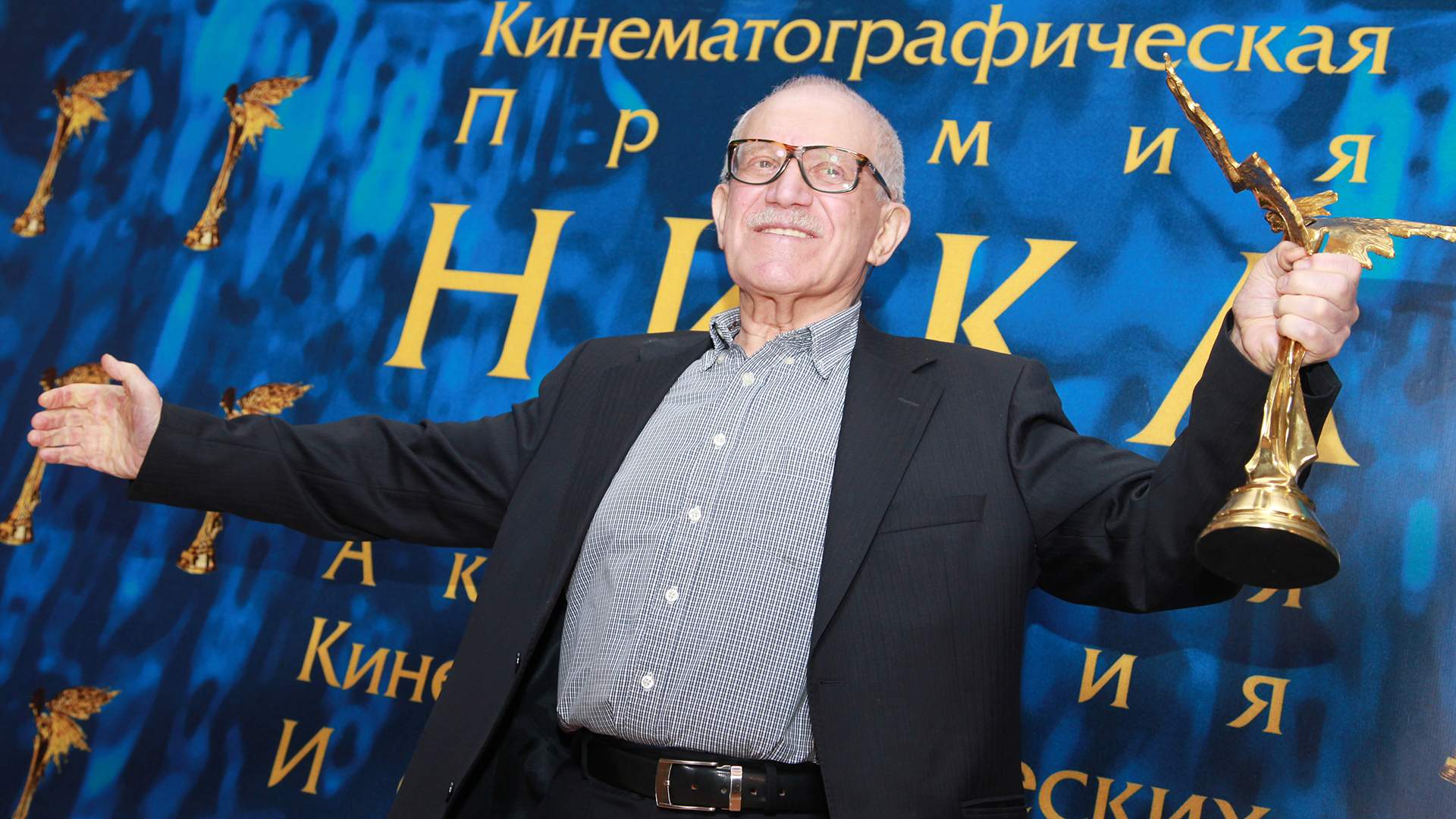
Even those who do not immediately remember his last name are well aware of his paintings — from the teen dramas "My Friend, Kolka!" and "Ring the Bell, open the door" to the USSR's first disaster film "The Crew" and the detective love drama "Border. The Taiga novel". Alexander Mitta is gone today. Izvestia recalls the director's life story.
"Rabinovich is too much"
Alexander Naumovich Rabinovich was born on March 28, 1933 in Moscow, into an intelligent Jewish family of Nahum Yakovlevich Rabinovich, an engineer at the automobile plant, and Lipa Israilevna Kaplan, an employee of the People's Commissariat of the Fishing Industry and party committee secretary. On his mother's side, the future director was the nephew of the Soviet People's Commissar of Agriculture, Aron Geister. This relationship, however, brought only misfortune to the family: in 1937, Gaister was arrested as an "enemy of the people," and after him, his relatives, including his wife and her sister, fell under the ice rink of repression. From an early age, Alexander was raised by his father.

The performer of the main role in the Soviet-Japanese film "Moscow is my Love" Komaki Kurihara and film director Alexander Mitta. The year 1973
Since childhood, the boy was distinguished by his creative abilities, he especially liked to draw. By the time he graduated, he had no doubt that he would become an artist. Alexander entered an art university, but did not stay there for long: he was cramped in the limited space of social realism. Having decided to try his hand at architecture, the future director entered the Moscow Institute of Civil Engineering, where his teacher was the outstanding Soviet architect Konstantin Melnikov. But Alexander Naumovich's love for architecture did not wake up: after graduating in 1955, he did not work in his specialty, going to conquer a third university. This time, the choice fell on the directing department of VGIK.
As Mitta himself has said more than once, the time of study for him was a period of incredible creative freedom, new acquaintances and impressions. For two months he attended Alexander Dovzhenko's course, where Otar Ioseliani, Larisa Shepitko, and Georgy Shengelaya studied with him. Later, the famous director Mikhail Romm became his mentor, in whose course Vasily Shukshin and Andrei Tarkovsky studied. However, his social circle was not limited to fellow filmmakers. He was closely acquainted with Boris Slutsky and David Samoilov, Vladimir Vysotsky and Yuri Vizbor. His future films and characters, with their reckless sincerity of feelings and uncompromising fury of decisions, were born out of the bold, innovative, young culture of the 1960s.
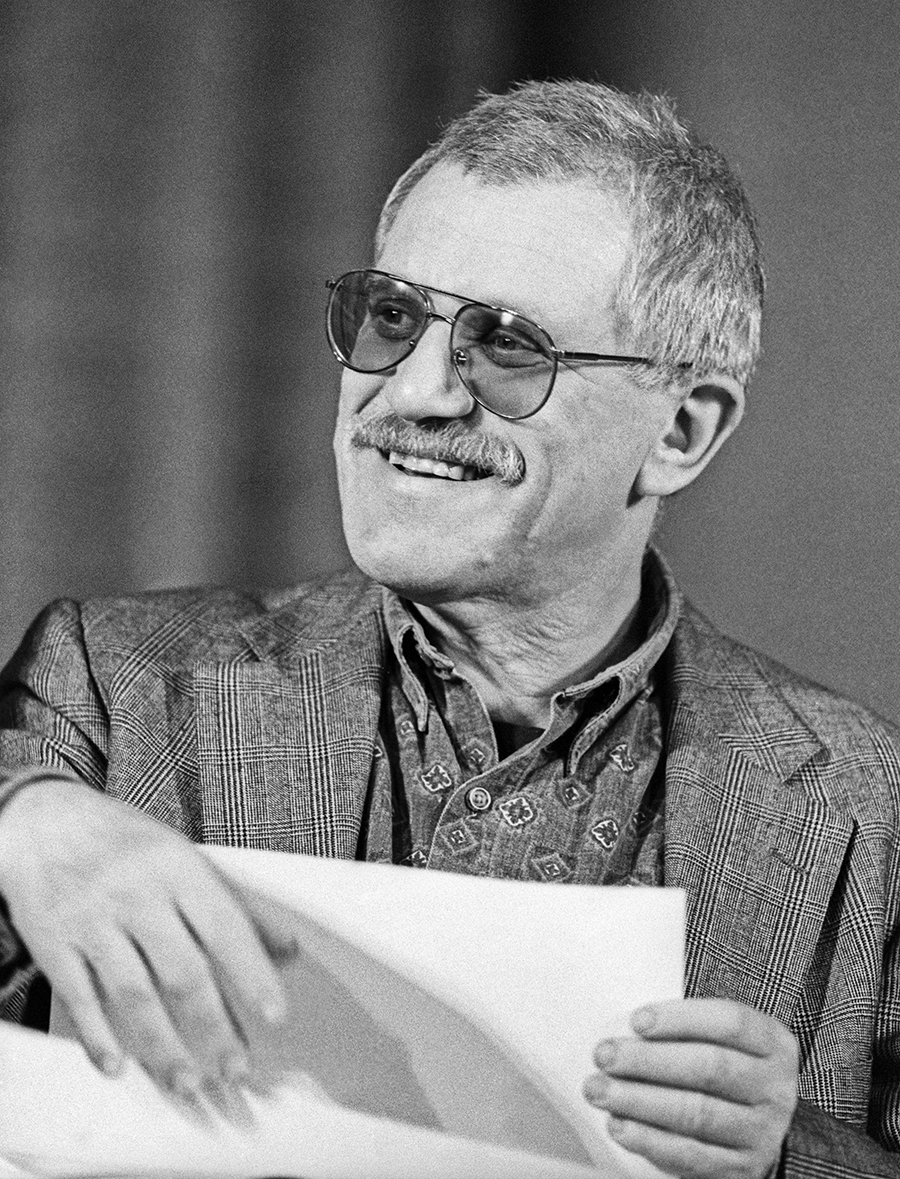
To earn a living during his studies, the future director remembered his artistic skills and began moonlighting as a cartoonist for magazines - first for Crocodile, then for Funny Pictures. It was thanks to Krokodil that his pseudonym was born: when the young artist first came to the editorial office, he was told that "Rabinovich is a cartoonist - this is too much." He took the pseudonym Mitta in honor of a distant relative on his mother's side: she came from the word "mitah", meaning in Hebrew a stretcher for carrying the dead. The director has never hidden his Jewish origin.
Comma without dot
In 1961, Alexander Mitta, together with his classmate Alexander Saltykov, directed his first film based on Alexander Khmelik's play "My Friend, Kolka!" No one expected that the debut of young cinematographers — an artless film about school and schoolchildren, about the search for truth, the first victories and defeats — would be included in the top twenty most popular films of 1961. The film about the Timurovites of the new era, the creators of the "Secret Society of Troechniki" with the aim of "helping the offended and weak, taking revenge on nerds and upstarts," appealed to both children's and adult audiences, captivating with the sincerity of their view of the world and real, living characters. The film was watched by almost 24 million viewers, it won several prizes, including the award of the International Film Festival in London.

A shot from the movie "My friend, Kolka". 1961. In the role of Kolka Snegirev — Alexander Kobozev
Soon Mitta will make another film about teenagers — "Ring the bell, open the door" It will be released in 1965 and will be the debut for actress Elena Proklova. After the film, where the touching story of fifth-grader Tanya Nechaeva's first love is intertwined with the theme of the revival of the communist ideal, typical of the era and woven into the plot naturally and gracefully, without a hint of moralizing, Mitt was talked about as a mature master. Soon, the film won a Big Prize at the Venice International Children's Film Festival. It was a worldwide recognition.

A shot from the feature film "Ring the bell, open the door." 1965
Mitta's third teen film, Dot, Dot, Comma, thundered even louder. The film about the search for oneself and the growing up of eighth-grader Lesha Zhiltsov won a whole gallery of prizes: it was recognized as the children's film of the year by the jury of film festivals in Moscow, Alma Ata, Belgrade, Salerno. This was quite enough to make films about children with the title of master of the genre for the rest of his career. But Mitta's creative energy demanded an outlet, the director could not stand routine and stagnation, he wanted to explore new territories of cinema. And, once at the height of his fame, he abruptly changes his trajectory, stepping into much more complex and even completely unexplored creative territories.
I wish to heaven
In 1969, Alexander Mitta made a completely new film for himself, "Burn, Burn, My Star," a philosophical tragicomedy about the complexity of the artist's relationship with power. The moment for filming was not the most successful: Gennady Poloka's film "Intervention" had just been shelved, besides, in the plot presented by Mitta, there were allusions to the fate of the disgraced Vsevolod Meyerhold. Nevertheless, despite the pressure, Mitt's film stood up. However, Rolan Bykov, who, according to the director's plan, was supposed to play the founder of the innovative theater with the pseudonym Iskremas ("art for the revolutionary masses"), had to be invited to play Oleg Tabakov, who saw her in a less tragic and more comedic way. So, in the end, the genre of the picture was determined — tragicomedy. As the director later recalled, this also caused difficulties during the acceptance of the picture: the censors were annoyed and said they did not understand whether to cry or laugh.

Vladimir Vysotsky as a blackamoor and Vladimir Zolotukhin as Filka in the film "The Tale of how Tsar Peter married a Blackamoor". The year 1976
Mitta had a difficult time with another of his famous films, "The Tale of how Tsar Peter Married a Black Man" (1976). And here he had to fight a lot, first of all for the performer of the main role. He was offered to take on the role of Ibrahim Hannibal by many performers, including the famous black actor and singer Harry Bellafonte, who was persistently wooed by a French producer who promised Mitta success at the international box office. But the director was sure that this role was only for Vysotsky. Later, he recalled with a laugh that only one person shared this confidence with him — Vysotsky himself. However, in the end, the actor and the director still quarreled — Vysotsky wrote a couple of songs for the film, but Mitta did not insert them into the picture, fearing for its rolling fate. He already, at the insistence of the censors, had to rewire the two-part film, turning it into a smoother one-part version. However, even in this form, the audience accepted the picture with delight: about 30 million people watched it during the year.

Alexander Mitta, director of the film "The Crew", receives the prize of the XIII All-Union Film Festival. The year 1980
In 1979, Alexander Mitta shot his most famous work, the disaster film The Crew. It was an incredibly bold step: no one believed that the American genre would take root on Soviet soil, except Mitta. Goskino, although it agreed to the shooting, allocated a frankly ridiculous budget for it. Alexander Mitte had to break through decommissioned airliners and the possibility of full-scale filming at Aeroflot himself, to persuade the actors. So, instead of Alexei Petrenko, who considered the script too weak, Georgy Zhzhenov starred in the film, and Elena Proklova, who refused an explicit scene, was replaced by a young Alexandra Yakovleva. But the director's efforts were not in vain. The success of the film exceeded all expectations, over 71 million people watched it during the year. "The Crew" became not only the most popular film of the year, but also one of the leaders in the history of Soviet distribution.
However, many critics considered the director's next film, The philosophical Tale of Wanderings (1982), to be even more innovative. Many film critics agree that this dark parable is the first adaptation of the fantasy genre in the history of Soviet cinema.
Director and teacher
Unlike many Soviet-era cinematographers, Alexander Mitta entered the new era without problems or shocks. He continued to teach at the Higher Courses of Screenwriters and Directors, and organized his own Alexander Mitta Studio School.

Director Alexander Mitta, who was awarded the badge "For his contribution to Russian Culture", at the ceremony of awarding cultural and artistic figures with state awards of the Russian Federation and departmental awards of the Ministry of Culture of the Russian Federation in the Atrium of the Bolshoi Theater in Moscow. The year 2018
At the same time, pedagogical concerns did not prevent him from making popular films. In 2000, he loudly reminded of himself with the serial TV movie "Border. The Taiga novel". Like Mitta's best films, it was made at the junction of genres — a crime thriller and a love drama, expertly played by the main actors Alexei Guskov, Olga Budina and Marat Basharov. In 2002, the film was awarded the RSFSR State Prize and received several TEFI awards. Alexander Mitta's last painting was the film "Chagall – Malevich" about the relationship between two great artists. It was released in April 2014.
On July 1, Alexander Mitta was hospitalized in serious condition. Recently, the director has been struggling with cancer. Alexander Mitta died at the age of 92.
Переведено сервисом «Яндекс Переводчик»
