- Статьи
- Economy
- In an active lawsuit: investors are suing en masse due to the unblocking of their funds

In an active lawsuit: investors are suing en masse due to the unblocking of their funds
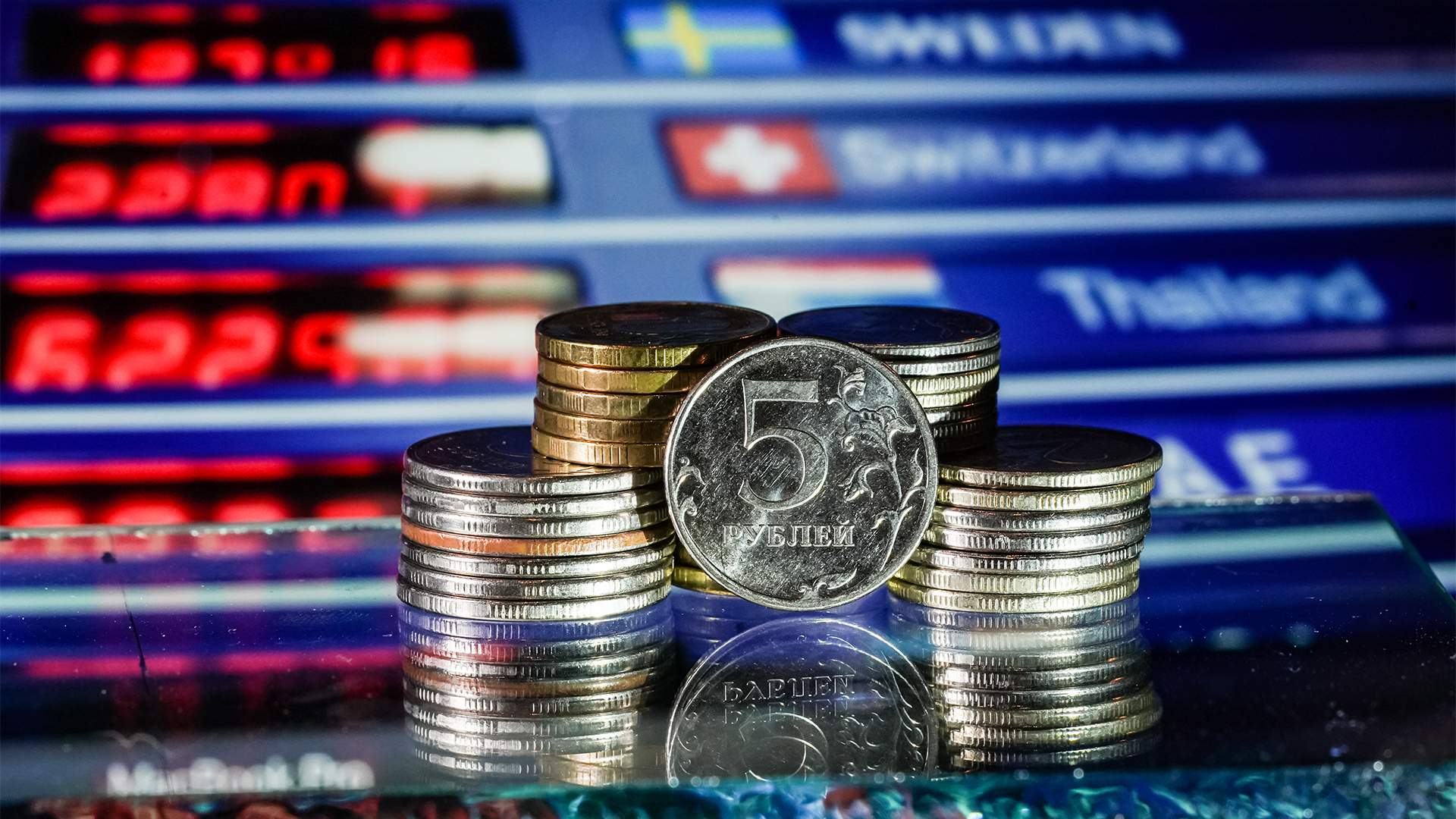
Investors began to actively file lawsuits against the Belgian depository Euroclear for unblocking their foreign accounts, Izvestia found out. It is this organization that stores the blocked assets of Russians — since the beginning of the summer, complaints have been received against it from 14 plaintiffs. Citizens were inspired by the success of one of these cases, when the Moscow Arbitration Court ordered Euroclear to pay compensation of $ 9 million to the victim. However, he has not received his funds yet. And victory in the Russian jurisdiction as a whole does not guarantee a full return of assets. Whether the situation can change given the warming of relations with the West amid negotiations on the Ukrainian conflict is in the Izvestia article.
How to sue over blocked assets in Euroclear
In June, there was a surge in lawsuits against the Belgian depository Euroclear, according to the Moscow Arbitration Court (Izvestia studied them). Since the beginning of the first summer month, 14 plaintiffs have filed a lawsuit against the organization: one of the lawsuits is collective, it contains complaints from 12 people, and two more are individual. This is one of the most massive waves of lawsuits since the sanctions were imposed.

Many Russian investors who invested in foreign securities lost access to them in 2022. The assets were blocked after the imposition of sanctions against banks from the Russian Federation and the National Settlement Depository (NSD). Through the court, they are demanding compensation for losses due to the freezing of their funds.
The influx of plaintiffs has been really active since the beginning of the year, after the Moscow Arbitration Court fully satisfied the claim of a private investor, experts say. Euroclear was obliged to pay him more than $9 million, the amount of lost assets and unpaid dividends.

The court then concluded that Euroclear had no legal grounds to block the plaintiff's accounts. However, the money has not yet been received by the investor. The Belgian depository is currently trying to appeal the decision, but it is unlikely to be able to do so in the Russian jurisdiction.
"Investors are inspired by these judicial successes — they believe in the possibility of a successful outcome in their case," explained economist Andrei Barkhota.
In addition, over the past few months, there has been hope for a warming of relations between the West and Russia amid negotiations on the Ukrainian conflict, in which the United States is involved. Restarting relations between the European Union and the Russian Federation is also possible — this may be accompanied by "goodwill gestures" and implicit friendly actions, the expert noted. Unfreezing assets could be one of these steps, which investors are counting on, among other things.

At the end of March 2025, Euroclear Bank held €195 billion worth of frozen Russian assets (about 18 trillion rubles) — they increased by €12 billion over the year (due to the transfer of income there — dividends and coupons). At the same time, Euroclear itself earns from them — by the end of the first quarter of 2025, it received €1.47 billion in interest income from investing blocked securities, of which €360 million went to the Belgian budget in the form of taxes.
Is it worth demanding compensation for blocked assets in the Russian Federation
There are chances of winning against Euroclear in the Russian jurisdiction, said Yan Goncharov, senior associate at the Delcredere Bar Association. The courts have already recognized the dishonesty of the actions of the European depository, because it blocked the assets of Russians even before the official sanctions, on its own initiative.
However, it is not worth expecting that investors will be able to fully receive compensation by filing a lawsuit in Russia, concluded Dmitry Lesnov, Deputy General Director for brokerage business at Finam. It will simply be impossible to enforce the decision of the Russian court, said the head of the international legal service. Razmorozka.com Alexey Bogdanov. The fact is that Euroclear has no property in Russia that can be seized and recovered in favor of the affected investors.

— The only EU assets in Russia are the frozen funds of Western clients in accounts with, which are blocked as counter—sanctions. But they are inviolable: access to them has been prohibited by a special Russian decree since January 2024," explained Alexey Bogdanov.
This opportunity to compensate for investors' losses due to Euroclear's actions was disabled for a reason. In 2023-2024, individual Russian organizations (Rosbank, MTS Bank, Leader Management Company), with the support of Russian courts, were able to withdraw about €10 billion from accounts. In response, the Belgian Finance Ministry confiscated assets worth the same amount from the accounts of Russian investors. In order to stop the practice of embezzlement of funds, this possibility was immediately suppressed at the highest level.

Izvestia sent a request to the Central Bank about the amount of funds accumulated in type C accounts by June 2025.
The lawsuits filed will not refund the money, but they can provide psychological relief — the court's decision on the investor's correctness becomes a kind of compensation for the lost savings that people have been saving for years. The irony is that such decisions mean nothing to Euroclear: execution will require violating sanctions (which is a criminal offense in Belgium). In fact, this is just a "check mark" for investors, but not a refund mechanism. The only sure way to get the frozen funds back is to obtain permission for unblocking in the European jurisdiction, Alexey Bogdanov emphasized.

How to unblock frozen assets in the EU
Currently, there are three strategies for unblocking assets abroad, said economist Andrei Barkhota. The first is filing lawsuits against Euroclear in the EU itself and obtaining licenses from the Belgian Ministry of Finance for unfreezing securities. The second implies that it is necessary to wait for the lifting of sanctions and the natural unfreezing of assets, although many investors have lost faith in such an outcome. The third option is to participate in the exchange of frozen assets, which was launched by the Central Bank of the Russian Federation. However, the volume of the application for this mechanism could not exceed 100 thousand rubles.

This option really worked. Russian investors managed to partially compensate for their losses from the asset freeze through a buyback mechanism organized by the regulator. As a result, foreigners acquired assets of 8.1 billion rubles from Russian investors blocked in NSD's accounts at the expense of their own funds frozen in type C accounts. The participation of foreigners was minimal due to sanctions risks, but even such modest results were the first opportunity for many to return at least part of the blocked investments.

To take advantage of the first option and file a lawsuit against Euroclear in Europe, it is important to collect documents from the broker through whom the frozen assets were purchased. Then they are properly processed and submitted to the Belgian Ministry of Finance and the Office of Foreign Assets Control of the United States (OFAC). This is necessary in order to obtain individual licenses for unblocking securities.
For approval, an investor must meet a number of requirements:
The frozen assets were purchased prior to the imposition of sanctions against NSD (until June 12, 2024);
the person himself should not be on the SDN lists, that is, he should not be under sanctions.;
It is necessary to prove that there is no connection with the organizations that have been sanctioned.;
It is important to open an account with a European broker, which will potentially receive funds.;
if the amount of assets exceeds €100,000, it is important to have friends or relatives in the EU in order to withdraw funds to them, or temporarily cease to be a resident of the Russian Federation.;
It is necessary to provide a letter from the guarantor — legal entity in the EU, which confirms that the recipient of the blocked assets will not spend them on the directions prohibited by the sanctions.

It makes sense for investors with a portfolio of over $15,000 to file lawsuits against Euroclear in Europe, the press service said. Razmorozka.com . This is a very long (at least 14 months) and complex process, so legal services in this case will be quite expensive — about €15-40 thousand. For holders of a small amount of investments, unblocking may simply be unprofitable.
Of course, there is a direct ban on the withdrawal of funds received to Russia, but ways to circumvent this requirement could already be created — it is not so difficult for rich investors to find a solution to this problem, Andrei Barkhota concluded. Anyway, the fact is that the real unblocking of assets in the EU is not available to an ordinary retail investor — he can only wait for a warming in relations between Russia and the European Union.
Переведено сервисом «Яндекс Переводчик»
