
Street business: protests in Serbia may become more radical
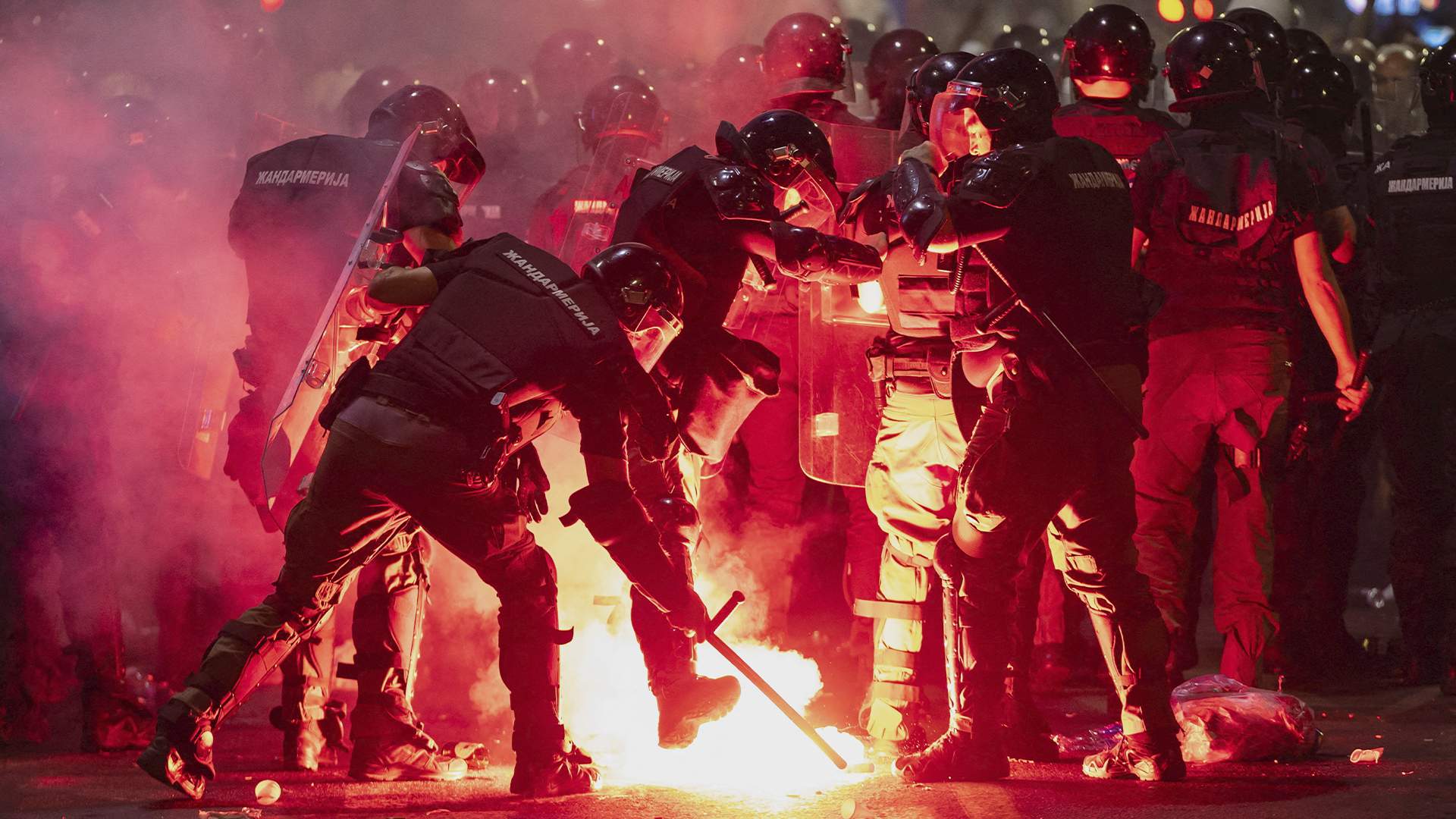
Protest actions in Serbia will continue and intensify, Dragan Stanojevic, head of the National Assembly Committee on Diaspora and Serbs in the region, told Izvestia. According to him, whether their participants will be able to achieve their goals will depend on the desire of the West to change power in the country. On June 28-29, mass rallies were held in the republic, which ended in clashes with the police. The opposition has announced that it will begin widespread roadblocks until its demands for new parliamentary elections and the release of arrested protesters are met. At the same time, President Aleksandar Vucic declared the "victory of the state over the protesters" and refused to comply with their demands. The risk of destabilization of the situation in the country and how the situation in Serbia may affect relations between Belgrade and Moscow is described in the Izvestia article.
Why has the situation in Serbia escalated?
Protests in Serbia will continue and intensify, and new actions are possible to block roads and government institutions, Dragan Stanojevic, head of the Serbian Parliament's committee on Diaspora and Serbs in the region, told Izvestia.

— Yes, the protests will continue and intensify, and I think they will be more radical — blocking cities, institutions, and so on. This is all a game, they are not interested in parliamentary elections, but in the overthrow of Vucic," the politician is sure. — The elections were held a year and a half ago and have not changed anything, because the conditions for them have not changed. Whether the protesters succeed or not will depend on the wishes of the West. After all, if they lose, they will say that the elections were stolen, and there will be even more problems.

Dragan Stanojevic noted that the Serbian president's task is to prolong the time until the next presidential and parliamentary elections, which are scheduled to take place in 2027.

The situation in Serbia escalated dramatically over the weekend. The formal reason for the new wave of discontent was Alexander Vucic's refusal to fulfill the conditions of the protesters' ultimatum by the end of Saturday, June 28. They demanded early parliamentary elections and the punishment of those responsible for the tragedy at the railway station in Novi Sad in November 2024. Then a 50-meter canopy made of concrete, metal and glass collapsed. As a result, 15 people were killed, including three children.
The date of the new protest was not chosen by chance. June 28 is one of the main national holidays of the republic — Vidovdan, which has a special sacred significance for the Serbs. On this day in 1389, the battle of Kosovo Field took place, which led to the conquest of Serbia by the Ottoman Empire. And in general, significant events for the country have taken place on this date throughout history, INF program manager Milan Lazovich noted in a comment to Izvestia. For example, in 1914, on this day, the Austrian heir to the throne, Archduke Franz Ferdinand, was assassinated by order of a Serbian terrorist organization, which served as the prologue to the First World War.

— The protesters, apparently, decided to use the symbolic meaning of this date in order to legalize the rally and give it a new impetus. The last rally was characterized by significant radicalization, violence, clashes with security forces and detentions," the expert said.
About 36,000 people took part in the protest, the Serbian Interior Ministry said. Independent observers counted 140,000 protesters. However, unlike the previous mass actions, which were mostly peaceful, this time it all ended in clashes with the police. As a result of the riots in Belgrade, 48 law enforcement officers were injured, 77 people were detained, including one minor. It is worth noting that the protests are not exclusively pro-Western in nature, but they can become an instrument of EU pressure on Belgrade. The main reasons for discontent are corruption and poor operation of social elevators. The pogroms began after the main rallies, when masked radicals began attacking the police.

On the night of June 30, the protests resumed with renewed vigor. Opponents of the authorities announced the beginning of blocking roads and streets until their demands for early elections and the release of all detained protesters are fully fulfilled. Moreover, the actions were held not only in Belgrade, but also in 18 other cities. During the night, the police completely restored normal traffic, removing all obstacles on the roads. The media reports that new actions are planned on working days.

On June 29, the Serbian president addressed the nation and declared "the victory of the state over the protesters." Alexander Vucic said that due to the rallies, the level of investment this year has decreased by 46%, noting that he does not intend to pardon any of the detainees. Moreover, the identification and search for the remaining attackers continues.
— Serbia won because Serbia cannot be defeated by violence, as some wanted it to be. Serbia has not stopped and will never stop," the country's president declared.
Simultaneously with the protests on June 28, a rally of supporters of Alexander Vucic took place near the parliament building. They set up a tent camp and chanted slogans in support of the Serbian leader.
Will there be early elections in Serbia
The main question now is how the situation in the country will develop further. Protest waves cover Serbia with a regular frequency, and for a variety of reasons. Serious actions took place after the shooting at a school in Belgrade in 2023. Then 10 people died. In the summer of 2024, Serbian eco-activists and the opposition opposed the mining of lithium in the Jadar River Valley by Rio Tinto. No election campaign in the country is complete without protests. The current rallies have been going on for six months with varying degrees of intensity and, most likely, they will continue, Milan Lazovich believes.

— Regarding the success of the demands, I am inclined to believe that the demonstrators will not be able to achieve the fulfillment of all of them. In particular, it is unlikely that we will see a change of power in Serbia in the near future, the dissolution of parliament or the appointment of early elections," said the INF program manager.

Opponents of the Serbian president succeeded in getting the resignation of Milos Vucevic's government, but this did not change the situation. The new prime Minister, Juro Matsut, is formally an independent politician, but 22 of the 30 ministers of his government have transferred from the previous cabinet. By the way, the Serbian authorities have previously held early parliamentary elections against the background of political instability. The previous unplanned election campaign in December 2023 ended with the victory of the ruling coalition, despite all the efforts of the opposition.

It is likely that in order to resolve the situation, the Serbian authorities will take steps to step up the fight against corruption and establish a dialogue between the government and society. At the same time, the fact of the protests itself will not affect relations with Russia, since the prospects for a change of power are not yet visible, Lazovich concluded.
Earlier, Russian Foreign Minister Sergei Lavrov said that Moscow was monitoring the situation in Serbia and hoped that the protests in the country would be resolved peacefully, and Western states would not engage in a color revolution in the republic. The Kremlin stated that they see the risks of destabilization of the country.

"Despite the fact that unprecedented pressure is being exerted on Serbia, of course, we cannot rule out that well—known technologies are being used there to provoke color revolutions," said Dmitry Peskov, the press secretary of the Russian president.
It is now a completely standard practice in Serbia to intercept power, MGIMO Professor Elena Ponomareva told Izvestia.
— Barricades have appeared on the streets, the most important infrastructure communications have been blocked, buildings are being seized, chaos and lawlessness continue, by the way, very similar to what happened in October 2000 (the "bulldozer revolution", when President Slobodan Milosevic was overthrown. — Izvestia), — she said. — The police are clearing some barricades on the streets of Belgrade and other major cities, while the official authorities declare that there will be no serious actions by the security forces.

Elena Ponomareva emphasizes that the lack of a proportionate reaction is a serious problem that can turn out badly for the current government. At the same time, Western countries, primarily the European Union, are interfering in Serbia's internal affairs. The head of the Serbian government, Djuro Matsut, told Izvestia that Western intelligence services have been trying to organize a color revolution in the republic since November last year.
Переведено сервисом «Яндекс Переводчик»
