- Статьи
- Society
- Around the fingers: counterfeit medical gloves could deprive the budget of 1.4 billion

Around the fingers: counterfeit medical gloves could deprive the budget of 1.4 billion
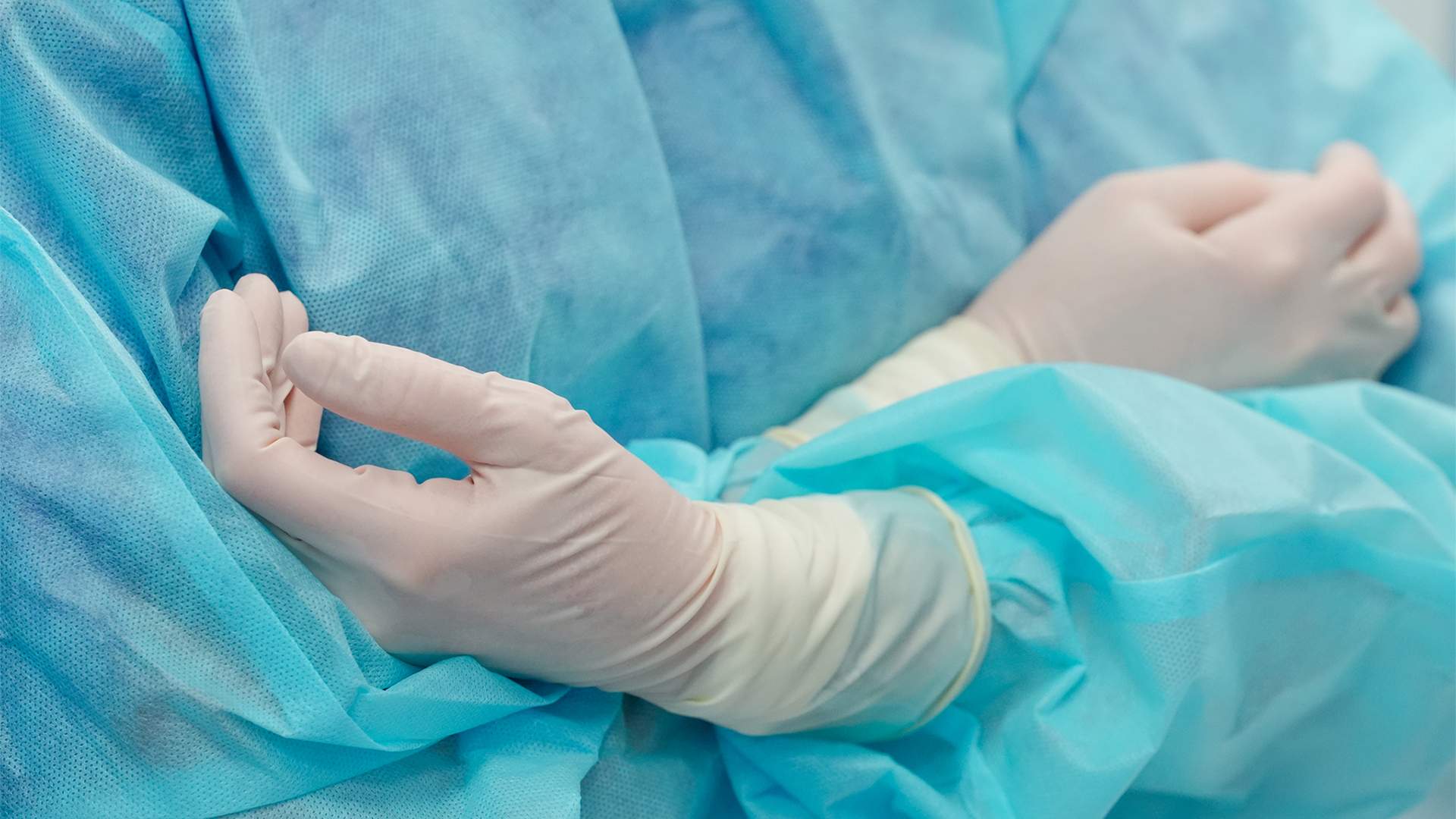
For four years, an organized group of entrepreneurs profited from government procurement focused on import substitution: they passed off Chinese medical gloves as allegedly manufactured in Russia. This was reported to Izvestia by the international Anti-Counterfeit Association. But no production of these medical products was established in Russia, everything was limited only to repackaging, they noted. The FAS has repeatedly included sellers of these gloves in the register of unscrupulous suppliers. But entrepreneurs registered new legal entities and won tenders again. The damage caused to the budget could amount to up to 1.4 billion rubles, Izvestia estimated. A criminal case has been opened on one of the supply episodes. Who and how supplied dangerous counterfeit drugs to Russian hospitals is in our article.
Where did the gloves come from
The Russian budget spent almost one and a half billion rubles on the purchase of questionable medical examination gloves, Izvestia found out. We are talking about latex, nitrile and surgical latex gloves, which were purchased by budgetary medical institutions as part of public procurement procedures.

The demand for such goods increased dramatically during the pandemic, Alexander Nosenko, head of the Center for the Protection of Copyright Holders of the International Anti-Counterfeit Association, told Izvestia. And since 2021, according to him, in order to meet the requirements of the national regime in Russia, unscrupulous market participants began to simulate the production of medical products according to the following scheme: gloves made in China are imported into the Russian Federation, then they are repackaged with Russian labeling, without quality control and sold as goods of domestic origin.
The sale of such medical devices is dangerous, illegal and falls under several criminal articles at once.
—Only original products can protect against infection, and gloves that were supplied to our hospitals as part of state auctions under the guise of original ones are of very poor quality," said the expert. "They do not meet the criteria of strength and sterility and can tear at any moment. Such substandard products are dangerous to the life and health of doctors, as they do not protect against infection in contact with infected patients.

Roszdravnadzor has repeatedly withdrawn Chinese counterfeits from circulation, and the FAS has added sellers to the Register of Unscrupulous Suppliers. However, they continue to circulate in the market today.
"Starting in 2022, counterfeit medical gloves from Asia, passed off as Russian, have filled the market," Alexander Nosenko added. — According to the estimates of our association, about 90% of all domestic medical examination gloves from the register of Russian industrial products are of non—Russian origin. They do not meet the criteria established by the government decree on the confirmation of the production of Russian industrial products.
How the scheme works
The gloves are sold by an organized group of entrepreneurs from Buryatia through a chain of front persons, Izvestia found out after analyzing data from the Public Procurement website. The group operates in almost all regions, but the main supplies go to Buryatia, Novosibirsk and Vladimir regions, as well as Krasnodar Territory.
The procurement scheme looks like this: the companies Spec-i-al LLC and Royal Crown LLC, registered in Novosibirsk and Buryatia, have all the necessary permits for the production of full-cycle medical gloves. However, they do not produce gloves, but buy finished products in Asian countries — Malaysia, China and Vietnam and repackage them under their trademarks, Anti-Counterfeit said.

"The repackaging is taking place in the village of Turuntaevo in the Baikal region of Buryatia, where the factory allegedly has production facilities. In fact, there is no production in Buryatia, and technical machines and capacities are used as props," the association said.
This is confirmed by the inspection conducted at the plant in Buryatia as part of the investigation of the criminal case of fraud, which was initiated in May 2025 by investigators of the Astrakhan Investigative Committee.
A case has been opened against Andrey Rybakov, the head of Pharm-Medical LLC, over the supply of more than a million pairs of counterfeit medical gloves for the needs of the Ministry of Health of the Astrakhan region in the amount of over 6.6 million rubles, a law enforcement source told Izvestia. The company became one of several sellers affiliated with Spec-i-al and Royal Crown companies.

—In December 2022, Pharm-Medical won a competition for the supply of medical examination gloves," the source said. — Subsequently, Roszdravnadzor recognized these gloves as substandard because they did not meet the requirements for medical devices. In particular, they were found to have an increased zinc content, which, when in contact with skin and mucous membranes, can negatively affect health.

The case was initiated on the fact of fraud committed by a group of individuals on an especially large scale (Part 4 of Article 159 of the Criminal Code of the Russian Federation), as well as under Article 238.1 of the Criminal Code of the Russian Federation — "Circulation of falsified, substandard and unregistered medicines and medical products."
During the investigative actions, searches were conducted at the plant in Buryatia. According to the case file, instead of producing gloves, the company was repacking them — medical products were transferred from boxes with Chinese characters to "Russian" boxes.

"The factory itself looks more like a warehouse, the counterfeit products have been seized," the source said.
Russian manufacturers have government preferences when concluding government contracts, so it is beneficial for entrepreneurs from Buryatia to pretend to be domestic manufacturers. Starting in 2021, Spec-i-al and Royal Crown LLC supplied gloves worth about 1.4 billion rubles to state medical institutions. To ensure the production of medical gloves for such an amount, it is necessary to have the appropriate capacities, and law enforcement officers did not find any traces of production at the Buryat plant.
According to the public procurement website, the supply of products to healthcare institutions in 2022-2025 was carried out by: IP Smetankin Dmitry Sergeyevich — for a total amount of more than 418 million rubles, IP Igumnov Mikhail Alexandrovich (373 contracts for 237 million rubles), Pharm-Medical LLC (368 million rubles) and Globus Travel LLC (more than 1 thousand contracts for 669 million rubles) and IP Zakamennykh Sergey Alekseevich (37 million rubles).
Three of these sellers were included in the Register of Unscrupulous Suppliers in 2023 and 2024.

According to the SPARK database, the owners of Spec-i-al and Royal Crown LLC are residents of Buryatia — Vyacheslav and Valentina Eskov (brother and sister), as well as their partner Artyom Burdukovsky.
Izvestia sent a request to these companies asking them to confirm or deny the data of the "Anti-counterfeit" and to inform them of their production volume.
In 2018, the Oktyabrsky District Court of Ulan-Ude found Vyacheslav Eskov guilty of attempting to transfer a bribe of 1 million rubles to an official for the termination of a criminal case, which at that time was being investigated by the Investigative Committee of Buryatia against himself and his sister.

The case concerned an episode in 2019, when four unregistered citizens of the CIS countries were burned alive at the factory of the Eskov family in Buryatia. Investigators have opened a criminal case on the fact of organizing illegal migration and the use of slave labor, which resulted in the death of a person.
However, the court acquitted Eskov, and his sister was sentenced to five years in prison for violating fire safety requirements. But she was also released from punishment due to the amnesty.
Following the tragedy, a number of employees of the local Federal Migration Service, the Federal Migration Service and the Ministry of Emergency Situations were dismissed, suspected of drawing up forged inspection reports. And Eskov got off with a fine of 1 million rubles in the case of attempted bribery.

Where were the fake gloves identified
Since 2022, Roszdravnadzor has identified 34 episodes of shipments of substandard and falsified batches of medical gloves to medical institutions in more than a dozen regions (Izvestia has the documents).

So, in October 2022, the supervisory authority suspended the use of one of the batches of medical gloves manufactured by Spec-i-al LLC due to the threat of harm to the life and health of citizens, according to the order of the federal service.
From 2023 to 2025, substandard batches of medical gloves manufactured by Spec-i-al were repeatedly detected in the Sakhalin, Astrakhan, Saratov, Smolensk and Tver regions, in Primorsky Krai and Buryatia. In 2024-2025, Roszdravnadzor recognized gloves supplied by this company to hospitals in the Astrakhan region and Udmurtia as counterfeit and recommended that they not be used.
The supervisory authority also recommended to its territorial authorities to check and withdraw gloves under the trademark "Spec-i-al" from circulation of subordinate medical institutions as non-compliant with technical requirements.

"Administrative liability is provided for violations in the sphere of circulation of medical devices, as well as criminal liability for the circulation of falsified, substandard and unregistered medical devices," the document says.
What are the dangers of low-quality medical gloves?
Fake gloves can cause a severe allergic reaction not only in the doctor who performs the operation, but also in the patient, medical workers interviewed by Izvestia said.
"Low—quality medical gloves can be dangerous if a person has allergies," said Elvira Sinyakova, a dermatovenerologist at the Medsi clinic. — Previously, it was believed that latex gloves are more likely to cause allergies. If it contains talcum powder and the hand sweats when interacting with the glove, this can cause contact dermatitis.
Such gloves can be especially dangerous for patients with eczema or other skin diseases, the doctor emphasized. In addition, low-quality medical gloves tear faster, which increases the risk of infection during surgery. Both the doctor and the patient can become infected.

Yulia Goryacheva, a nurse at the Valgo clinic in Moscow, added that if sterility is disrupted during invasive procedures, such as injections or blood collection, there is always a risk of secondary infections. And if a medical glove breaks during surgery, the doctor loses valuable time, because it is not always possible to replace it quickly.
Medical gloves are primarily needed by doctors and mid-level medical staff who perform invasive procedures. Dermatologists, traumatologists and surgeons, in particular, are required to carry out examinations with gloves, but gastroenterologists and therapists practically do not use gloves during patient appointments, experts said.

According to Alexander Nosenko, the scheme of work of pseudo-producers from Buryatia is actively implemented by other unscrupulous participants in the public procurement market.
"Anti—Counterfeit is preparing relevant appeals to the Ministry of Industry and Trade, Roszdravnadzor and the Investigative Committee with a request to verify the legality of including a number of manufacturers of medical gloves in the register of Russian industrial products," he said.
Izvestia asked Roszdravnadzor whether the facts of counterfeit, substandard and unregistered medical gloves in circulation were revealed and what measures the agency was taking. The editorial board also asked how many companies have been issued Registration certificates for medical gloves manufactured in Russia and how many companies have had their registration certificates revoked.
Переведено сервисом «Яндекс Переводчик»
