
The block is with you: Moscow will demand NATO guarantees on Ukraine

Ukraine's non-aligned status must be fixed in writing to resolve the crisis, Russian Deputy Foreign Minister Mikhail Galuzin told Izvestia. According to him, it is unacceptable for Russia to absorb this country by the alliance and use it as a springboard for inflicting strategic defeat on the Russian Federation. Among the points of the final communique of the NATO summit, held in The Hague on June 24-25, there is no mention of Ukraine's possible membership in the bloc. The alliance countries have agreed to increase defense spending to 5% by 2035. However, experts believe that internal contradictions and economic realities make the prospects of the alliance vague. The results of the NATO summit and why the members of the bloc adopted the shortest final resolution in several decades are described in the Izvestia article.
Ukraine is out of NATO's focus
The two-day NATO summit has ended in The Hague. The short communique, consisting of only five points, paid much less attention to Ukraine than in the final statement adopted last year. Although Secretary General Mark Rutte said that the bloc's countries would support Kiev's "irreversible" path to NATO, there is no wording on the inevitability of its joining the alliance. The United States and some members of the bloc verbally acknowledge that Ukraine cannot align with them.

NATO Secretary General Mark Rutte speaks at a press conference
Russia, on the other hand, intends to seek written guarantees that Ukraine will not be a member of NATO.
— Our position has always been consistent and has been that the unrestrained expansion to the east undertaken by the leadership of NATO and NATO countries, contrary to the promises made to the Soviet and Russian leadership in the early 90s, is unacceptable to us. It is unacceptable for us to absorb Ukraine into the alliance and use the country as a springboard for inflicting a strategic defeat on us. We have always said this clearly, and our position remains unchanged. Regardless of what the NATO members write in their various documents. They know this position," Mikhail Galuzin, Deputy Foreign Minister of the Russian Federation, told Izvestia.

The diplomat recalled that the draft peace treaty with Ukraine, which was discussed in March-April 2022, fixed the non-aligned, neutral and nuclear-weapon-free status of this country.
"We are in favor of fixing Ukraine's status as an integral part of the overall settlement," Mikhail Galuzin stressed, noting that Russia considers NATO's attempts to draw post—Soviet countries into its ranks unacceptable, as this poses a threat to Russia's security.
It should be noted that Ukraine was given a secondary role at the NATO summit. Unlike the meeting in Washington a year ago, the NATO–Ukraine Council was not held in The Hague, where Vladimir Zelensky hoped, as before, to talk with allies on equal terms.

The previous three NATO summits were almost entirely focused on supporting Ukraine, while the last summit focused on improving the member states' own combat capability, HSE analyst Tigran Meloyan tells Izvestia. The rejection of the wording on Ukraine's membership in NATO means that the country's path to the bloc is not so irreversible, he adds.
Vladimir Zelensky's long—awaited private meeting with American President Donald Trump lasted less than an hour "without any extra eyes" - representatives of the press were not allowed to attend. The leaders of the countries discussed ways to resolve the conflict in Ukraine, and Donald Trump admitted that he would call Russian President Vladimir Putin.
The United States, Turkey, Hungary and Slovakia initially did not want to see Ukraine at the summit, Hungarian Prime Minister Viktor Orban said on June 24: "We have made it clear that we do not want to sit at the same table with Mr. Zelensky when it comes to NATO," he said. The head of the Hungarian government also remained committed to the idea of the inadmissibility of Ukraine's admission to the EU and said that despite the reproaches of senior European politicians, he would defend this position at the EU summit to be held on June 26-27 in Brussels. Slovak Prime Minister Robert Fico also spoke in support of Hungary, who, on the eve of the summit, shared with reporters that it would be best for his country to remain neutral and not enter into military alliances.
The leadership of the EU and NATO, however, does not want to give up support for Ukraine. On the first day of the summit, the head of the European Commission, Ursula von der Leyen, announced increased cooperation within the framework of a joint military innovation program with Kiev, and the Secretary General of the bloc, Mark Rutte, promised to allocate a new $35 billion package of military assistance to Ukraine. At the upcoming EU summit in Brussels on June 26-27, the members of the union will also discuss the 18th package of sanctions against Russia.

Commenting on the EU's militarization plans, Dmitry Medvedev, Deputy chairman of the Russian Security Council, said that "the EU is becoming a military bloc that can compete with NATO." In his opinion, Europe has entered the era of rearmament, while simultaneously destroying the idea of the EU as an "economic giant."
NATO military spending
At the same time, the central point of the final communique was the commitment of the alliance members to increase defense spending from 2% to 5% of GDP by 2035. Earlier, Spanish Prime Minister Pedro Sanchez opposed this because of the country's financial difficulties. By the way, Trump threatened that the United States would force Spain to enter into a bilateral trade deal that was unfavorable for it for Madrid's refusal to increase military spending through NATO to 5% of GDP. The leader of Slovakia, Robert Fico, also stated that his republic wants to independently determine the pace and structure of the increase in the military budget.
The final document of the summit included a compromise formula for increasing military commitments: 3.5% of the country's GDP will be invested directly in defense annually, while 1.5% will be used to protect critical infrastructure, ensure civilian readiness and strengthen the military-industrial base. The costs under the plan will be reviewed in 2029, taking into account the strategic situation and the updated alliance's "capacity targets." The text also says that NATO confirms its commitment to provide support to Ukraine, whose security contributes to the security of the alliance. When calculating defense spending, direct contributions to support the country's defense capability and its defense industry will be taken into account.

NATO countries are expanding the concept of "defense spending," Vadim Koroshchupov, a military expert and a junior researcher at IMEMO RAS, told Izvestia.
— Increasing defense spending to 5% of GDP by 2035 is an achievable goal, because 5% consists of the 3.5% goal that countries agreed to earlier and it is achievable. And 1.5% is already unattainable. But the NATO countries understand this, so they will expand the concept of "defense spending." For example, the expanded concept may include such practically civilian expenses as the construction of bridges, railways, attracting young people to service, the construction of new military plants, cybersecurity and assistance to Ukraine," he said.

At the same time, resistance to militarization is growing in Italy. Thus, according to a recent ECFR survey, 57% of its citizens are either "somewhat" or "strongly" against an increase in the defense budget. The budget deficit is growing rapidly in France, which is why the country is forced to save money.
Plans of the North Atlantic Alliance
Some NATO and EU members are categorical about a possible escalation with Russia, but the leaders of other European countries perceive the decisions of the last summit as part of a coordinated strategy aimed at neutralizing the "Russian threat." Germany, in particular, adheres to this approach. At the same time, there are EU and NATO states that advocate dialogue with the Russian Federation.
— Not all NATO countries are ready for just such an option for the further development of the organization, which will focus solely on countering the so-called Russian threat. This can be seen from the special positions of the United States and some Eastern European countries, such as Hungary and Slovakia," said Artem Sokolov, a researcher at the MGIMO Institute of the Russian Foreign Ministry, commenting on the differences among the alliance members.

When Hungary was president of the European Council in the last half of 2024, Orban tried to engage in diplomacy, German political scientist Ulrike Hero reminded Izvestia.
— He flew to Moscow, talked with Putin, talked with Xi Jinping. And he was practically blocked by the EU authorities, which in itself was a scandal, because at that time he was president of the European Council. But it's not just about Hungary. I think it is important to know, for example, about the position of Slovakia, Romania and Bulgaria, as well as southern countries such as Greece, Italy, Spain or Portugal. They are on the sidelines of the incitement of war," she said.

There is also no unity within the bloc's states, which have been actively promoting anti-Russian rhetoric lately. For example, in Germany, a manifesto was recently published by a number of influential politicians of the ruling Social Democratic Party of Germany, in which they called for normalization of relations with Russia. This highlights the ongoing discussion about how exactly NATO will develop in the future, notes Artyom Sokolov.
— The decisions taken at the NATO summit signal a change in the trajectory of the alliance towards intensive rearmament. A scenario of a new proxy war against Russia is already being prepared in the Baltic and Arctic. It's one thing to counteract such a threat with the Ukrainian case unresolved at hand, and another without it," HSE analyst Tigran Meloyan tells Izvestia.

NATO members are interested in prolonging the conflict in Ukraine until they restore their own combat potential. Until then, they will force Russia to strain its forces in Ukraine, distracting it to other artificially created "gray zones" near the borders, in particular, in the Baltic, the expert is sure.
In order to "protect" themselves, European countries have obtained from Donald Trump a final confirmation in a joint communique of his commitment to the principle of collective defense, enshrined in Article 5 of the Washington Treaty. Earlier, the American president told reporters that the US position on collective defense "depends on which definition of Article 5 to adhere to," which raised questions from the allies.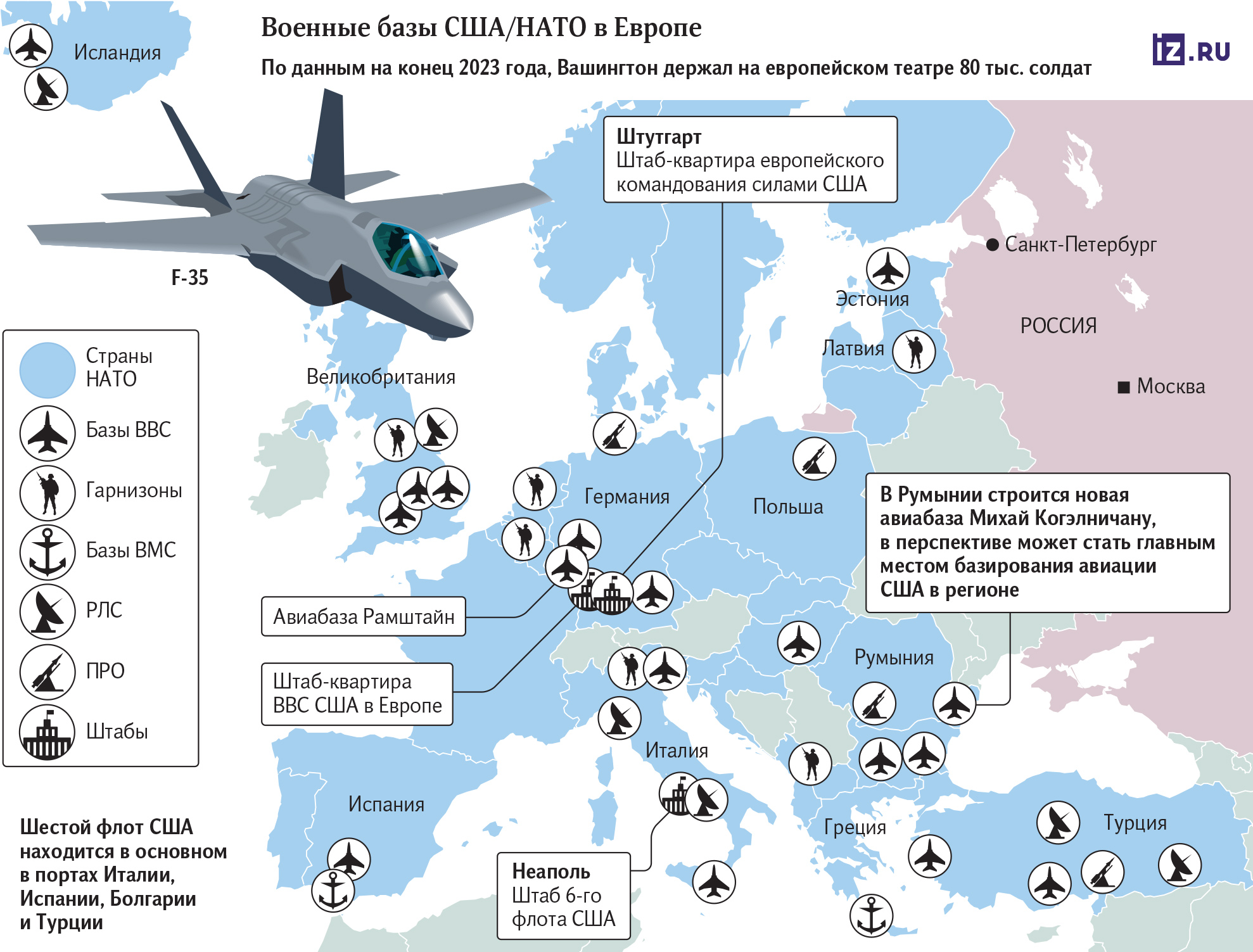
The NATO summit in The Hague showed that the alliance is moving into a mode of accelerated militarization, but internal disagreements hinder a unified strategy. Ukraine, despite the rhetoric of support, is increasingly being pushed into the background, and its path to NATO looks less and less "irreversible." However, "revanchist, aggressive, militant sentiments are returning in full force in Europe," says Russian Foreign Minister Sergei Lavrov.
Переведено сервисом «Яндекс Переводчик»
