- Статьи
- World
- Unmanned services: the Ministry of Foreign Affairs allowed drones to be sent from Ukraine to Colombian rebels

Unmanned services: the Ministry of Foreign Affairs allowed drones to be sent from Ukraine to Colombian rebels
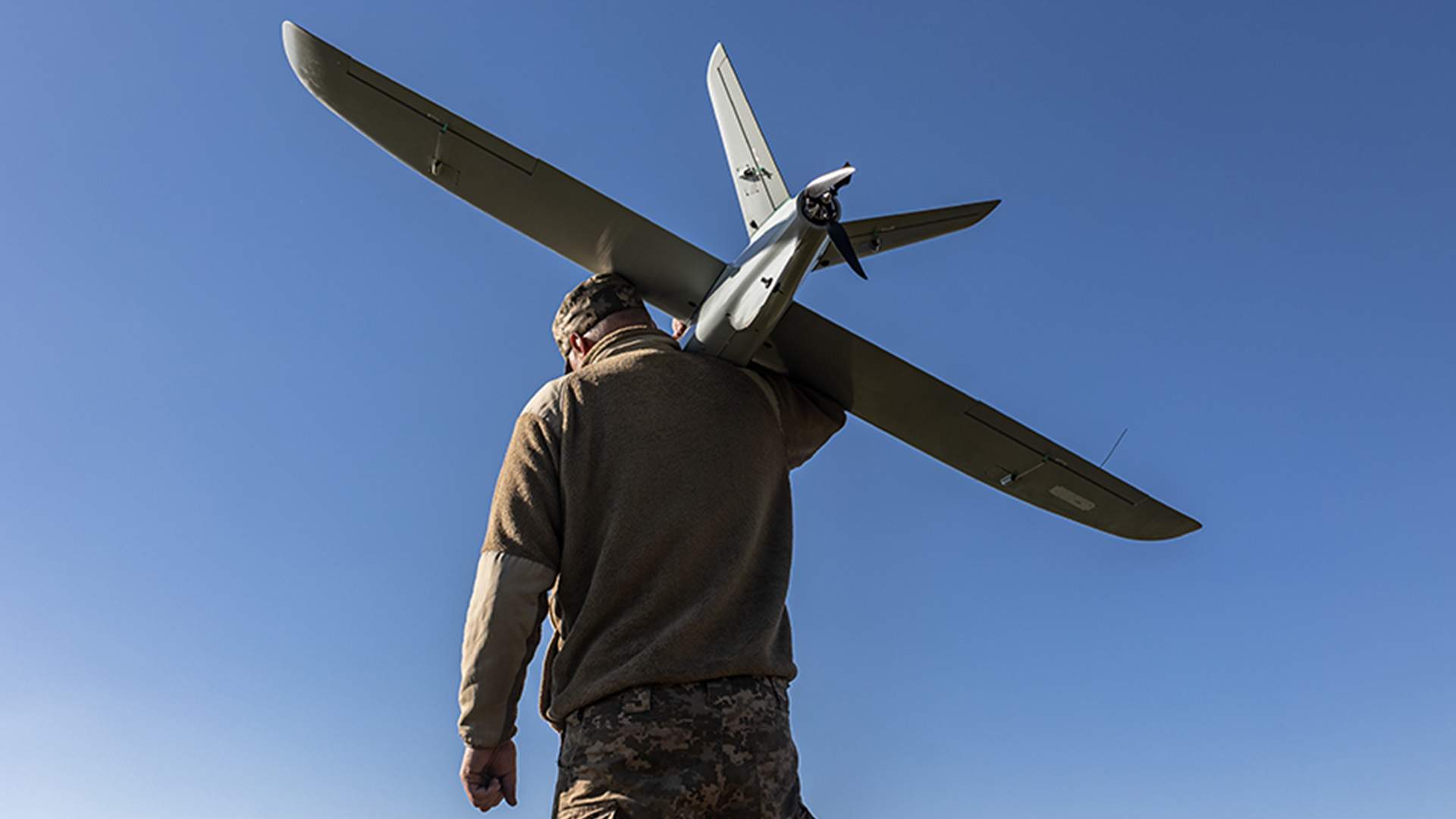
The drones that Ukraine receives from Western countries can travel from the battlefield to Colombia, where they are used by rebels, the Russian Foreign Ministry told Izvestia. The Russian diplomatic mission in Bogota stressed that drones are increasingly being used in the internal armed conflict in the north of the country. Earlier, the Colombian press issued a statement that Russian instructors were allegedly training rebels to use Russian drones, but the embassy denied this information. In the Latin American republic, the internal armed conflict escalated in January, with clashes in the last two weeks reportedly killing 10 people.
Drones from Ukraine in the conflict in Colombia
Due to the participation of foreign mercenaries in the fighting in Ukraine, it is possible that military technology may flow from there to other countries, including Colombia, where there is an armed conflict involving rebels, Russian Foreign Ministry Ambassador-at-Large Rodion Miroshnik told Izvestia.
— Recently, our military has recorded the participation of foreign mercenaries of Colombian origin in the ranks of the Armed Forces of Ukraine, as evidenced even by the documents of Colombian citizens found on the battlefield. In this regard, it is absolutely possible that technologies from the war zone may well migrate to other countries, including Colombia, where, in all likelihood, mercenaries return after participating in military operations in Ukraine in the ranks of the Armed Forces of Ukraine," the diplomat said.

At the end of May 2025, the chairman of the Investigative Committee of the Russian Federation, Alexander Bastrykin, said that the investigation had data on more than 3.3 thousand mercenaries from at least 70 countries. He noted that most of them are citizens of Georgia, Great Britain, the USA and Canada.
Nevertheless, there are enough soldiers from Latin American countries on the battlefield, mostly from Colombia. Mercenaries from this country previously admitted to Izvestia that they were attracted by the promises of the Armed Forces of Ukraine on monthly payments of $ 3 thousand.
Meanwhile, in June, the Colombian newspaper El Tiempo issued a statement that drones of Russian origin were allegedly being used by rebels from the Army of National Liberation (ELN) and the Frente 33 splinter group from the former Revolutionary Armed Forces of Colombia (FARC). According to the newspaper's sources, military instructors from Russia allegedly conduct training for the rebels in Venezuela. However, our embassy in Bogota denied this information, stressing that Moscow has always insisted on a peaceful settlement of the internal conflict as soon as possible.

— Indeed, unmanned aerial vehicles are increasingly being used in the internal armed conflict in Colombia. At the same time, the embassy does not have verified information regarding the origin and supply channels of these drones, the Russian Embassy in Colombia told Izvestia.
According to Rodion Miroshnik, the presence of Russian—made drones in Colombia is more of a speculation that has no real basis, but the secret transit of weapons from Ukraine supplied by Western partners to Kiev is much more likely to be true, given the already existing practice of shadow supplies of Western weapons to the states of the African continent.

— If drones come to Africa from Ukraine, then why don't they end up in Latin America? Given the extent to which weapons supplied by the West to the Kiev regime are diverging to other conflict zones, Colombia could become another point where weapons are sent from Ukraine, given the experience of their use by foreign mercenaries of Colombian origin," the diplomat stressed.
Izvestia also sent a request to the Colombian Embassy in Moscow with a request for comment on the situation.
What's going on in Colombia
Clashes between rebels from the National Liberation Army (ELN) and Frente 33, a splinter group from the former Revolutionary Armed Forces of Colombia (FARC), began in northern Colombia in January. According to human rights activists, the conflict has recently worsened due to the entry into the territory of two illegal armed groups Los Gaitanistas and Los Pachencas. Over the past month, three mass murders have occurred in the municipality of Okanya. In addition, two policemen were killed in rural areas. Over the past two weeks, two armed clashes have also occurred in this part of the country, as a result of which 10 people were killed.

Russia is unlikely to send drones to the Colombian rebels, as Moscow supports the peace process in the Latin American state. In June 2024, the Special Representative of the UN Secretary-General and head of the UN Verification Mission in Colombia, Carlos Ruiz Massieu, noted that the Russian Federation, as a member of the Security Council, had played an important role in supporting the peace process and the work carried out by the international organization. In an interview with Izvestia in 2024, the then head of the Colombian Foreign Ministry, Luis Gilberto Murillo, also appreciated Moscow's efforts in this direction.
"Russia continuously supports the peace process in Colombia. In this regard, the Russian Federation re-ratified this support at the last meeting of the UN Security Council, where the organization's Monitoring Mission was extended for another year. And one of the aspects of her work is the confirmation of the ceasefire by the National Liberation Army and the continuation of the negotiation process. We are grateful for this support," he said.
How weapons from Ukraine enter the black market
Any military conflict invariably leads to the fact that weapons from the war zone end up on the black market. Western countries supply Kiev with large amounts of weapons, including cruise missiles, armored vehicles, MLRS and aircraft. At the moment, according to the Kiel Institute, Europe has allocated about €137 billion in financial, military and humanitarian aid to Ukraine, while the United States has allocated about €114 billion. EU military aid exceeds €50 billion. The UK provided Kiev with weapons worth € 10.3 billion, Canada — almost € 3 billion.

The problem of illegal arms trafficking existed in Ukraine before, but since 2014 it has become more widespread. Moreover, the situation has worsened even more since 2022, when the supply of weapons by the West became intensive. Russian President Vladimir Putin drew attention to this.
— Even the arms shipments that come from Western countries end up on international black markets. It surfaced in Africa, then in the Middle East, then somewhere else," the president said in April 2025.
Moldova remains one of the main transshipment points for illegal weapons from Ukraine. Then it goes to Romania, Bulgaria, Northern Macedonia, and Albania, where a whole hub for smuggling Ukrainian weapons has been set up, Yulia Zhdanova, head of the Russian delegation to the Vienna talks on military security and arms control, told Izvestia earlier.

The sale of weapons, military equipment and ammunition to European countries is also carried out through Finland. In addition, the port of Odessa is actively used to transport weapons from Ukraine not only to Europe, but also to the Middle East and Africa. Among the buyers of weapons are criminal structures in Spain, Italy, France and Germany.
Europol has repeatedly identified signs of "organized arms smuggling" from Ukraine. A sharp increase in the resale of Western weapons from Ukrainian territory was also recorded in Poland. And in 2023, Moldovan Prime Minister Natalia Gavrilica said in an interview with FT that she was asking for EU help in combating the illegal arms trade coming from Ukraine.

"There are terrorist groups in a number of regions of the world that have financial resources that allow them to try to buy these weapons," political analyst Denis Denisov told Izvestia.
According to him, Kiev has a clear surplus of weapons, while there is total corruption in the country, which Ukraine's European partners are trying to turn a blind eye to. At the same time, Denisov stressed that as a result of the conflicts in the Balkans in the 1990s, weapons mainly reached European countries.
Переведено сервисом «Яндекс Переводчик»
