
Have been terminated: what is behind the truce between Iran and Israel
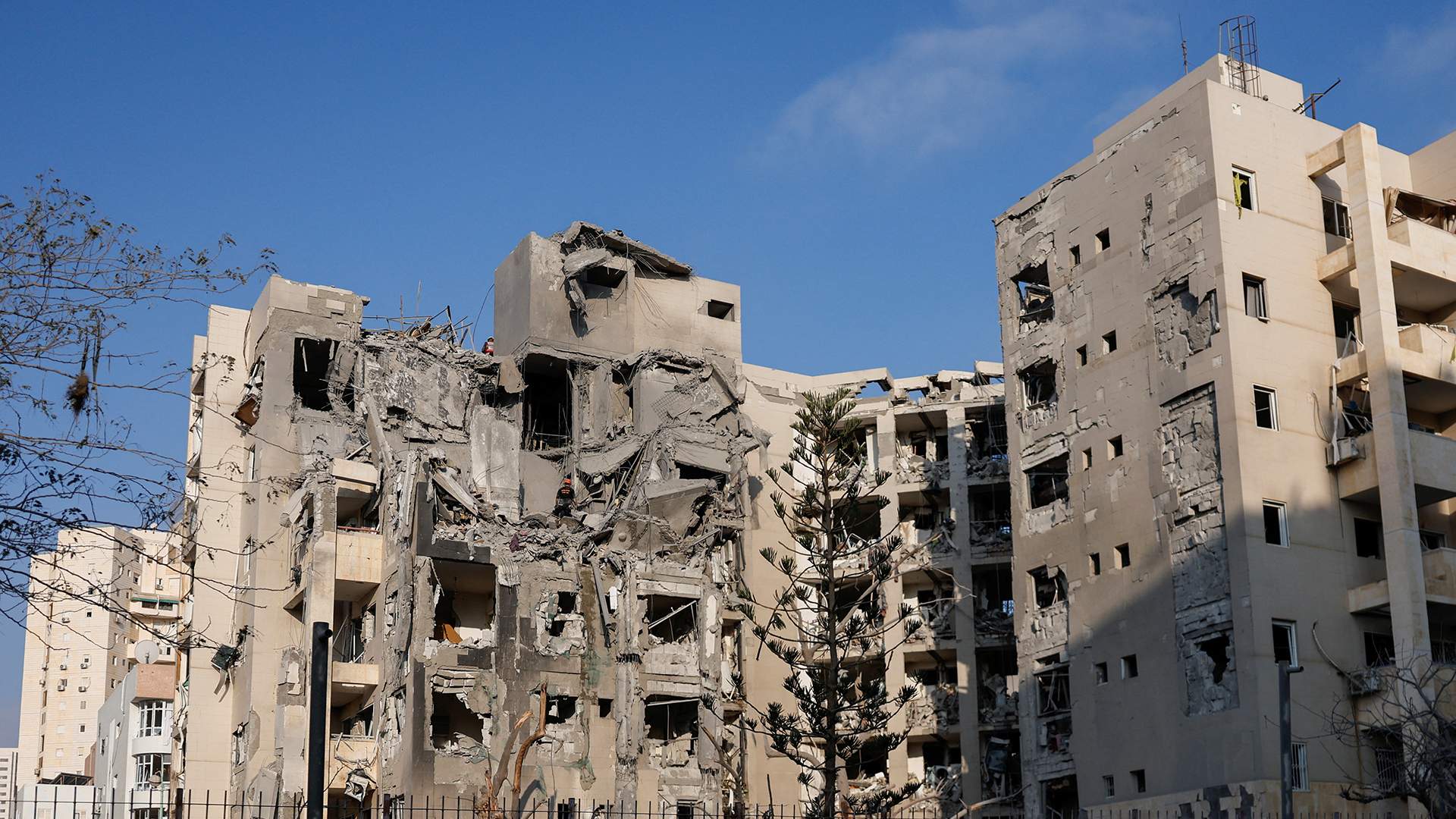
After 12 days of military escalation in the Middle East, US President Donald Trump announced the achievement of a "complete and final truce" between Israel and Iran. The statement made on the night of June 24th came as a surprise. A few hours earlier, Iran launched a massive missile attack on an American air base in Qatar, while Israel continued to carry out attacks on Iranian territory. Yesterday, Iranian Foreign Minister Abbas Araqchi visited Moscow, where he met with Russian President Vladimir Putin. How durable this truce will turn out to be and whether it means a real path to de—escalation is in the Izvestia article.
The Iran-Israel Truce
The armed conflict between Israel and Iran broke out on June 13 after Israeli airstrikes on military, energy and nuclear facilities in the territory of the Islamic Republic. In response, Tehran fired dozens of rockets and drones, some of which reached targets in Israel. This is the first time that the sides have clashed directly on such a large scale: more than 600 Iranians and at least 25 Israelis have died as a result of the fighting. Both sides have demonstrated their willingness to escalate, despite warnings from the international community.
Nine days after the start of hostilities, on the night of June 22, Washington attacked three Iranian nuclear facilities — in Fordo, Natanz and Isfahan. According to a White House official, these strikes "created the conditions" for the start of negotiations on a cease-fire. Nevertheless, Iran conducted a rocket attack on the American airbase Al-Udeid in Qatar on June 23 in response to the actions of the United States. Of the 19 missiles fired, only one reached the base, causing minimal damage. According to the Ministry of Defense of Qatar, there are no casualties. In addition, military bases in Iraq, where the military of the international coalition led by the United States is stationed, were attacked.
— We were at the hypermarket — we saw flashes in the sky, at first we thought it was fireworks. And then we realized that something serious was flying," Mustafa, an eyewitness who lives in Qatar, tells Izvestia.
His friend Mohammed tried to film what was happening on his phone, but the falling debris forced them to take cover urgently. According to him, panic began in shopping malls: visitors ran to parking lots, many rushed home.
The Ministries of Foreign Affairs of Qatar and other Gulf states condemned the strike on the territory of the state, regarding it as a violation of sovereignty. Doha threatened Tehran with an "adequate response at the appropriate time."

As a result, the peace agreement was the result of intensive negotiations involving Qatar, a senior White House source told the New York Times. According to him, the Emir of the state, Sheikh Tamim bin Hamad Al Thani, played a key role in mediation between the parties. "The ceasefire has entered into force. Please don't break it!", Trump wrote on the Truth Social network.
— Both the Iranian and Israeli sides declare the achievement of their goals. Israel talks about weakening Iran's nuclear and missile programs, and Iran talks about curbing Israeli aggression. Thus, the parties demonstrate some satisfaction with the current status quo, and are generally ready to detente," orientalist Leonid Tsukanov told Izvestia.
However, within three hours of Trump's statement, the Israeli military reported that it had detected launches from Iran. They denied this information. The Minister of Defense of the Jewish state, Israel Katz, said that Israel would "respond harshly," which called into question the consistency between the parties. On the afternoon of June 24, Israeli aircraft attacked a radar station near Tehran in response to Iran's morning shelling of Israeli territory. Trump said he was unhappy with both sides in light of the ceasefire violations.
None of these incidents led to the resumption of full-scale hostilities, which indicates restraint and mutual unwillingness to return to the acute phase, Leonid Tsukanov believes. As the orientalist emphasizes, one should not expect a complete cessation of the conflict.
The United States has fulfilled its goal
Iran has notified the United States in advance of its intention to strike at the American Al-Udeid airbase in Qatar, Donald Trump said. This fuels the theory that the US attack could have been coordinated in advance, albeit behind the scenes, with the Iranian leadership. The strikes could be more aimed at demonstrating strength and satisfying the internal audience. This version is supported by the limited losses, both human and technical, despite the scale of the operation.
Thus, Bloomberg, citing satellite images and four senior sources in Vienna, reports that the Americans, attacking the nuclear center in Isfahan, Iran, deliberately did not strike at buildings in which, according to experts, research reactors are located.
A similar situation has already occurred before — after the assassination of General Soleimani in 2020, when Iran retaliated against the American base in Iraq, warning in advance about it. Then both sides actually avoided escalation. It is possible that the current exchange of blows is part of a similar scenario, the purpose of which is not so much military destruction as a political demonstration of capabilities.
According to Andrei Baklanov, Deputy Chairman of the Association of Russian Diplomats and Professor at the National Research University of Higher School of Economics, the United States has generally achieved its goals: it needed an externally successful military operation in order to move on to solving other, including internal financial and economic problems.
At the same time, the interests of the United States at this stage largely coincide with those of Israel, although Tel Aviv has its own nuances in its approach to the Iranian threat. At the same time, the ceasefire announced by Trump is more of an operational nature: it is a pause, and not the result of any solid agreements. According to the diplomat, the parties have not yet agreed on anything like this through official channels.
Trump demanded that Iran dismantle its nuclear program, including the research complexes at Fordo and Natanz, and return to the negotiating table.
— From Washington's point of view, the goal has been achieved, and now we can move on to the stabilization stage. Recriminations and exchanges of blows will continue, but they do not change the overall situation. The parties are not capable of getting involved in a large—scale conflict with the use of armed forces of all kinds," Andrei Baklanov told Izvestia.
The American stock market reacted to the escalation with restraint. The S&P 500 index lost 1.13% after Iran's retaliatory strikes on Israel, but after the first week of attacks, the decline was only 0.39%. Such a moderate reaction to the worsening situation in the Middle East may indicate expectations that the impact on energy prices will be limited. According to Jonas Golterman of Capital Economics, only serious damage to the energy infrastructure or the blocking of the Strait of Hormuz, a key tanker transportation route, can cause a steady increase in oil prices.
The day before, Iranian Foreign Minister Abbas Araqchi visited Moscow and met with the Russian president in the Kremlin. Vladimir Putin stressed that the unprovoked aggression against the republic has no justification.
The Russian president also discussed the situation in the Middle East during a telephone conversation with King of Bahrain Hamad Bin Isa Al Khalifa on June 24. In addition, the leaders touched upon the results of the last SPIEF, in which Bahrain participated as a guest country.
Iran's nuclear potential
After Donald Trump triumphantly announced the "destruction of Iran's nuclear potential," Washington recognized that it was too early to assess the real consequences of the strikes. The key question remains open: was it really destroyed, or did the program just go into the shadows — into closed and classified facilities.
According to the IAEA, by June 10, that is, just a few days before the American strikes, Iran had a stockpile of 408.6 kg of uranium enriched to 60%. In theory, this material is enough to produce more than nine nuclear charges after increasing enrichment to 90% weapons grade. It is unknown what happened to this stock after the strikes.
The head of the International Atomic Energy Agency, Rafael Grossi, demanded the immediate access of inspectors to nuclear facilities. According to him, the IAEA "needs to establish the exact location and volume of the remaining enriched uranium."
According to the agency, Iran had about 22,000 centrifuges before the strikes, but experts estimate that the exact number may be even higher — it is possible that some of the installations are located in unknown locations.
Richard Nefew, an ex-employee of the US National Security Council, who worked on the Iranian dossier in the Obama and Biden administrations, said: "It all comes down to the question — where is the material now? We are not sure yet that we are in control of the situation. It would be naive to think that the program has been thrown back more than a few months."
US Secretary of State Marco Rubio said in an interview with CBS: "It is unlikely that Iran managed to move the material — the degree of surveillance is too high. Any truck that left the base would have been destroyed immediately. Israeli drones can see everything."
However, a source within the Iranian establishment, close to the military leadership, gave the Financial Times the opposite version: "It would be naive to store enriched uranium in such obvious places. The material is intact." This statement may indicate that Iran was preparing for such a development and had moved its strategic reserves in advance.
— The Iranians, of course, have no opportunities to switch from a technological breakthrough to the production of weapons, this is unrealistic, — says Andrei Baklanov.
According to him, the idea of using nuclear weapons on Israeli territory looks absurd from a humanitarian point of view, as 2 million Palestinians living on the same lands would suffer. All this, according to Andrei Baklanov, makes the topic of the "Iranian bomb" more of a political pressure tool than a real threat.
Переведено сервисом «Яндекс Переводчик»
