
Persian Code: how Russia and Iran are trying to end the war in the Middle East
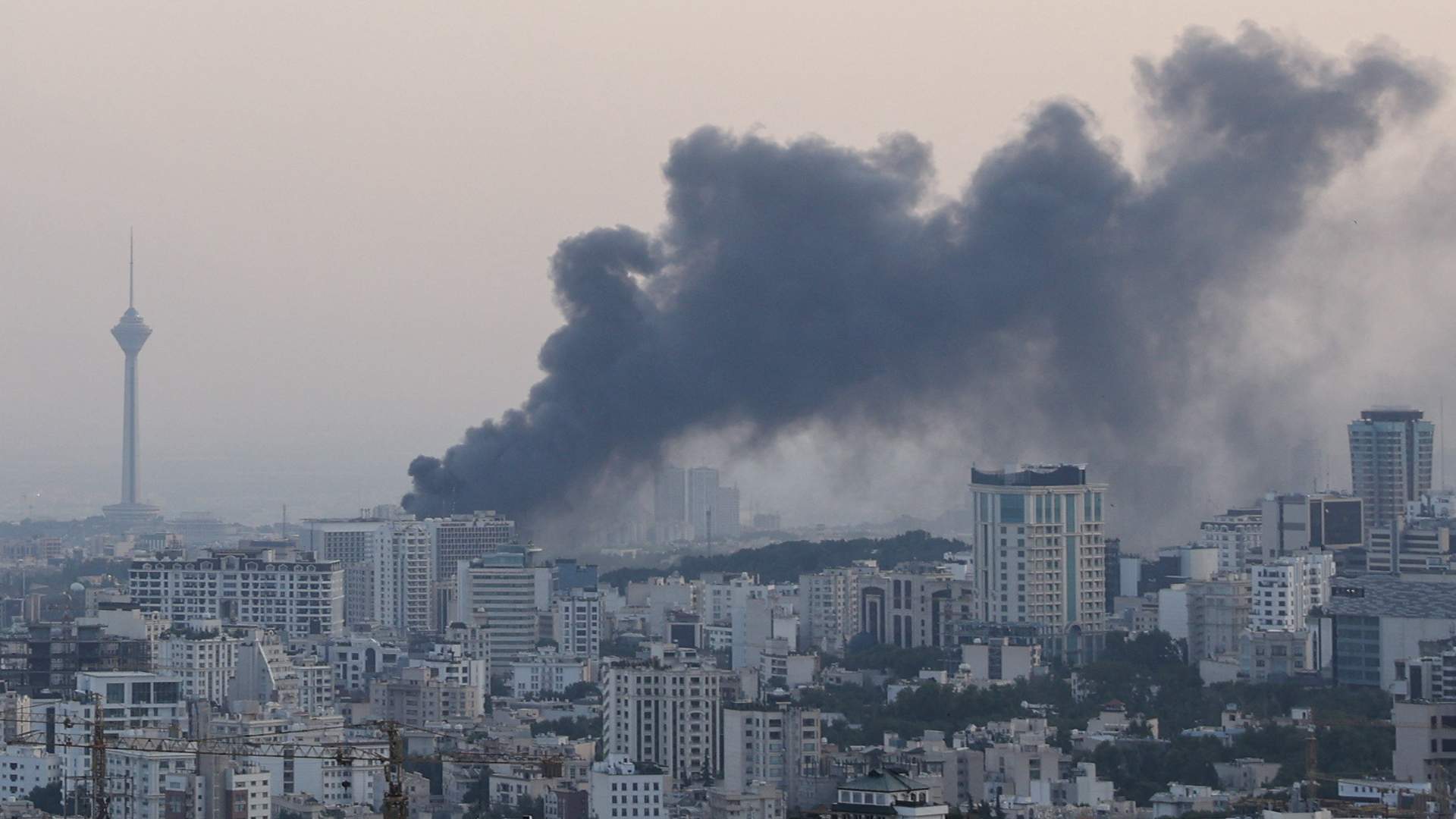
Aggression against Iran has no justification or grounds. Vladimir Putin said this on June 23 at a meeting with the Foreign Minister of the Islamic Republic, Abbas Araqchi, which focused on the prospects for normalization of the situation in the region. The talks took place in the Kremlin. The conflict between Iran and Israel has reached a new round of escalation after the United States launched a series of attacks on Iranian nuclear facilities. The next step on the part of Tehran could be attacks on Washington's military bases in the Middle East, as well as the potential closure of the Strait of Hormuz, experts warn.
Putin receives Iranian Foreign Minister
The Russian Federation is making every effort to assist the Iranian people, Vladimir Putin began a meeting with Abbas Araqchi on June 23. On the Russian side, Foreign Minister Sergei Lavrov, Presidential Aide Yuri Ushakov, and Chief of the Main Directorate of the General Staff of the Russian Armed Forces, Deputy Chief of the General Staff of the Russian Armed Forces Igor Kostyukov also participated in the talks in the Kremlin. The Iranian delegation included Kazem Jalali, Ambassador Extraordinary and Plenipotentiary of the Republic to Russia, and Kazem Gharibabadi, Deputy Foreign Minister for International Legal Affairs.
— The aggression against Iran, which was absolutely not provoked, has no grounds and no excuses. We have long—standing good, reliable relations with Iran," the Russian leader said.
Vladimir Putin stressed that he had previously discussed the escalation with White House Chief Donald Trump, Israeli Prime Minister Benjamin Netanyahu, UAE President Mohammed Al Nahyan, as well as with Iranian President Masoud Peseshkian.
Shortly before the meeting with the head of the republic's Foreign Ministry, Vladimir Putin also phoned with Iraqi Prime Minister Mohammed Sudani. The sides exchanged views on the situation in the Middle East, noting that the actions of the United States and Israel grossly violate the UN Charter and other norms of international law, and are fraught with extremely dangerous and unpredictable consequences for the stability of the region and the entire global security system.
Araqchi, addressing the Russian leader, noted the close and good relations between Moscow and Tehran, which have acquired a strategic character in recent years.
— We are constantly consulting with our Russian colleagues on a regular basis on all areas and issues of global security. In the field of Iran's nuclear program, the Russian Federation, as a partner, is building a nuclear power plant in Bushehr, helping us in this area, as well as in reaching nuclear agreements. The Russian Federation has played a positive role so that we can reach good agreements," he added.
The diplomat drew attention to the illegitimacy of the actions of Israel and the United States and to the justification of his country's defensive actions.
The prospects for a peaceful resolution of the conflict were discussed at the meeting in Moscow, Russian Presidential spokesman Dmitry Peskov said. Earlier, senior Iranian sources allegedly told Reuters that Tehran was still "not impressed" by Russian support and would like Moscow to do more, without specifying exactly what actions they expected. However, even at the SPIEF plenary session, the Russian leader called provocateurs all those who call Russia an unreliable ally on the issue of the Israeli-Iranian conflict.
— First of all, Moscow's political support and authority in the United Nations are important to Iran in order to ensure maximum information support for Tehran's actions and protect it from possible pressure through the United Nations structures from the United States and Israel. It is also important for Russia to declare its conviction in the peaceful nature of the Iranian nuclear program, this will help reason with the IAEA Board of Governors and reduce the risk of new sanctions against the republic, says orientalist Leonid Tsukanov.
If these actions are carried out, Russia will not be directly involved in the conflict, the expert continues. At the same time, Moscow's participation in the diplomatic defusing of the crisis in the Middle East is beneficial for the United States.
— Even taking into account the fact that Trump has previously stressed his unwillingness to include Russia in the group of mediators on Iran, Moscow can reassure Tehran and deter it from excessive attacks on American bases in the Middle East. Washington is partly counting on Moscow now, although they are not officially talking about it, Tsukanov is sure.
The number of casualties on the Iranian and Israeli sides
The conflict between Iran and Israel has reached a new round of escalation after the direct intervention of the United States in it. As White House spokeswoman Caroline Levitt stated on June 23, American strikes on Iranian Natanz, Fordo and Isfahan completely destroyed the nuclear facilities located there and hit the storage sites of enriched uranium. At the same time, the American leader did not inform his Russian counterpart about his intentions to strike at the Islamic Republic, Dmitry Peskov said.
The IAEA claims that attacks on three sites of Iran's nuclear program have caused damage to the enterprise. Speaking at an emergency meeting of the UN Security Council, the agency's Director General, Rafael Grossi, said: craters are visible at the Fordo site, and buildings related to the uranium conversion process have been damaged at the Isfahan facility. At the same time, according to him, there was no increase in radiation levels at these facilities.
Grossi called for a return to negotiations in order to achieve a long-term guarantee that Iran will not receive nuclear weapons. At the same time, even before the American military operation, Trump spoke about his readiness to give Tehran a maximum of two weeks to conclude a deal on the nuclear program, from which, by the way, Washington itself withdrew.
— After President Donald Trump's order to strike at Iranian nuclear facilities, the discussion of the possibility of concluding a new deal with the Islamic Republic has lost all political and diplomatic meaning — at least for the foreseeable future. The very nature of Washington's actions, accompanied by the harsh and aggressive rhetoric of the head of the White House, was perceived in Tehran not just as a manifestation of pressure, but as an existential threat to Iran's political and state system," said Farhad Ibrahimov, an orientalist and lecturer at the RUDN University Faculty of Economics.
According to him, Trump's speeches, in which he actually calls for a change of power in Iran, do not give Tehran the "moral right" to discuss anything with him until he changes his rhetoric. After all, Trump's slogan "Make Iran great again" is, in fact, aimed at mobilizing protest sentiments and delegitimizing the existing regime.
— In the context of the ongoing Israeli strikes on Iranian territory and growing regional tensions, the idea of dialogue looks illusory. Neither side is demonstrating a willingness to de-escalate. The Iranian political elite, despite the existence of internal political differences, is showing consensus on a key issue: concluding an agreement with the United States is an inappropriate and risky step in the current conditions, and Trump, according to Tehran, is an unpredictable politician whose promises are not sustainable, he added.
The IAEA calls on Iran to stop the operation of its nuclear facilities, which have become targets of Israeli and US strikes, to ensure the safety and access of inspectors to them so that they can assess the situation on the ground. Moreover, the authorities should inform the international agency about the transportation of nuclear fuel from facilities to other locations in the country. According to The New York Times (NYT), the US leadership is not aware of where Iran could have moved its enriched uranium reserves after American strikes on nuclear facilities. Iran's permanent Representative to the world organization, Amir Saeed Iravani, however, called on the Security Council to take immediate action against the United States and Israel, in particular, to place the Jewish state's nuclear facilities under the control of the IAEA.
The United States now highly appreciates the risk of a counterattack from Iran and expects a military response in the next few days. At the same time, it is already known about the strike on the US military base in the western province of Hasakah in Syria. Washington also has military bases or outposts in Bahrain, Iraq, Jordan, Qatar and the UAE. According to NYT estimates, some facilities may be attacked by both Iranian missiles and Tehran's "proxy" forces, including, for example, the Houthis (the Ansar Allah movement in Yemen).
Meanwhile, Iran and Israel continue to exchange blows. Tehran's attack on the Jewish state on June 23 was the longest since the beginning of the armed conflict, the Islamic Revolutionary Guard Corps said. At the same time, Iran used the Qadr H multi-warhead ballistic missile for the first time. The Israeli military, in turn, attacked the vicinity of the Iranian nuclear facility in Fordo.
On June 23, the Iranian authorities reported that since the 13th, when Israel launched a military operation against the Islamic Republic's nuclear program, Tehran has destroyed more than 130 Israeli drones, more than 10,000 drone mines have been discovered, and several dozen Israeli spies have been detained.
According to the Iranian Ministry of Health, more than 400 people were killed and at least 3,000 injured in the country. Israel said that more than 20 people were killed and 1.2 thousand injured by Iranian strikes.
— It seems that the parties would prefer to end the conflict, but cannot agree on the terms. Iran is being demanded to surrender almost unconditionally, but it is trying to save face and insists on stopping the strikes as a precondition for dialogue. In this situation, the longer the Iranians hold out, the more likely they are to conclude a truce on acceptable terms, since it is difficult and expensive to maintain the current intensity of strikes, Nikolai Surkov, a senior researcher at the IMEMO Center for Middle East Studies, told Izvestia.
In the current configuration, a cease-fire is possible, Leonid Tsukanov believes, but it requires a first step from Israel, as the party that initiated the transition of the conflict to a hot stage. However, now the authorities of the Jewish state are not ready for such steps. Tehran, on the other hand, does not want to accept the terms of the truce first, since there are no guarantees that the obligations will not be violated by the opposite side, the expert noted.
What will the closure of the Strait of Hormuz lead to?
Another scenario for Iran's response to American strikes on its territory could be the closure of the Strait of Hormuz, as the republic's parliament unanimously voted to block the oil and gas supply channel from the Middle East to Europe and America.
— First of all, it will hit the energy market due to the reorientation of supply chains. Oil prices will rise, and some pessimists predict a jump to $300 per barrel. This may be excessive, but a one-time increase of at least $50-70 is likely. So far, Iran is holding this trump card for last, but given the current vector of the conflict, the transition to blocking the strait is a matter of time, Tsukanov believes.
According to Surkov, Iran controls only the northern part of the strait. An attempt to establish a complete blockade by laying mines or using underwater drones would mean reaching a new level of crisis, as the Arabian monarchies would be drawn into it.
— At the same time, a partial blockade cannot be ruled out for ships associated with Israel and the United States. By analogy with the actions of the Houthis in the Red Sea. In this case, the United States is likely to be further involved in the conflict, which will have to use its fifth fleet to protect freedom of navigation in the Strait," the expert says.
The UAE is ready for such a scenario, Surkov believes. They have built an oil pipeline to the coast of the Indian Ocean, which will allow them to partially maintain export volumes, but countries such as Kuwait or Qatar will face problems. Energy exports from Iraq and Iran itself will also be at risk, he concluded.
Переведено сервисом «Яндекс Переводчик»
