
"We call the economic situation cooling with recession risks"
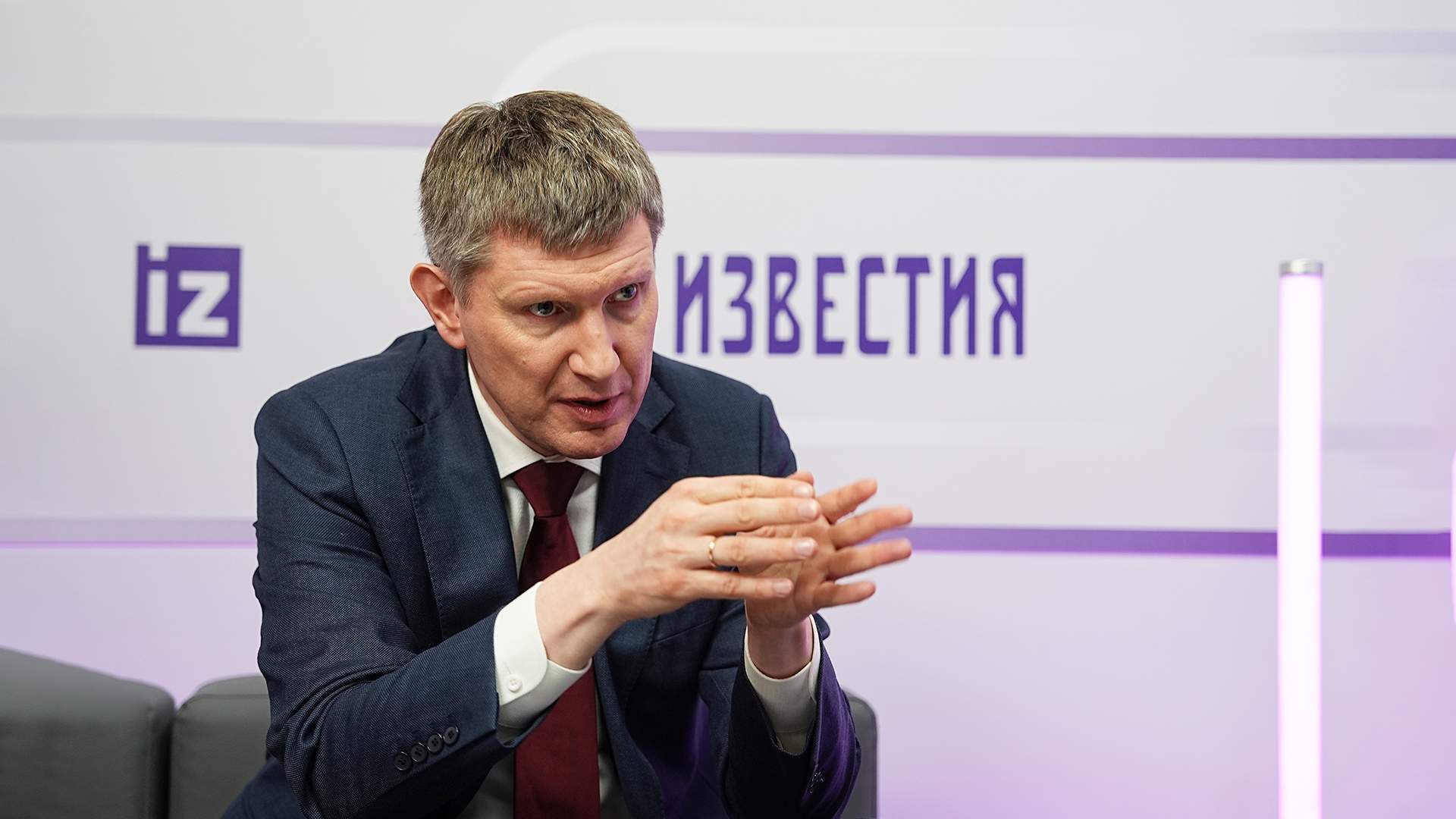
Monetary conditions in Russia have significantly tightened this year: inflation has slowed, but the key rate is still too high, so business lending is stagnating. And then the situation may become more complicated, as banks may not have enough capital to issue a sufficient amount of loans. This was stated by Minister of Economic Development Maxim Reshetnikov in an exclusive interview with Izvestia at SPIEF 2025. According to him, the price growth slowed down to 1.5-2% at the beginning of the year. However, the risks of economic hypothermia remain. How Russia is coping with the personnel shortage and what principles the authorities will adhere to when returning foreign companies — in an interview with Izvestia.
"Our monetary conditions have been tightened three times"
— Elvira Nabiullina recently compared the situation with inflation in the country with Beethoven's ninth symphony, the final part of which is "Ode to Joy". And what kind of musical composition would you compare the whole situation in the Russian economy with?
— It's difficult for me. Economics is about numbers. I'm more about rock, but I think such comparisons would be meaningless here.
What is happening with the economy now? The key question is where is the line between cooling and hypothermia, or, as it is called, stagnation and recession. If we look at the statistics, the economy is cooling down, and noticeably.
But the problem with our statistics is that it's a rearview mirror. We have salary data from March, and production data from April. But even they show that the area where the economy continues to grow has become very narrowed — these are sectors related to the military-industrial complex, construction, mineral fertilizers, where there is a clear seasonality. Otherwise, economic growth is slowing down.
This can be seen in other indicators. For example, the number of vacancies on our websites is hh.ru "Work in Russia" is already 30% below its peaks. That is, the labor market is cooling. Demand is also not in the best shape. In general, there is a fairly visible decline, which, unfortunately, continues.
— What do you see as the main reason?
— The reason is clear. Interest rates have increased, and monetary conditions have tightened significantly.
If we take monthly inflation converted into an annual index, then by December it was about 15% in Russia. Then the key rate was 21%, that is, the real rate was 6%. But it is clear that no one received loans at 21%. In addition, banking regulation and macroprudential limits have led to a significant increase in the premium to the "key".…
In April-May, we have monthly inflation, converted into annual inflation — about 5%. And the rate, even taking into account the reduction, is 20%, that is, the real rate is 15%. And it was in December — 5%. In other words, our monetary conditions have been tightened three times. That's why we see stagnation in lending.
At the same time, our money supply is growing at the same rate as in 2016-2019. But this year it was supported not by loans, but by increased budget expenditures. In fact, the costs of the second half of the year were shifted to the first, because national projects were launched on time, a number of defense expenditures were financed, and so on — everything is working rhythmically like clockwork. If this were not the case, the money supply would shrink even more.
According to our estimates — we disagree with the Central Bank here — we are not reaching the increase in lending of 14 trillion, which we talked about as a kind of indicator in November-December last year. According to our estimates, we are even going below the lower limit of the Central Bank — somewhere at the level of 7 trillion.
We call this situation in the economy a cooling down with risks of recession.
Moreover, there are several issues that will open up to us after monetary policy stabilizes sooner or later. This is a matter of banks' capital — most of them will not have enough to continue lending to the economy. Everything is fine now, but the Central Bank is tightening the requirements and returning to the basic standards. In other words, the players simply will not be able, due to regulatory regulation, to lend to the economy in the amount that we need.
And, of course, while we are dragging out a period of high interest rates, losses are accumulating in the real sector. The more we accumulate these losses, the longer we will wait for the economy to transition and return to the investment stage of growth. Because enterprises will have to offset these losses somehow.
All this creates tangible risks for economic growth. And this is, in fact, the focus of our discussion between the Central Bank, the economic bloc, industry departments, and the Ministry of Finance.
— Is there a risk of stagflation — when the economy is not growing, while inflation is increasing?
— Inflation was 4-5% in April-May, and in June, if we take weekly data, which, of course, must be carefully recalculated, inflation was 1.5-2%.
— So you don't agree with the experts who say that we are moving towards stagflation?
— We can get stagnation. That's all with inflation, the economy has reacted.
An important sign that we don't have enough demand is a strong ruble exchange rate. He says that we have no demand for foreign currency because there are not enough imports to balance the balance.
"Consider that we have reached the target level in terms of inflation"
— Today, in a session with Elvira Nabiullina, you said that you need to show "a little love for the economy" and not reduce everything to the goal of 4%. In early June, annual inflation was almost 10%, while the Ministry of Energy predicted a lower 7.6%. What would you call the acceptable level of price growth now?
— We need to avoid getting confused about the indicators. Yes, annual inflation is now 9.6%, but it includes the low figures of recent months plus the high one that was before that. This is the "tail" that is. But if we take the current price increase in two months, it will be lower. That's why we say that inflation has decreased. The average inflation rate for the last three months is 4.5%. Consider that we have reached the target level. It is necessary to focus on it and take it into account and make decisions based on it.
If we go back to the annual figures, the updated macro forecast of the Ministry of Economy for the end of the year is 7.6%, but it will be lower. In July and August, we will revise the forecast to reflect the balance. We are currently analyzing all external risks and trade wars. Possible threats are Iran and Israel.
Therefore, we will delay making the forecast as close as possible to the adoption of the budget in order to calculate it as accurately as possible. We're going out with him in August. Of course, inflation will be strongly revised, as will economic growth.
— Another risk to the economy is staff starvation. According to the Ministry of Economic Development, how tough will the labor market be and what will make it more flexible and responsive to the challenges of economic growth?
— The labor market will remain labor-deficient. What will make it more flexible? We still have certain opportunities to increase the involvement of people in the workforce. The cohort of young people aged 15-24 is growing now, and it is important for us that children immediately after graduation or even in parallel with their studies get the job they like and where they will continue to work.
The recently released university ranking, reflecting the situation from the position of the employer, employment, and salaries, which was prepared by Anton Kotyakov and his colleagues, and where we also participated closely in the discussion, shows an interesting picture. The universities ahead are not at all the ones we expected to see. This is a good tool to involve young people in labor relations as quickly as possible, to involve the older generation and to increase the flexibility of the labor market.
In addition, we have developed a draft law that we have been discussing with the trade unions for a long time, and more or less agreements have been reached on it. It allows us to make overtime work more flexible, which will give people the opportunity to earn more. Now there is a limit: only 120 hours for an indefinite period, no more. And employers exhaust themselves in different ways. This is such an atavism of the Soviet times, but unfortunately, there are groups that cling to them. This must be overcome.
Another resource is labor productivity, which needs to be dealt with in a substantive manner. We are currently developing productivity improvement programs with each industry. Moreover, both with social sectors and with the real sector. Take public transport, for example. Labor productivity varies significantly from region to region. The processes are organized in different ways.
"If a Russian business has invested in import substitution, we will give it a period for the investment to pay off."
— You already said at the forum that the return of Western companies would have a positive impact on competition and price stabilization. But won't this undermine import substitution efforts, which have already invested a lot of money?
— We said that we would take a differentiated approach. If a Russian business has invested in import substitution or replaced foreigners, we will give it a period for the investment to pay off. And only after that we will normalize the situation. Our position here is that the Russian business, who believed, who invested, especially at this level of rates, should be calm. He needs to ensure that his investments are protected.
— Are there any real requests from foreign businesses to return?
— There are conversations going on. There are some contacts in the sectors, among others. But this is an area where we will talk only when we reach specific agreements.
Переведено сервисом «Яндекс Переводчик»
