- Статьи
- World
- Dependency Day: what will happen if the United States enters the conflict between Iran and Israel

Dependency Day: what will happen if the United States enters the conflict between Iran and Israel
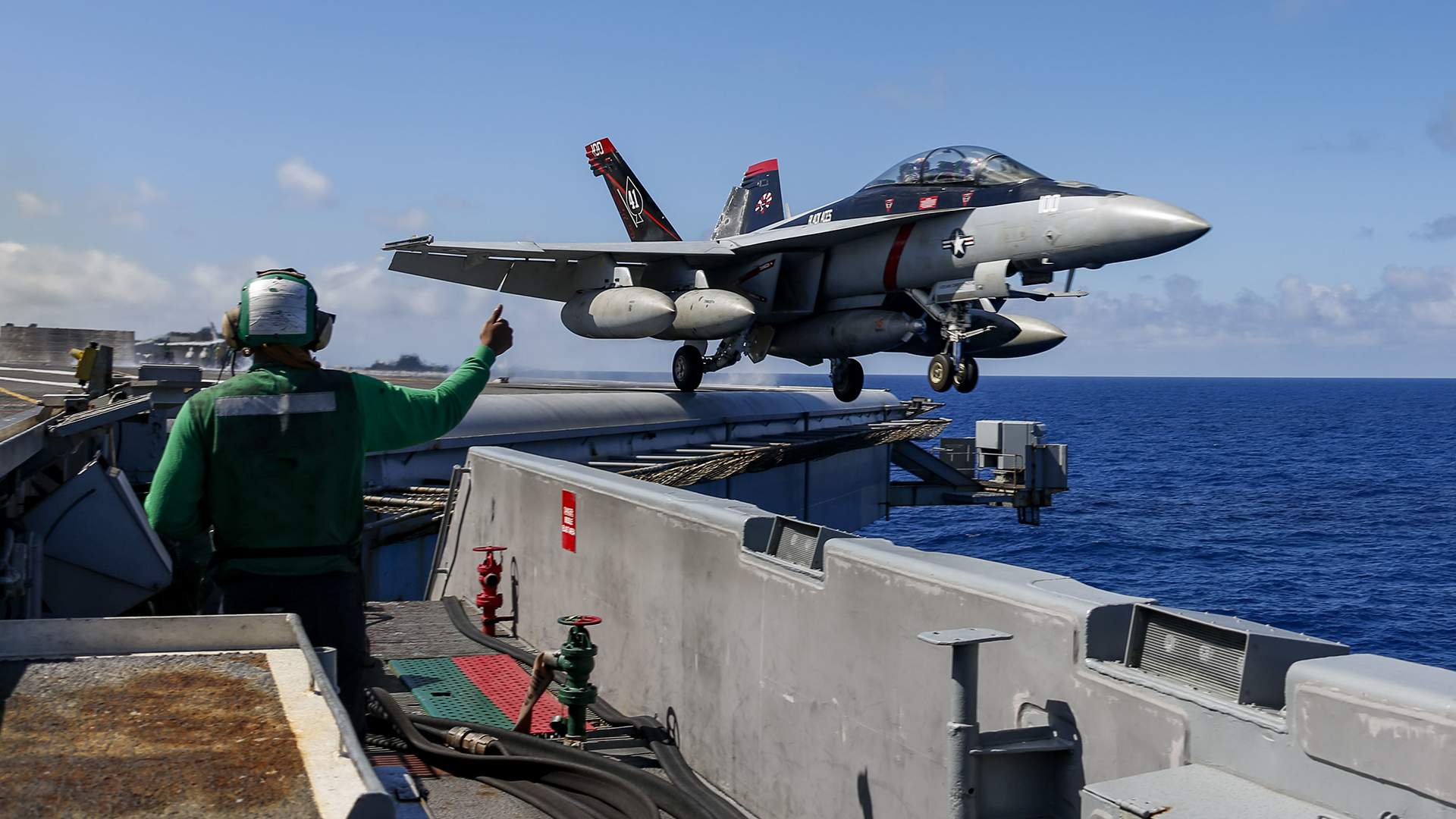
The entry of Americans into the conflict between Iran and Israel threatens to expand the confrontation beyond these states and attacks on the territories of other countries in the region, according to the expert community. The United States should make a decision on possible strikes on the territory of the Islamic Republic in the next 24 hours. But there is no unity among Donald Trump's advisers on this issue: many recall the failures in Afghanistan, Libya and Iraq. In the meantime, Trump has said that Iran's leader Ayatollah Ali Khamenei is an "easy target" and the United States knows where he is hiding. At the same time, countries are emerging that are ready to mediate to resolve the conflict. In particular, Switzerland can help in resolving the Iranian-Israeli confrontation, the Ministry of Foreign Affairs of the European country told Izvestia.
The United States may strike at Iran
The next 24-48 hours will be key to the conflict between Iran and Israel, his advisers told Donald Trump on June 17. During this time, foreign journalists believe, the United States will decide whether Washington should continue diplomatic efforts or move to military action.
The American president also stated on his social media that Iranian leader Ayatollah Ali Khamenei is an "easy target" and the United States knows where he is hiding, however, they are not going to kill him "at least for now." In another post, Trump stated that the United States has full control of the skies over Iran. Next, in a separate publication, the Republican wrote "unconditional surrender," but this idea did not receive any further development.
Meanwhile, the supreme leader of the Islamic Republic warned the United States against such actions. The entry of the United States into a direct military conflict with Iran does not meet American interests, as the United States will suffer much greater losses than Tehran, Ayatollah Ali Khamenei said.
"Americans and those who are familiar with the politics of this region know that America's involvement in this issue will certainly be to their detriment and they will receive a blow. A blow that will be much more devastating than the damage that Iran will suffer," he said in an address to the nation. Khamenei's words are quoted by his press service.
At the same time, there has been an increase in the number of American military personnel at Middle Eastern bases. Now there are about 40 thousand people there, which is 10 thousand more than usual. Informed American media sources claim that a similar increase in the contingent occurred in October 2024, when Iran launched strikes against Israel in response to the latter's elimination of the heads of Hamas, Ismail Haniyeh (killed in July) and Hezbollah, Hassan Nasrallah (killed in September).
In addition, the United States has already deployed several fighter squadrons to the Middle East, and a number more have been put on standby, the media reported.
— The United States has deployed about 40 KC-135 and KC-46 tanker aircraft to Europe. This is a fairly serious fleet, it is reinforced with fifth-generation F-35 aircraft of the American Air Force and F/A—18 aircraft," Dmitry Kornev, editor of the Militaryrussia portal, told Izvestia. — There are two aircraft carrier groups in the Middle East. On June 17, some of the aircraft were transferred to Saudi Arabia and to some American bases in the Persian Gulf.
According to the expert, the air defenses of a large part of Iran's regions have either been destroyed or are thoroughly battered, which is why Israeli and, in the future, American aircraft can operate almost unhindered.
As for the possibility of the United States attacking underground nuclear fuel storage facilities and uranium enrichment points, it is not so easy to destroy them, Kornev explains. They are located at such a depth that guided bombs are unable to penetrate them.
— Israel can fill up the entrances on its own, which it successfully does. There are already many images from space that confirm that work is already underway on the entrances and exits to these underground rocket storage facilities, and they are already partially inactive," the expert said.
Iran has the ability to retaliate against the US military if necessary, says military expert Yuri Lyamin.
— The United States has a large base in Qatar, an air force base in Bahrain and other countries. All of this is within the range of Iran's weapons of destruction. The ships are in the zone of destruction of coastal missile systems, missile boats and other things. At the same time, Iran's missile base and air defense in the south of the country have so far remained virtually intact. The fact is that Israel hardly strikes there at all, it has focused more on targets in the west of the country and in the capital, in Tehran. The southern regions should be ready to strike if necessary," he said.
What will the US involvement in the conflict lead to?
Trump has received a number of proposals from his national security team regarding actions against the Islamic Republic, ABC News reports. According to the TV channel, the head of the White House is considering options that include the potential use of American military resources to strike at Iranian nuclear facilities.
The deployment of US troops in the republic cannot be discounted, given the constant pressure from the Jewish state and the large pro-Israel lobby in the country, says orientalist Leonid Tsukanov. The preparations for a serious attack are evidenced, among other things, by the deployment of American strategic aviation to the base of Diego Garcia Island.
— On the other hand, there is no unity among Trump's advisers on the issue of participation in a hypothetical operation. Many people really recall the failures in Afghanistan, Libya and Iraq and do not want to destabilize Iran, fearing, among other things, a new surge of terrorist activity in the Middle East," Tsukanov stressed.
The United States sent troops into Afghanistan in 2001 to overthrow the Taliban regime (under UN sanctions for terrorist activities). The operation lasted 20 years, however, in August 2021, the movement returned to power in the country. In March 2003, Washington launched a ground invasion of Iraq, promising to end Saddam Hussein's rule and destroy suspected weapons of mass destruction. No weapons were found during the operation, and the George W. Bush administration acknowledged the groundlessness of its pre-war arguments. In order to overthrow the regime of Muammar Gaddafi, NATO troops began attacking Libya in the spring of 2011. Five years later, Barack Obama recognized the intervention as his biggest foreign policy mistake, since the United States and NATO failed to ensure stability in Libya after the change of power, and the country is still in a fragmented state.
"So far, Trump is trying to play on information contradictions, thus pushing the Iranian side to negotiate (according to the "now or never" formula), but this tactic does not work very well,— the orientalist added.
In recent days, the American president has been insisting on the need to sign a nuclear deal, which would imply a complete ban on Iran's possession of nuclear weapons. Trump expressed confidence that the agreement would be signed or "something would happen."
The direct participation of the US Air Force, which, along with Israeli aircraft, will strike at Iranian military and energy assets in the region, can take the conflict beyond its current geographical scope, analyst Tigran Meloyan believes.
— American bases and ships may be at risk, including the bases of those allies that will provide their airstrips and airspace for attacks on Iran. However, this is only part of the possible consequences. The Iran-Israel conflict may also turn into a proxy war between the United States and China, which may be waging it based on its special relationship with Pakistan. Although de—escalation of the conflict in the Middle East is a priority for Beijing, the potential closure of Hormuz to shipping may force China to take a more active position, the expert noted.
According to him, Syria, Iraq, Jordan and the monarchies of the Persian Gulf may be at risk.
— US facilities in Iraq and the Arabian monarchies are guaranteed to be hit (in particular, the Qatar al-Udeid airbase, one of the largest in the region). Despite the fact that American facilities will be the main target, such a turn of the situation will aggravate Iran's relations with its neighbors," Leonid Tsukanov summed up.
Who is ready to mediate in the negotiations
The prospect of a negotiation process now does not look very realistic, since the initiator of the conflict, Israel, has repeatedly opposed a return to the diplomatic track. The country's politicians claim that Iran's interests include the destruction of the Jewish state and its inhabitants, and the Islamic Republic's nuclear program is developing despite attempts to come to an agreement on stopping it.
Nevertheless, various States have expressed intentions to mediate in future negotiations.
"Switzerland's good offices remain available, provided that both sides request it," the Ministry of Foreign Affairs of the European state told Izvestia.
Oman and Qatar are also ready to help resolve the conflict, and Iran has been sending messages to the United States through them. Saudi Arabia is also making efforts to reach an exit to negotiations. Earlier, Tehran also asked Cyprus to send "a number of messages" to the Israeli authorities. Oman, in particular, was scheduled to host the sixth round of negotiations between the United States and Iran on the nuclear deal on June 15. But on the eve of the meeting, Tehran announced its withdrawal from the process.
Russia has repeatedly offered its mediation services in resolving the conflict. On June 18, during a telephone conversation with the President of the United Arab Emirates, Mohammed bin Zayed Al Nahyan, Vladimir Putin confirmed the readiness of the Russian Federation to assist in promoting dialogue between the parties to the conflict, informing about contacts with a number of foreign leaders in this regard.
Germany opposed Russian mediation. Chancellor Friedrich Merz noted that Israel is doing "dirty work" for the West, he called Iran a "terrorist regime" and accused Tehran of military assistance to the Russian Federation.
However, there was a disagreement in the West wing about the possibility of regime change in Iran by force. Thus, Italian Prime Minister Giorgia Meloni called the overthrow of the authorities of the Islamic Republic the best scenario for events in the Middle East. The politician added that it is necessary to "look at the goal, not at what is the ideal way to achieve it." Meloni stressed that Israel has every right to self-defense in the conflict with Iran.
At the same time, French leader Emmanuel Macron, speaking after the G7 summit in Canada, said that "the biggest mistake would be to use military action to change the regime, because then chaos would ensue." Later, Anwar al-Anuni, a representative of the European Commission (EC), said that regime change in Iran was not part of the EU's agreed position on this country.
Переведено сервисом «Яндекс Переводчик»
