- Статьи
- Economy
- "Banks are already integrating Bluetooth payments using the Wave into their applications

"Banks are already integrating Bluetooth payments using the Wave into their applications
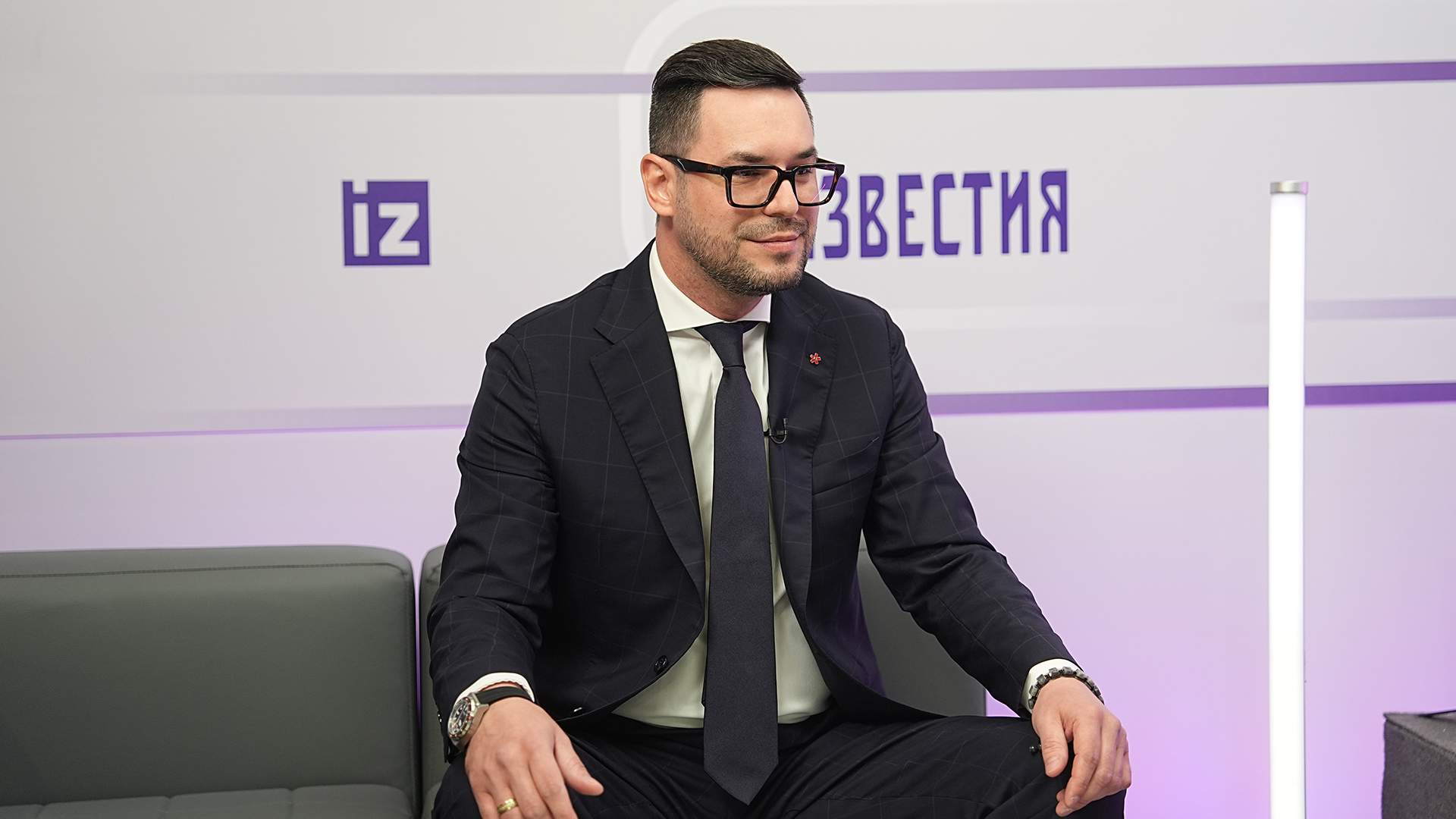
Some banks are already embedding Bluetooth purchase payments using Volna into their applications, Dmitry Dubynin, CEO of the National Payment Card System (NSPK), told Izvestia in an exclusive interview at the SPIEF. This technology will allow Android and iOS owners to pay for goods and services contactless. The NSPK is also working on another new calculation mechanism — using a smart speaker. So far, a prototype of a communication payment solution has been launched, but in the future people will be able to deposit money for housing and communal services or kindergarten in this way, Dmitry Dubynin believes. The expansion of options will depend on user interest. Work is also underway to develop QR code payments in other countries.
"More than 20 banks are already freezing payments to tokenized cards"
— What further vectors of development of the NSPK do you see?
— It's been a year since I joined the NSPK team. This year, we have been developing universal QR, biometric acquiring, a fast payment system, and the Mir payment system in general. This area is very important to us, because fintech allows us not only to provide people with innovative payment methods, but also to increase financial accessibility.
— How is the launch of the Wave technology for remote Bluetooth payment for iPhone progressing? Individual banks have already announced that they have started testing this solution. Has the general pilot of the NSPK solution already begun?
— The pilot is already on his way. Indeed, several banks have stated that they have successfully tested the acquiring part — it ensures the purchase of a trade and service company. Last October, we presented a prototype, and all this time we have been working on an industrial solution. During the pilot, we tested this service together with banks and looked at how to package it in terms of customer experience and convenience. We are currently evaluating the technology based on its maturity.
For two quarters of 2025, we have prepared all the documentation and started the pilot. Some banks are already embedding Bluetooth purchase payments using a "Wave" in their applications. After some time, they will be able to fully launch the technology.
— Approximately when do you expect the full launch of this system?
— In terms of timing, we need to rely on the results of piloting. It is important that terminals and mobile applications support the new technology. It is especially difficult to work with the latter now, as you yourself know the current situation. We also need a sufficient fleet of terminals for this. Therefore, it is not necessary to name the exact dates yet. The participants and I should work more and release mature technology.
— To combat fraudsters, the NSPK launched a service to freeze payments to tokenized cards. How many banks have already joined your system?
— This is a very interesting service, many market participants have joined it now. Due to it, more than 20 banks have already frozen payments to tokenized cards. And I must say that the system is working successfully — we receive positive feedback from participants and banks, which in many cases is really enough for a person to realize what is happening and not allow scammers to deceive themselves.
Of course, there is no need to stop there, we will look at how the behavior of those scammers develops. They are also awake and watching the actions of the regulator, the banks, and our actions. This is not a complete victory in the fight against fraud, but it is a good step. Our task is to try to stay ahead of the scammers.
"Russians will be able to pay for their purchases regardless of the bank they use"
— NSPK and Sber planned to combine face-to-face payment services in 2025. How is this work going now? Is there a more precise time frame for when it is planned to merge the services?
— NSPK and Sber plan to combine face-to-face payment services in the second half of the year. Now we are moving in this direction. Most of the work has already been completed, and there are still mutual improvements to the system.
— What difficulties does this combination of systems allow to bypass? And how many people will have direct access to this technology?
— The biometrics market is currently at an early stage of development. The bank that invested the most in this solution is Sberbank. They have the largest network of terminals for face-to-face payment. Other market participants are moving in this direction, they are also developing their networks. Our centralized, equidistant solution will achieve the same convenience that we are used to with maps. That is, Russians will be able to pay for their purchases regardless of the bank they use. This is exactly what we strive for.
Therefore, it is important that other market participants continue to develop biometrics. Then there will be networks at different banks, purchases will take place in them, and we will help this.
— In April, it was reported that the NSPK is planning to launch a pilot project with four countries in the near future to integrate QR systems based on the SBP. Has this pilot project already been launched? If not, when do you plan to launch it?
— We have already launched some areas, they are really working. Some are still in the process of launching, including with an eye to the near future. However, we are not currently commenting in more detail on topics related to international work. I think you can see why. We are always working on these areas, but we do not name them. Here, people will focus on the banks where they are served — they bring information to their customers.
— But abroad, the system for Russian tourists will work about the same as in Russia — will a person be able to read a QR code in a store and make a payment?
— Yes, exactly the same.
"Users will be able to use a smart speaker to pay for housing and communal services, kindergarten"
— What are your plans for further development in the country?
— We will develop payment services, the Mir system, and the SBP. We need to meet absolutely all modern technology, security, and speed requirements. Of course, we need to develop payment methods — through QR, biometrics, and other methods. We are in search mode together with market participants.
For example, today, together with MTS Bank, we presented a prototype of payment using a smart speaker. You can order her to pay for communication services, and then the transaction will be processed using the fast payment system. Of course, before doing this, you need to link your bank account to your device via a mobile payment service. I think that this approach holds the future, when assistant services can perform a specific, understandable task for the user at a moment.
Now we will look at how the system works. The technology is still at the prototype stage, but in the future it is planned to expand the list of available services: users will be able to pay for housing and communal services, kindergarten, and school using a smart speaker. We have designed a prototype to pay for communication, but in fact it can be anything. It all depends on people's interest. Perhaps the bankers will come up with new ideas on what could be done.
— I think it would be very interesting.
— Now everyone is developing smart assistants in one way or another. Someone, for example, is in the app, and from year to year these services are becoming more functional and interesting. This is exactly the direction in which it is definitely worth participating together.
— Are there any estimated implementation dates yet?
— We are currently in hypothesis testing mode. This is one of those stories that is interesting to watch and see the reaction. If there is interest from users, then other participants will begin to develop similar services.
— Let me ask you one last question. How do you assess the prospects for the introduction of universal QR? The pilot has already taken place. What else needs to be done?
— Indeed, the entire network of the fast payment system — more than 200 banks and about 6 million retail and service enterprises - is already operating on universal QR. We are adding services that have expressed a desire to participate there. Installment services have already been connected to universal QR, while some others are still in the process.
We have made it possible for the market to create its own corporate page. In fact, the bank can brand the payment page that the customer sees for himself or for the outlet that he serves. There will be their logos, colors, and so on. But the page will be formed according to some uniform rules so that there is no discrimination. We do not charge any additional fees for this.
With the help of universal QR, we will in no way influence the tariff policy of banks, their business models, cashbacks or bonuses for customers. The technology only allows people to choose which service they want to pay for their purchase with when scanning the code. The fast payment system will be only one of the ways that is available to a person.
Переведено сервисом «Яндекс Переводчик»
