
To leave in an American way: It becomes more difficult for the West to support Ukraine
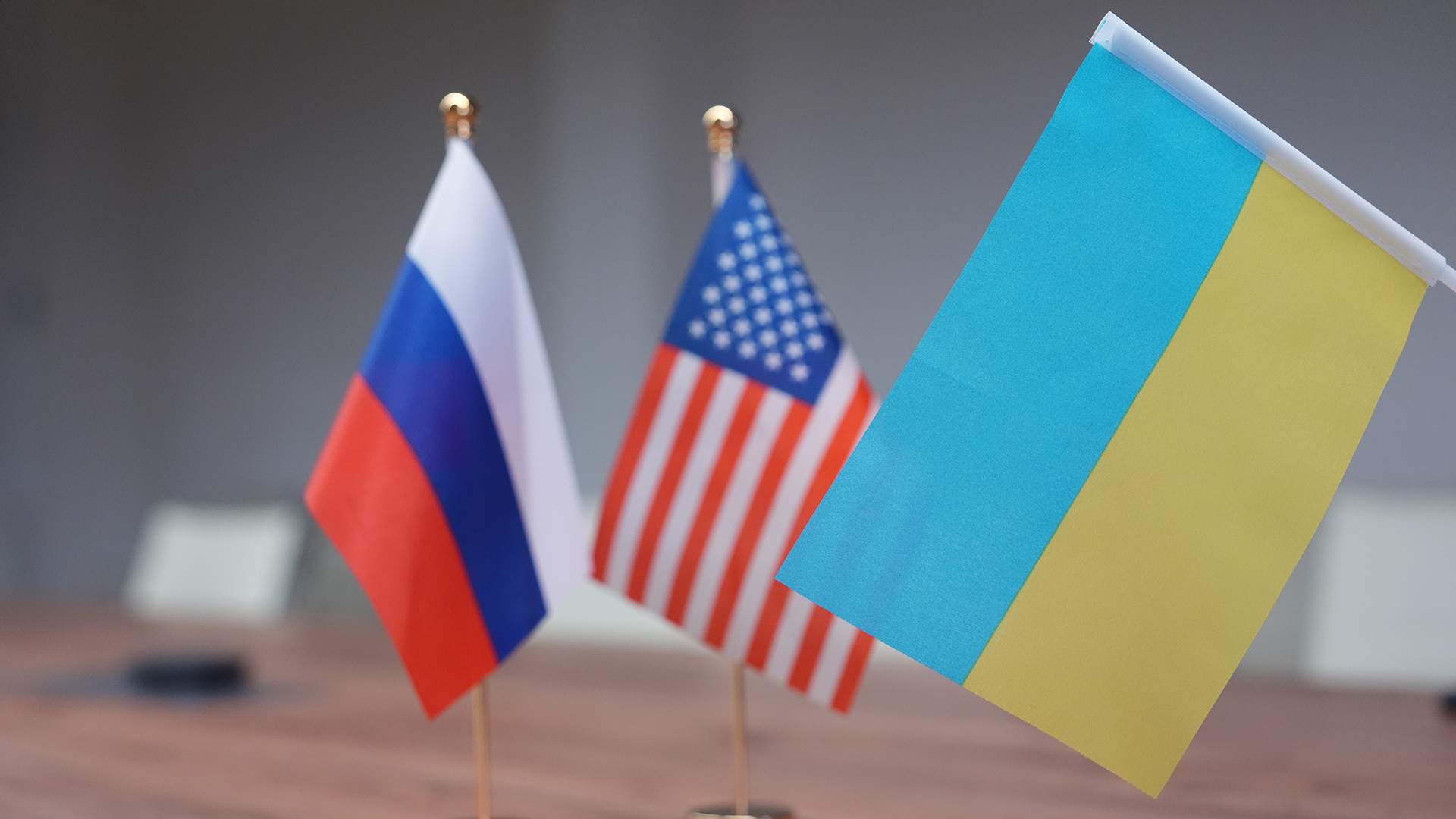
The United States may continue to redirect part of the military resources allocated to the Armed Forces of Ukraine to help Israel, according to the expert community. Against the background of a sharp escalation of the situation in the Middle East, the priority of resolving the Ukrainian conflict for the American president has decreased. Donald Trump even left the G7 summit in Canada ahead of schedule, where he was supposed to meet with Vladimir Zelensky. European countries and Canada also hoped to get Trump to support sanctions against Russia, but they did not achieve success. Why the US president avoids increasing aid to Kiev and for what reason he does not support new restrictions is in the Izvestia article.
How does the situation in the Middle East affect support for Ukraine
The 51st G7 Summit has ended in Canada. The meeting of the leaders of the "seven" took place in the picturesque Kananaskis, in the province of Alberta. Among the goals announced by Canadian Prime Minister Mark Carney were the protection of peace and security, the fight against foreign interference, transnational crime and forest fires. Traditional economic issues such as energy security, digitalization, development of supply chains for critical minerals, and the use of AI for GDP growth were also discussed.

However, the discussion of generally relevant topics could not smooth out the key contradictions between the countries. The summit participants did not adopt a joint communique. As previously reported in the media, they decided not to do this due to disagreements between European countries and US President Donald Trump, in particular, on the issue of support for Ukraine. The total investments of European states in this country since the beginning of the Russian CBO have reached almost €150 billion. Germany remains Kiev's main sponsor in the European Union, and on June 12, Berlin announced additional military assistance to Ukraine worth €1.9 billion. Following the summit, Prime Minister Carney said that Canada would provide Ukraine with about $1.4 billion more.
Over the past three years, while Joe Biden was president of the United States, the members of the "seven" unanimously supported Kiev and devoted a significant part of the final documents to the Ukrainian issue. The situation changed after Donald Trump became president. The new head of the White House does not participate in the Ramstein format and regularly criticizes Vladimir Zelensky for inconsistency in the negotiation process with Russia. The situation has also been affected by the escalation of the conflict between Iran and Israel, which risks escalating into a major war in the Middle East.
On June 13, Israel announced a military operation against Iran. According to the Prime Minister of the Jewish state, Benjamin Netanyahu, it pursues three main goals: the destruction of the nuclear program, the deprivation of Tehran's ability to produce ballistic missiles, as well as the dismantling of the so—called axis of terror, a network of Iranian satellites in the region. As a result, members of Iran's supreme military command (in particular, the head of the General Staff of the armed forces, Mohammad Bagheri, and the commander of the Islamic Revolutionary Guard Corps, Hossein Salami) and some nuclear physicists were killed. Iran responded by firing hundreds of ballistic missiles at Israel.
Since 2022, Vladimir Zelensky has been regularly invited to G7 summits, and separate sessions have been devoted to discussing the Ukrainian conflict. He was invited this time, but the meeting with the US president did not take place. On June 17, it became known that Trump had left the event ahead of schedule. White House press Secretary Caroline Leavitt stressed that the president returned to Washington to personally address other important issues.
"Much has been achieved, but because of what is happening in the Middle East, President Trump is leaving tonight after dinner with the heads of state," the White House said in a statement.

According to the Axios portal, Trump soon held an emergency meeting of the National Security Council at the White House.
— The aggravation of the situation between Israel and Iran is seen as a more urgent and demanding topic on the part of the American president. It is difficult to say how much this will affect the volume and nature of military assistance to Ukraine. But it cannot be ruled out that some kind of influence will occur in this sense, that is, some amounts of military aid will be redirected to the Middle East. As a matter of fact, this process is already underway," Andrei Kortunov, an expert at the Valdai Club, told Izvestia.
Pentagon Chief Peter Hegseth said earlier that the United States had moved its anti-drone air defense systems from Ukraine to the Middle East. He explained that the United States intends to use all possible resources to protect its citizens not only in the region, but also around the world.

Also, one should not deny the fact that, due to the lack of clear prospects for a breakthrough during the Russian-Ukrainian negotiations, the American leader considered that a meeting with Zelensky was not a priority for him right now.
"Maybe it was the fact that there is no such special emotional closeness between the two presidents that played a role, and, in general, Trump may not have been particularly interested in meeting Zelensky," the expert added.

US President Donald Trump
The American president, in particular, discussed the escalation in the Middle East with German Chancellor Friedrich Merz. The politicians exchanged views on ways to resolve the conflict. However, Trump refused to sign a draft joint statement by the leaders of the G7 countries on the situation in the Middle East.
Trump was persuaded to impose sanctions against Russia
During the summit, the American leader stated that he considered the decision to withdraw Russia from the G8 format to be erroneous. Disagreements between the United States and the EU are intensifying, including against the background of trade wars unleashed by the Trump administration in the spring. In addition, the parties in Europe are not satisfied with the US claims to Greenland. French President Emmanuel Macron paid a visit there before the summit in Canada. He said that Paris is ready to hold joint exercises to strengthen Greenland's security.
As The Wall Street Journal wrote, world leaders hoped to enlist the support of the United States to tighten sanctions against Russia, but Trump's attention shifted to Israel and Iran. The American president said that he does not seek to strengthen sanctions, as it costs the United States dearly. His words were commented on by the Russian Foreign Ministry.

"The main result of the G7 meeting was a statement of the multibillion—dollar damage caused by anti—Russian sanctions - a crossbow was recorded," Russian Foreign Ministry spokeswoman Maria Zakharova wrote on her Telegram channel.
The United States has refused to tighten sanctions against Russia, as it still hopes to reach an agreement on Ukraine. By the way, on June 17, it became known that the Trump administration had disbanded an interagency group that was engaged in a strategy of pressure on Russia in order to speed up peace negotiations.

Before the G7 summit in Canada, the European Commission announced the introduction of the 18th package of sanctions against Russia in the near future. Western media reported that the European Union may approve a new set of restrictions on June 20. And the EU was counting on the support of the United States in reducing oil prices. On June 10, EC President Ursula von der Leyen proposed a ban on the use of Russia's energy infrastructure, including the Nord Stream and Nord Stream 2 pipelines, and lowering the ceiling on Russian oil prices from $60 to $45 per barrel. The EU countries hoped to reach an agreement with the United States on a new price ceiling level at the summit in Canada, but this was not possible. Brussels can impose restrictions against Russia without Washington, but an agreement involving all G7 countries would be more effective, Western media reported.

Now, even if such an initiative is adopted, it will have a limited effect, says political analyst Ivan Loshkarev.
— Most of the Russian oil goes to India and China, not to the EU countries. And against the background of rising oil prices due to the situation around Iran, even with a possible discount, Russian oil will be sold above the established ceiling," he told Izvestia.
Moreover, such a measure could have a negative impact on global energy markets, Andrei Kortunov believes.
"This is especially significant given that Iran is threatening to block the Strait of Hormuz, which means that a significant amount of oil produced in the Middle East region will leave the market, so it seems to me that such an idea has little practical prospects in the near future," the expert says.

Global oil prices began to decline sharply from April, falling below $59 and staying at about this level until June. Due to the escalation of the conflict between Iran and Israel, prices have jumped sharply, but they have already regained their growth. Brent is currently trading around $74 per barrel. At the same time, the increase in oil prices has a negative impact primarily on fuel importers, in particular, European countries.
Переведено сервисом «Яндекс Переводчик»
