
Nuclear breakdown: what consequences will Israeli strikes on Iran have for the region
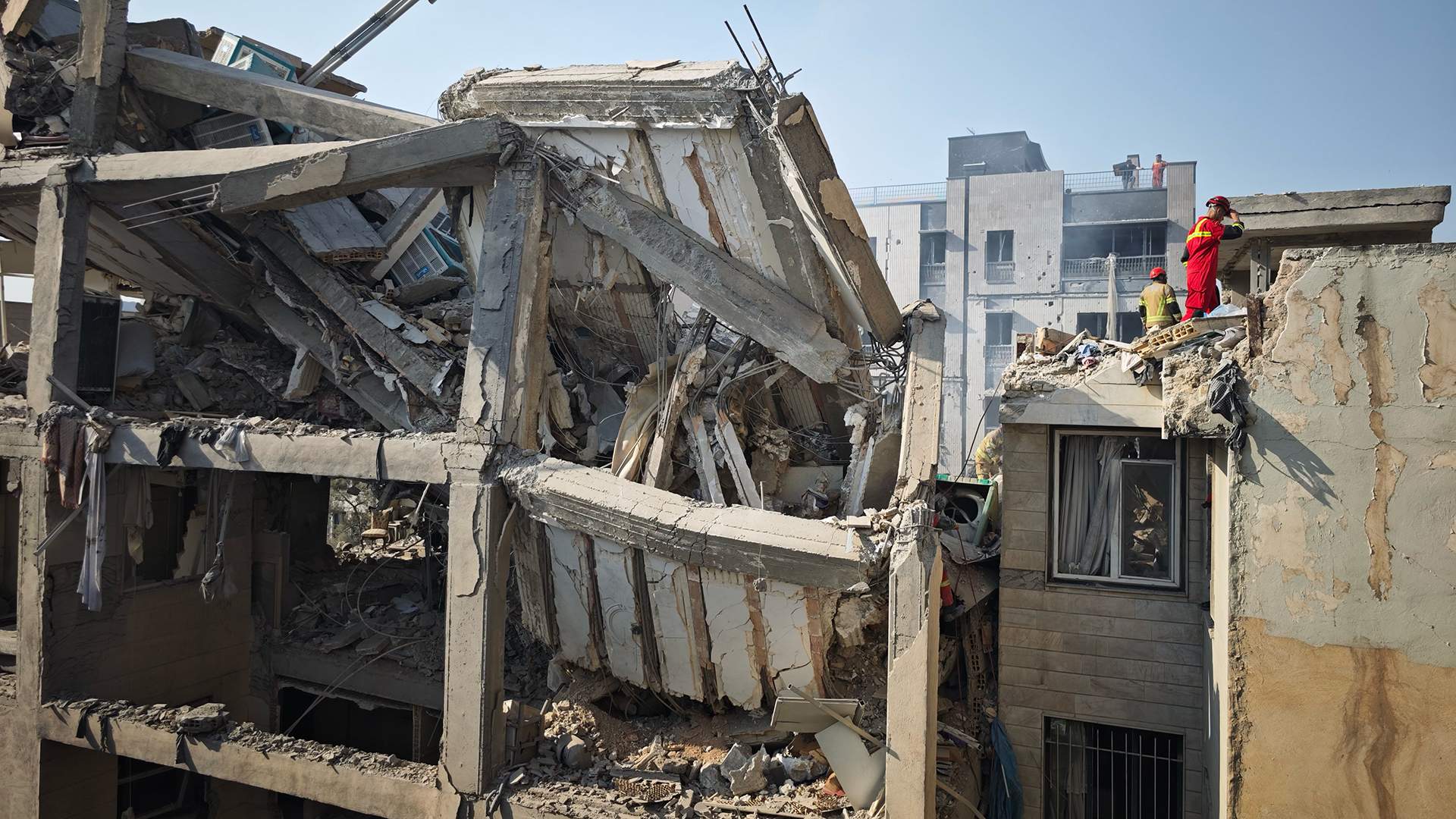
The escalation of the conflict between Israel and Iran will inevitably lead to a chain reaction throughout the Middle East, experts interviewed by Izvestia believe. After the massive attack on targets in Iran on June 13, the Jewish state is already preparing for retaliation, including from Yemen, Lebanon and Syria. At the same time, a major war in the region, in particular, may lead to an increase in oil prices. The Iranian-American negotiations on the nuclear deal will also be under threat, Tehran has already announced that it will not participate in the sixth round of negotiations on June 15, to which the American leader Donald Trump threatened with measures. What is happening in the Middle East and what consequences the Iranian-Israeli conflict will have for the entire region is in the Izvestia article.
Israel has attacked Iran
Contrary to the forecasts of The Wall Street Journal, which predicted an Israeli strike on Iran on June 15, on June 13, the IDF launched air strikes on at least 60 locations in eight provinces of Iran. According to the Israeli Embassy in Russia, more than 200 Israeli Air Force fighter jets attacked over 100 targets throughout Iran, using accurate intelligence information.
The fact of the strike was confirmed by Israeli Defense Minister Israel Katz. He also declared a state of emergency in his country in connection with a possible retaliatory strike by Iran. Since 03:00 Moscow time, studies and work have been canceled in the Jewish state, and a ban on the operation of enterprises and meetings has been imposed. Israelis were advised to be near shelters, and hospitals were put on alert. In addition, the army of the Jewish state has ordered the conscription of thousands of reservists.
—Israel is in a state of full readiness for any development of events," Dmitry Gendelman, an adviser to the Israeli Prime Minister's office, told Izvestia, effectively stating that his country was ready for a full—fledged war with Iran.
The operation of the Israeli army was named "Rising Lion", its main purpose was to attack Iran's nuclear and military facilities, as well as military commanders of the Islamic Republic. During the first stage of the special operation, which ended at about 04:00 Moscow time, Israel attacked air defense systems, surface-to-surface missiles, as well as military leadership and nuclear scientists.
As a result of the Israeli attacks, the commander of the IRGC (Islamic Revolutionary Guard Corps) was killed Hossein Salami, the head of the General Staff of the Armed Forces, Mohammad Bagheri, the commander of the headquarters of Hatem al-Anbiya (emergency response headquarters), Hatem Gholamali Rashid, as well as six nuclear physicists. At least 95 people in 12 Iranian provinces were injured due to Israeli strikes, and one rescuer was killed, according to the Iranian Red Crescent Society. Ali Shamkhani, adviser to the Supreme Leader of Iran on political issues, is among the wounded.
Along with the airstrikes, Israel also conducted a series of covert sabotage operations deep into Iran in order to damage strategic missile sites and air defense systems. The operation is expected to last for two weeks.
Since the preemptive strike on military targets in Iran, a special situation has been imposed in the rear, IDF spokeswoman Anna Ukolova told Izvestia. According to her, Israel understands that Iran may again try to launch a missile attack on the citizens of the Jewish state, so all air defense systems are on high alert.
— For many years, Iran has been directly and indirectly conducting terrorist activities against the State of Israel, financing and coordinating terrorist actions through its proxy structures throughout the Middle East, while simultaneously developing its nuclear program. The purpose of our operation is to eliminate this threat. We started acting to secure our lives here and protect the civilian population. We have been preparing for this operation for a long time. The IDF is ready to continue operations for as long as necessary. The State of Israel is obliged to protect its citizens and will do so wherever necessary, as it has done before," Ukolova explained.
Iran has been informed that the country will give a tough response, and the military is 100% ready for this. The supreme leader of the Islamic Republic, Ayatollah Ali Khamenei, gave "freedom of action" to the country's armed forces, and also promised a "bitter and terrible fate" to Israel. Tehran also considers the United States to be complicit in the attack, although Washington immediately stated that they were not involved in the strikes and did not help Israel in any way. Nevertheless, Secretary of State Marco Rubio stressed that according to Israel, these actions are necessary for its defense, and Donald Trump said that he knew in advance about the upcoming raids.
Iran's retaliatory strike took place around 08:00 Moscow time, more than 100 drones were sent to Israel, all of them were intercepted.
The UN expressed concern about the situation: Secretary General Antonio Guterres called on both sides to exercise "maximum restraint." A similar comment was made by the head of the IAEA, Rafael Grossi, who expressed his willingness to cooperate with Iran and Israel to ensure the protection of nuclear facilities.
— Today's Israeli strikes on the territory of Iran can be qualified as a casus belli. The attack was openly aggressive and caused heavy losses for the Iranian military and political elite. Israel's actions are not just a tactical strike, but a strategic challenge that directly undermines Iran's sovereignty, as well as the already shaky regional security architecture. Israel is probably pursuing the goal of forcing a military escalation, hoping to draw Iran into a full—scale conflict, in which Tehran will be completely isolated and forced to act under multi—level pressure - diplomatic, economic and military, says orientalist, lecturer at the Faculty of Economics of the Rudn University Farhad Ibrahimov.
According to the expert, Tehran is well aware that dragging the country into an open war with Israel could be exactly the trap that Tel Aviv is so persistently trying to set.
According to Iranian international relations specialist Hadi Issa Daloul, Israel has failed to launch strikes deep into the country.
— Iran's response is expected to follow in the coming hours. The fear is that Netanyahu may also decide to launch a hard strike on Lebanon," the expert emphasized to Izvestia.
What was the blow inflicted with
The Israeli armed forces have shown what modern aviation is capable of, Dmitry Kornev, editor of the Military Russia online project, told Izvestia.
"According to the information that we now know, almost all aircraft of the Israel Defense Forces Air Force took part in the strike," the expert noted. — That is, the F-16 light fighters with additional fuel tanks, the F-15, are the fourth generation of aircraft. Fifth-generation F-35 aircraft were also involved. The blow was delivered in several waves.
For the first time, Israel has massively used high-precision air-launched aeroballistic missiles. They took off from planes over the territory of Iraq. Intercepting such missiles with modern air defense systems is extremely difficult.
"Although Iran has flown MiG—29s and probably other planes, so far there is no information about downed Israeli vehicles," Kornev said. — In addition to aeroballistic missiles, guided bombs of several types with television and possibly satellite guidance were used in the strike.
In addition to aeroballistic missiles, Israel has deployed guided bombs and shorter-range aircraft missiles, according to military expert Yuri Lyamin. Iran, for its part, uses drones of the Shahed-136 type.
"Iran has large stocks of intermediate—range ballistic missiles, including those with hypersonic warheads, as well as significant stocks of long—range drones," he added.
Iran has been preparing for such a war for many years, the expert noted.
— Knowing the missile and aviation power, they tried to hide nuclear and military facilities underground as much as possible. Many of them are hidden deep in the rocks. Israel will not be able to hit them — they do not have such powerful penetrating bombs. The entrances to such bases can be collapsed, but Iran must be prepared for such a development. The rubble can be quickly dismantled. In addition, there are launchers that can launch missiles directly from underground. And Iran has a lot of such bases. One of the two uranium enrichment centers, Fordo, is hidden deep underground. Israel, judging by open information, has no heavy bombs that could hit it. The maximum is that the exits will be blocked. They will not destroy the main nuclear infrastructure facilities," he explained.
Russia's reaction to Israeli strikes on Iran
On June 13, the Kremlin reported that the Russian Federation was concerned and condemned the sharp escalation of tension between Israel and Iran. Dmitry Peskov, a spokesman for the Russian president, said that Vladimir Putin receives online reports on events in the Middle East.
The Russian Foreign Ministry stressed that unprovoked military strikes against a sovereign UN member state, its citizens, sleeping peaceful cities, and nuclear energy infrastructure facilities are categorically unacceptable.
"It is obvious that a conscious choice has been made in West Jerusalem in favor of further escalation of tension and raising the stakes. We have repeatedly warned about the perniciousness of military adventures that pose threats to stability and security in the region. Responsibility for all the consequences of this provocation will fall on the Israeli leadership," the Russian Foreign Ministry said in a statement.
The Foreign Ministry also noted that the settlement of the Iranian nuclear program "does not have a military-military solution and can be achieved exclusively by peaceful, political and diplomatic means," and also expressed the hope that this approach will eventually prevail.
Russian diplomats called on the parties to exercise restraint in order to prevent further escalation of tension and the region's descent into a full-scale war.
At the same time, the Russian Embassy in Israel strongly recommended that citizens refrain from visiting the country until the situation normalizes. According to ATOR, no more than 500 Russian tourists can stay in Israel and Iran.
According to the Federal Air Transport Agency, Russian airlines have been informed that the airspace of Iran and Israel is closed, and flights to the Middle East will fly around these countries.
The negotiation process between Iran and the United States
The escalation of the conflict between Israel and Iran is taking place on the eve of the sixth round of direct talks between Washington and Tehran on the Iranian nuclear program scheduled for June 15. On June 12, Omani Foreign Minister Badr al-Busaidi announced that the meeting should take place in Muscat.
Against the background of the Israeli attacks, Tehran announced that it was withdrawing from the negotiations "until further notice." Moreover, we are talking here not only about dialogue directly with the United States, but also about any other discussions on the Iranian nuclear program.
In this regard, Donald Trump said that the Iranian leadership still has time to conclude a deal with Washington on the nuclear program. Otherwise, the situation will turn into an even tougher response, the American president warned.
— By launching a preemptive strike, Israel wanted to worsen Iran's negotiating positions on the eve of the meeting in Muscat on June 15 (in the worst case scenario, it would provoke a break in contacts between Iran and the United States). It is unlikely that the Americans initiated the attacks directly — most of the Trump team was nevertheless aimed at a diplomatic victory over Iran. It is possible that they agreed to carry out a symbolic attack (by analogy with the "Penitential Days" of 2024, when Israel hit some Iranian facilities), but the current escalation has already gone beyond symbolic exchange, orientalist Leonid Tsukanov is sure.
It is difficult to imagine that Iran will agree to accept the terms of the deal under pressure, says orientalist Ilya Vedeneev.
— So far, the deal has progressed more than moderately. Perhaps, as in the case of Gaza and the North Caucasus, where Trump failed to actively mediate, he creates conditions under which he can "merge" the negotiations without any damage to his image (at least for his audience in the United States), he said.
How will this affect the situation in the region
A few hours after the strikes, the IDF said that in addition to the Iranian strikes, Israel was also preparing for powerful attacks from Yemen, Lebanon and Syria. Indeed, an escalation involving Iran will inevitably lead to a chain reaction throughout the Middle East, says Farhad Ibragimov.
— It is impossible to overestimate the consequences of such a scenario: from Turkey to the UAE and Qatar, no regional power will be able to stay away. In the event of a direct Iranian-Israeli conflict, the entire regional system, including Turkey, Syria, Iraq, Lebanon, Jordan, the United Arab Emirates, Qatar and Saudi Arabia, will be at the epicenter. In other words, we are no longer talking about a bilateral confrontation, but about the potential transformation of Middle East tensions into a large—scale regional conflict that will destroy the remnants of stability and undermine existing economic, energy and logistics chains," the expert continued.
A major war in the Middle East will raise oil prices, which is important for the Russian economy, and divert American resources previously destined for Ukraine, analyst Tigran Meloyan believes.
— Iran has an important strategic "tool" in its arsenal — it is blocking the Strait of Hormuz. About 20-25% of the world's oil and a third of the world's liquefied natural gas pass through it daily. If this communication, the most important "oil hub" in the world, is paralyzed, oil prices could seriously skyrocket. However, the blockade of the strait is also a risky step, especially given that it will irritate the international community, including China, which actively uses this route," he said.
Such actions may provoke a military response from the United States and its allies, which are now refraining from direct military support for Israel and calling for de-escalation in the region, the expert concluded.
Переведено сервисом «Яндекс Переводчик»
