Clear pin: Russian scientists have tested bioprostheses of the future on animals
- Статьи
- Science and technology
- Clear pin: Russian scientists have tested bioprostheses of the future on animals


Scientists have completed animal testing of prototypes of osteointegrable prostheses with a neuro-management system designed for legs. They integrate into the bone like dental implants. This allows you to bring the biomechanics of leg movement closer to the natural one, as well as avoid stress on soft tissues. Medical devices still have a long test cycle to go through, but experts note that they will significantly improve the lives of patients. For more information about the technology, see the Izvestia article.
Osteointegrable prostheses of the future
Samara State Medical University of the Russian Ministry of Health (SamSMU) has conducted the first successful tests of prototypes of osteointegrable structures designed for prosthetics of legs. They allow you to bring the biomechanics of leg movement closer to the natural one, as well as avoid stress on soft tissues, the developers told Izvestia. In addition, the research is working towards providing more natural control of the exoprosthesis through neuromuscular signals.
The development is being conducted by the competence center of the NTI "Bionic Engineering in Medicine" of SamSMU together with the developer and manufacturer of prosthetics, the Motorika company, the Skolkovo Institute of Science and Technology Skoltech and partners. As part of the tests, operations were performed on laboratory animals, which were fitted with an innovative intraosseous implant. Its use significantly reduced the operation time, and also made it possible to completely eliminate any movement of the pin.

— Osteointegrable prostheses are a complex technological and medical solution that has great potential to improve the quality of life of patients. Our goal is to create products that can meet the needs of people facing amputation. After completing scientific research, we intend to start implementing this innovative technology and manufacturing products," said Andrey Davidyuk, CEO of Motorica.

The structures are installed by analogy with dental implants: a titanium pin with a hydroxyapatite coating is embedded in the bone. An exoprosthesis is attached to this pin, and electrodes that read neuromuscular signals pass through it. In the future, all the developments of the project participants used in the complex will allow a person to regain the leg's ability to support, using biomechanics close to natural, receive feedback from the prosthesis and use a more convenient control system, the scientists said.
Currently, stump sleeves are used worldwide as the main method of attachment in prosthetic limbs. Despite the very high level of development of their production technologies, this technology is not without drawbacks, the developers explained. This is especially important for legs that experience significant stress when walking and other daily activities. The main load in prosthetic legs with stump sleeves falls on soft tissues, which may disrupt their trophism, cause skin injuries, and users may experience discomfort. In addition, the mechanics of movement are disrupted. All this limits the patient's mobility.
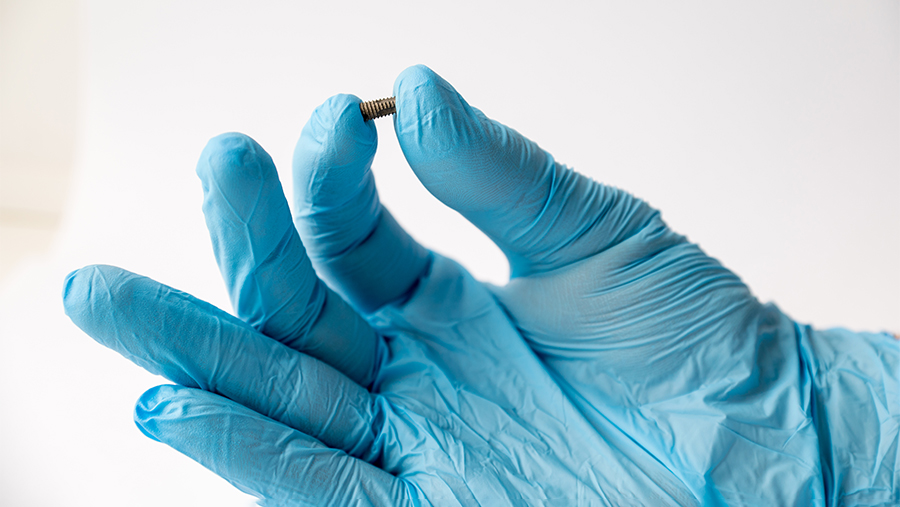
The osteointegrable prostheses being developed will provide a more natural load distribution, which will improve the biomechanics of movements and reduce fatigue, the authors of the design assured.
The technology includes modification of the implant surface to accelerate the connection to the bone. For example, special coatings such as hydroxyapatite or three-dimensional structures are used, as well as other types of titanium post-treatment that promote better interaction with bone tissue. Such coatings are being developed at the NTI SamSMU center.
The better the new prostheses are
The main goals of the first stage of the study were the improvement of surgical protocols, the choice of the optimal amputation model, as well as postoperative management techniques.
— The team of specialists is actively working on improving the design and design of the implant, surgical intervention techniques, postoperative care and management techniques, — said Alexey Komyagin, Director of the Competence Center for Bionic Engineering in Medicine at SamSMU. — For an objective assessment of the postoperative condition and rehabilitation, individual test benches with round-the-clock video surveillance and algorithms for analyzing the behavioral characteristics and motor activity of animals have been created. We also designed and manufactured an immobilizing device for amputees, which reduced the number of complications.
The news about the successful trials of osteointegrable prostheses is certainly good. The specialists' approach is quite innovative and gives hope for improving the quality of life of patients. Evgeny Sobolev, co-founder of biotech startup studio Scanderm and market expert at NTI Helsnet, noted that the development of a prosthetic control system using neuromuscular signals is particularly interesting. This is a trend now, so we can expect that the prostheses proposed by the developers will be in demand, he said.

— Of course, they still have to do additional research, testing and the equally laborious process of entering the market. There are concerns that the cost of such development will be high, but this does not negate the fact that developments in this area should be carried out, because over time they will really be able to help many patients," the specialist noted.

The tests carried out are an extraordinary event. In fact, we can talk about the integration of two areas in prosthetics — immersion implants and exoprostheses, said Alexander Popov, Candidate of Medical Sciences, Head of the Business Project Development Department at ANO CIITO.
— Until now, these techniques have practically not been used together in relation to limbs — each has its own indications for use, its own installation features that require different knowledge and skills. The set of technologies is very impressive. This is the result of years of research and design: materials, modification of product surfaces, specially designed tools, technical solutions, actual operational techniques, rehabilitation techniques, and wearable device service," he said.
In addition to the obvious advantages of implementing the technology, in the future, we should expect a reduction in the need for revision operations (repeated operations to replace a previously installed prosthesis), the specialist noted.
Переведено сервисом «Яндекс Переводчик»
