- Статьи
- Science and technology
- Space maps: seven missions to the Moon and one to Venus will be included in the national project

Space maps: seven missions to the Moon and one to Venus will be included in the national project
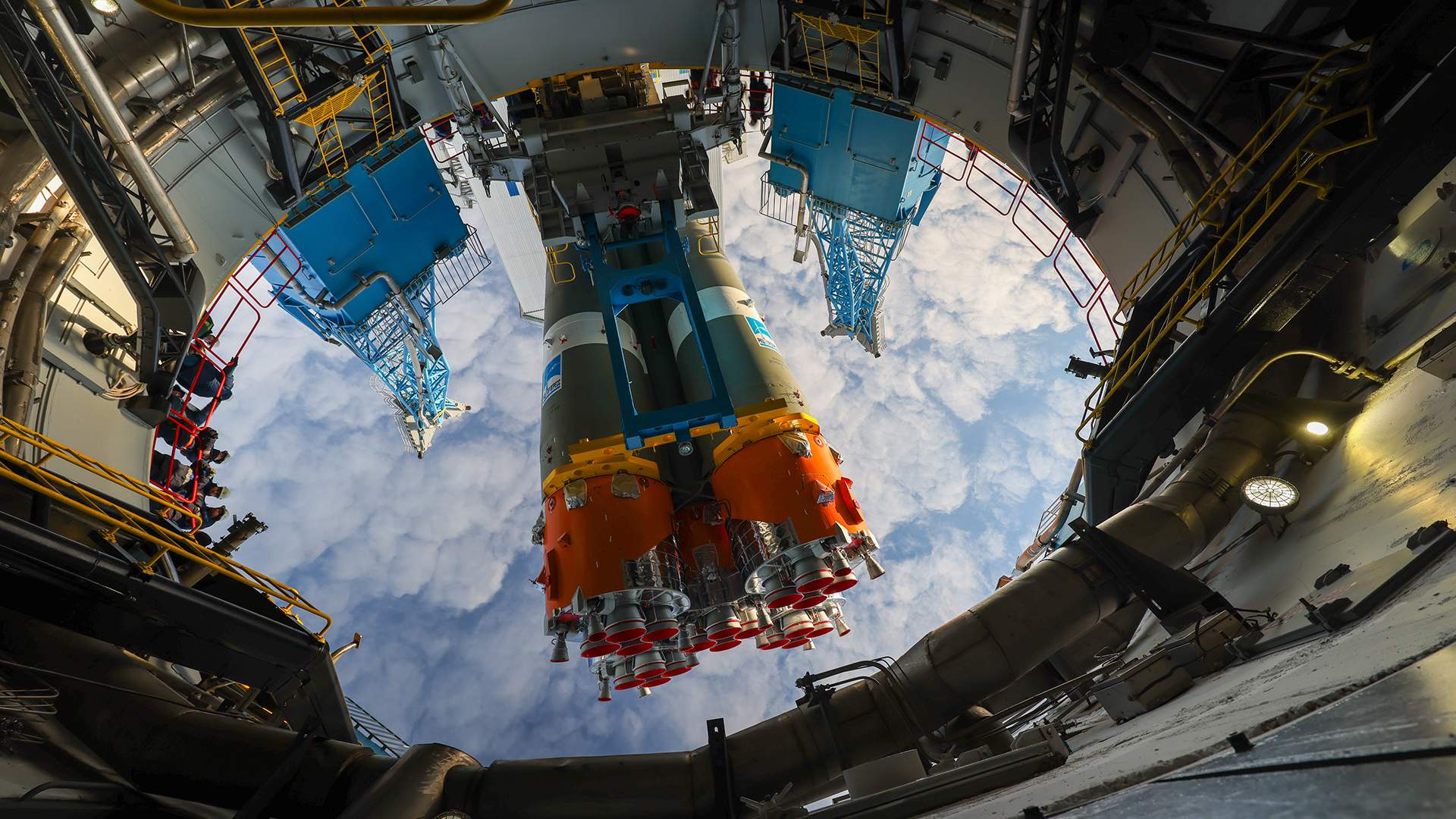
Gennady Krasnikov, President of the Russian Academy of Sciences, announced at a general meeting of RAS members a list of deep space exploration programs that will be included in a new national project for the development of the industry. Among them are an expedition to Venus, seven lunar missions, an orbiting solar telescope with record detail, and space observatories in the ultraviolet and terahertz ranges that have no analogues in the world. A complex of grandiose scientific installations will also be placed on Earth b to study different parts of the sky, and a natural satellite will be sent to lunar rovers. The financing of the programs will begin this year.
Exploring the Universe
At the general meeting of RAS members on May 28, Gennady Krasnikov announced a list of programs that will be included in the new national project of technological leadership for the development of the space industry.
— Scientific space occupies a special place in it. Currently, the Academy has developed an integrated, balanced program of fundamental and technological space research. It will allow us to maintain our leadership positions in the top three space powers," said the President of the Russian Academy of Sciences.

Gennady Krasnikov, President of the Russian Academy of Sciences, at the general meeting of RAS members in Moscow
According to him, the proposed projects in the field of astronomy, planetary exploration, solar-terrestrial physics, and biomedicine will allow achieving the highest scientific results.
Gennady Krasnikov named orbital observatories with unique characteristics among the programs in the field of deep space exploration that Russian scientists intend to launch in the coming years. One of them, the Millimetron project, involves placing the world's first 10—meter cooled telescope in space, which operates in the terahertz frequency range of electromagnetic radiation. The tasks of this scientific complex will include the search for water and complex organic compounds in the universe that may indicate the presence of life, as well as the refinement of cosmological theories on distortions of the spectrum of cosmic microwave background radiation.

General Meeting of RAS members, May 28, 2025
Another project to explore the universe is the Spektr—UV space telescope, which will operate in the ultraviolet range. Scientists also plan to launch the Spektr-RGN observatory. It is necessary to create a new, fully autonomous space navigation system for X-ray pulsars. It will also be used to study extreme physical phenomena in the superstrong fields of neutron stars and black holes.

Exploring the Sun, Moon, and planets
Scientists have also submitted to the national project a proposal for a comprehensive expedition to explore Venus. It will include sending an orbiter, two atmospheric modules and a lander to the planet. The purpose of the mission is to search for signs of life in the clouds and on the surface of Venus, to study the atmosphere and climate history of the planets Mars, Earth and Venus.
According to Gennady Krasnikov, the Russian lunar program in the coming years will include seven missions to the Earth's satellite with various scientific tasks. At the first stage, the research is supposed to be carried out using automatic complexes. It is necessary to study the North and South Poles, where the largest ice accumulations are found. Experts also expect to take the soil for analysis. At the same time, automatic devices will be sent to the Moon to study the terrain and prepare for the placement of the future station.

The Resonance and Arka projects have been proposed in the field of studying solar-terrestrial relations. These are spacecraft, the first of which will be focused on studying the Earth's magnetosphere, and the second — the solar corona. The data obtained by the spacecraft will be processed in cooperation with ground-based telescopes for studying the Sun, which we are currently doing at the Institute of Solar-Terrestrial Physics of the Siberian Branch of the Russian Academy of Sciences near Irkutsk, said Gennady Krasnikov.
— The entire world science is based on the Russian experience in studying the impact of space flight on biological objects. In this direction, scientists plan to launch two devices with animals on board the Bion-M," he stressed.
These projects are necessary for a more detailed study of the impact of space flight on the human body, which will allow us to prepare for work at the new Russian space station in polar orbits, and later for human stay on the Moon and Mars.

Mars
According to Gennady Krasnikov, the financing of the lunar program will begin this year. Earlier, Roscosmos reported that the government and the state corporation are currently finalizing adjustments to the strategic plan in the field of space activities. The updated strategy will become effective in 2026 after being finalized and approved by the President of Russia.
According to experts, in order to fulfill the tasks of the national project for the next three years, it is necessary to provide a total of more than 1 trillion rubles, and in the future until 2036 — about 4.5 trillion.

Why is the scientific space program important?
— It is worth noting that for the first time since the appointment of a new head of Roscosmos (Dmitry Bakanov was appointed to this position in February. — Izvestia) the program was presented on an academic platform, albeit in a short format. Moreover, the space block became one of the most intense in the speech of the President of the Russian Academy of Sciences. This underlines the importance that the Academy of Sciences attaches to such research, both fundamental and applied," explained Anatoly Petrukovich, Director of the Space Research Institute of the Russian Academy of Sciences.

Computer-generated three-dimensional perspective image of the surface of Venus
He added that the program was prepared with the participation of all interested Russian scientific organizations, and then sent to Roscosmos. It is currently in the final stages of approval by the Russian government. President Vladimir Putin announced on April 16 that a new national project would be approved in the near future.

The scientist called the program ambitious, but realistic. It is important that it covers key areas of space science, from deep space exploration to near—Earth space and biological research, Anatoly Petrukovich noted. This will help preserve scientific teams and keep Russia among the leading space powers.
— Scientists all over the world have been waiting for the launch of the large orbital observatories Spektr-UV, Millimetron and Spektr RGN for many years. These unique, unparalleled scientific complexes have been developed in Russia. But the meager funding did not allow for dynamic development of this area. Perhaps now the preparation of these observatories for launch will proceed at a faster pace," said Sergey Yazev, professor at Irkutsk State University, senior researcher at the Institute of Solar—Terrestrial Physics SB RAS.

It is important, the expert said, that solar-terrestrial physics is proposed as one of the priorities of the new national project. Powerful flares and auroras during 2024, and the lack of national space observatories to observe coronal emissions of solar matter, and, as a result, the poor quality of forecasts of geomagnetic storms have clearly demonstrated how relevant this topic is.
At the same time, experience shows that the level of space research determines the overall level of development of science, technology, and the economy of a country, the scientist noted. Our country was the founder and leader in many areas of space exploration, but now some of these positions have been lost. The proposed solutions are correct, but they should have been taken even earlier, he concluded.
Переведено сервисом «Яндекс Переводчик»
