Disrupted surveillance: OSCE will monitor the elections in Moldova

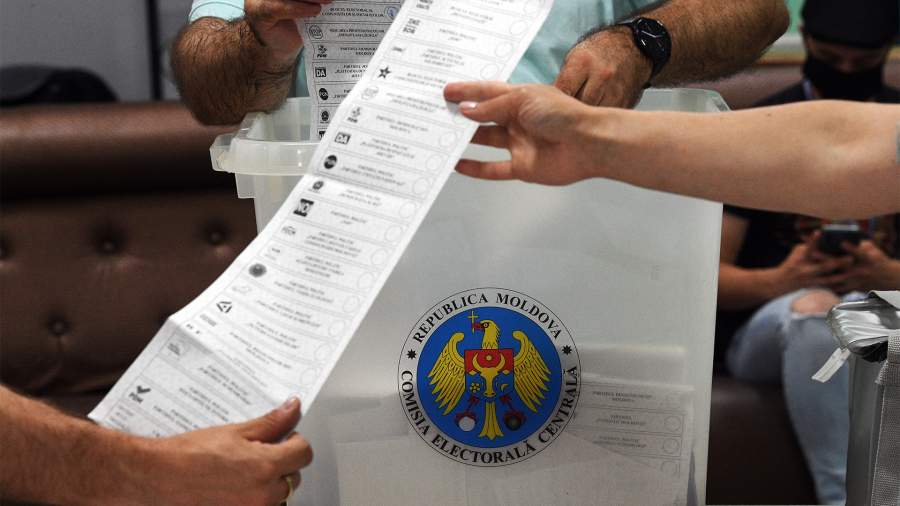
Moldova has invited the OSCE Office for Democratic Institutions and Human Rights (ODIHR) to monitor the upcoming parliamentary elections, the organization told Izvestia. Although this does not guarantee the transparency of the process, Moscow has repeatedly drawn attention to the bias of the organization's reports. Protests are currently continuing in the republic, and the elections may seriously affect the positions of the ruling party and President Maia Sandu. At the same time, Chisinau is increasing pressure on the opposition: it is possible that a law banning mass street rallies will be adopted in the near future, experts suggest. What is the situation in the republic on the eve of the most important vote and whether Chisinau's pro—Western course will continue? - in the Izvestia article.
OSCE observers to attend Moldovan elections
The OSCE Office for Democratic Institutions and Human Rights (ODIHR) will monitor the upcoming parliamentary elections in Moldova, the organization told Izvestia.
— The ODIHR has received an invitation to observe the parliamentary elections on September 28 in Moldova. We are planning to send an election observation mission. It will be deployed approximately 6-7 weeks before election day in accordance with our comprehensive election observation methodology used in each country.
In 2024, the mission has already observed the presidential elections in the republic. The voting took place in two rounds. As a result, the incumbent President Maia Sandu won with 55.33% of the vote. Alexander Stoyanoglo, a former prosecutor general and candidate from the opposition Party of Socialists, who advocated strengthening relations with the EAEU and Russia, scored 44.67%. Moreover, the majority of voters initially voted for Stoyanoglo, and Sandu managed to seize victory only with the help of the votes of the Moldovan diaspora in foreign polling stations.
Then, according to the preliminary report of the mission, the voting was organized "well." At the same time, observers noted that the holding of the presidential elections and the referendum on EU membership, as well as media coverage of events, "did not fully ensure equal opportunities." The mission also noted the "abuse of administrative resources" during the presidential campaign. The electoral process was accompanied by a number of violations: at that time, the General Inspectorate of Police reported only 225 cases, while the NGO Promo-LEX reported more than 1,000 violations.
The authorities barely reacted to the violations: the Central Election Commission of Moldova rejected the complaints submitted by the candidates' representatives during the second round on November 3. In particular, the complaint from the Party of Socialists was called "unfounded", which claimed the use of administrative resources and publicly accused Prime Minister Dorin Rechan of illegal campaigning in favor of Sandu.

The press bureau of the Russian Foreign Intelligence Service stated that the OSCE recognizes that the facts of numerous violations in the elections in Moldova will not be made public, as the leading Western countries insist on this.
"This is due to the fact that Washington and its allies are interested in Sandu's re-election for a second term and Chisinau's continuation of its policy of accelerated rapprochement with the EU and NATO. As they say, "the end justifies the means," the message said.
It is worth noting that the OSCE/ODIHR observed the elections in Georgia in October 2024. Then the ruling Georgian Dream party won, with which the West's relations have noticeably cooled in recent years. Following the results of the vote, the mission, although it recognized the results, declared "massive violations."
The Russian Foreign Ministry stressed that violations during the voting in the Moldovan elections were obvious.
"It would not be an exaggeration to say that it was the most undemocratic election campaign in all the years of Moldovan independence. Its distinctive features were the unprecedented repression of the authorities against the opposition and independent media, primarily Russian—speaking ones, the blatant interference of Western countries in the electoral process and the large-scale use of administrative resources by the authorities," Russian Foreign Ministry spokeswoman Maria Zakharova said at the time.
The ODIHR observers were not invited to the Russian presidential election precisely because of their lack of transparency and undemocracy, said Ella Pamfilova, Chairman of the Central Election Commission of Russia.
— When the OSCE/ODIHR demands democracy and transparency from us, we have recently been saying: "Start with yourself." Because the organization itself is both opaque and undemocratic. We have seen this many times when the reports were written in advance based on the political situation in Western countries, and the opinions of many professional observers who came from different countries <...> were not discussed during the preparation of the report within the OSCE/ODIHR," Pamfilova stressed.
Now the situation ahead of the elections in Moldova may be the same as last year. One should not expect a transparent electoral process, HSE analyst Nicole Bodisteanu tells Izvestia.
The situation in Moldova on the eve of the parliamentary elections
The recent presidential and upcoming parliamentary elections in Moldova are accompanied by an economic crisis in the country. The escalation began as a result of an increase in energy prices, after Chisinau switched to gas purchases from European suppliers.
On the eve of the previous elections, the Moldovan authorities radically increased pressure on the opposition: more than 10 TV channels were closed then. Later, Chisinau did not allow Vasily Bolyu, a candidate from the Victory bloc, to participate in the elections. About 1,000 people were searched during the election campaign.
There are also ongoing protests in Moldova. Earlier, the rallies were mainly attended by farmers, teachers and railway workers, dissatisfied with low salaries, late wages and inadequate working conditions. But during the May holidays, the scale of the actions took a new turn: then the Moldovan opposition gathered about 20 thousand protesters in different regions of the republic.
The protests became more frequent after the detention of the head of Gagauzia, Evgenia Gutsul, who advocates strengthening relations with Moscow. In addition to the bashkan of the autonomy, other members of the opposition also come under pressure: members of the Victory bloc were stopped at the Chisinau airport, and criminal cases were opened against members of the Party of Socialists.
It is also reported that the ruling party is preparing a new bill that will limit the holding of rallies. Given the current situation in the republic, it is likely that this document will be adopted, Nicole Bodisteanu believes.
"The lawmaking of the current Action and Solidarity party in Moldova has repeatedly demonstrated an amazing ability to formulate and promote laws that cause clear disagreement, protest, and sometimes outright discrimination," says the expert.

But in any case, the upcoming vote will be a test for the current authorities.
"The level of citizens' discontent is growing, and questions are increasingly being raised in the media field about the expediency of spending funds from the state budget and grants received from the EU," Bodisteanu emphasizes.
According to the results of the iData polling company, in February the support rating of the ruling party was 27.2%, which is 2.6% less than in December. No surveys were conducted in the spring. Nevertheless, the PDU can still get a majority of votes, at least due to the lack of cooperation from the Moldovan opposition, the expert concluded. And given the persecution of members of opposition parties, it is becoming increasingly difficult to cooperate in this case.
Переведено сервисом «Яндекс Переводчик»
