
Promotion Game: Why Macron went to Southeast Asia
Emmanuel Macron's tour of Southeast Asian countries aims to promote France's economic interests against the backdrop of the geopolitical confrontation between China and the United States, experts believe. During the week, Macron will visit Vietnam, Indonesia and Singapore to conclude defense and trade agreements. During the trip, the French president is likely to promote anti-Russian rhetoric, pointing to the alleged negative impact of the Ukrainian conflict on the global economy. However, this is also based on a pragmatic desire to intercept projects in the nuclear energy and defense sectors from the Russian Federation. Whether France will be able to strengthen its position in one of the most dynamically developing regions of the world is in the Izvestia article.
Why did Macron go to Southeast Asia
Emmanuel Macron has begun a large-scale tour of Southeast Asian countries in order to conclude a number of defense and trade agreements. He will spend May 26 and 27 in Vietnam, on the 28th and the morning of the 29th in Indonesia, and then he will leave for Singapore.

The trip was immediately marred by a piquant misunderstanding. The media distributed a video showing Macron getting off a plane at Hanoi airport and being slapped in the face by his wife. Ahead of the visit, the Elysee Palace stressed that France intends to present itself as a "reliable" partner that "respects the sovereignty and independence" of other countries. But judging by the incident, the president himself still has some problems with sovereignty and independence. At first, Macron's office insisted that the shooting was fake. However, as the annoying footage spread, its authenticity was recognized. The head of the French state did not shirk either. "We were arguing, or rather even fooling around with my wife," he explained.
The unfortunate incident, although it somewhat lowered the degree of importance of the visit, still did not interfere with the business program. Moreover, the last official visit of the French president to Southeast Asia took place almost ten years ago. And now Macron is trying to somehow strengthen ties with dynamically developing countries — 700 million people live in Southeast Asia, and this region currently accounts for 4.5% of global GDP.

Such ties are becoming particularly relevant against the background of the trade wars unleashed by Donald Trump. EU countries face import duties of up to 50%, as well as export-dependent Vietnam — at least a significant 46%. Indonesia may face 31%, while Singapore is promised rather symbolic tariffs of 10% — this is the lowest level among the ASEAN countries. However, it is worth mentioning that Singapore has a very pro-Western policy. It is the only country in Southeast Asia that has imposed sanctions against Russia. This probably explains Washington's loyalty.

Vietnam has been a de facto French colony for a long time, so there have certainly been close ties between the two countries for a long time. So Macron thought out the route of his tour very carefully. On May 26, he met with his counterpart Luong Kyong, as well as with the leader of Vietnam, General Secretary of the Central Committee of the Communist Party To Lam. As a result, the parties signed agreements totaling about $9 billion. They relate, among other things, to the supply of Airbus aircraft, cooperation in the field of nuclear energy, railway and maritime communications, and satellite surveillance. In general, we should expect closer cooperation between Hanoi and Paris in the defense industry, cybersecurity and the fight against terrorism.
It is noteworthy that in his statements to the press, Macron declared his support for freedom of navigation in the region. And this is a very sensitive issue for Vietnam — the country is engaged in territorial disputes with a number of countries in the region, in particular with China, over the ownership of islands in the waters of the South China Sea. Macron's statement is a clear challenge to the ambitions of Beijing, which claims most of the islands, and contrary to the decision of the International Court of Arbitration in The Hague.

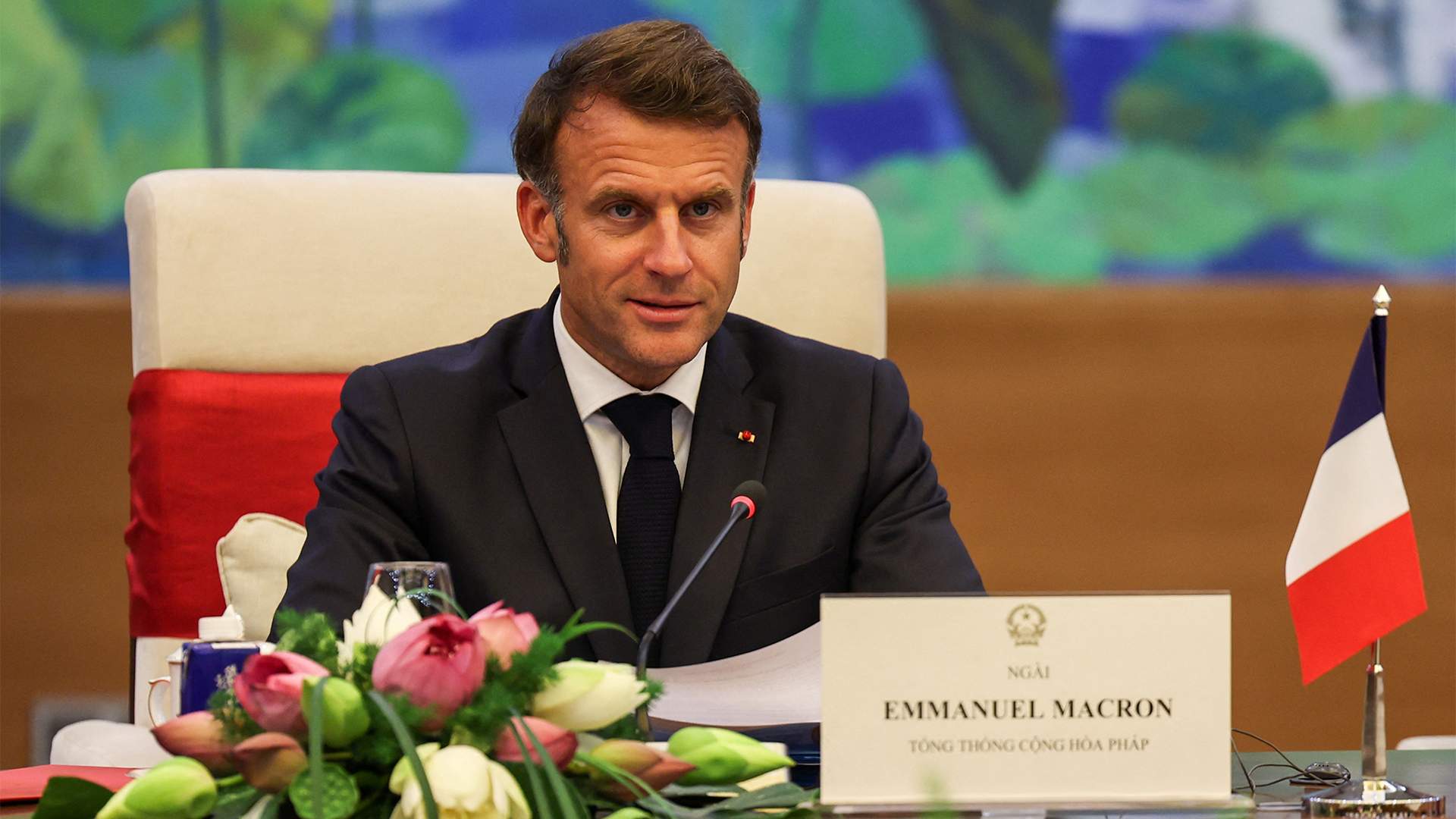
French President Emmanuel Macron and Chairman of the National Assembly of Vietnam Tran Thanh Man attend a meeting at the National Assembly during Macron's first official visit.
Why is France so eager to show itself as a reliable partner for the Southeast Asian countries: on the one hand, the United States is strangling it with tariffs, on the other, China is allegedly destabilizing the situation with territorial claims. It turns out that the two largest economies have turned the region into a testing ground for their geopolitical confrontation. And Paris does not hide this much: in such circumstances, Emmanuel Macron's trip is designed to "strengthen the Indo-Pacific strategy" of the country.
Are there any risks for Russia's position in Southeast Asia
Of course, Southeast Asian countries do not limit their priorities to cooperation with the United States, China, and major EU countries. Russia, as a world power, is also actively establishing ties with key players in the region: recently, Russian President Vladimir Putin hosted the leader of Vietnam, Tho Lam. Our countries have had strong and trusting relations since the Soviet era. Federation Council Speaker Valentina Matvienko recently called Vietnam Russia's closest and most reliable partner in Southeast Asia. The visit of Indonesian President Prabowo Subianto to the SPIEF is expected soon. He had previously come to Moscow for talks with the Russian president, and even before his official inauguration.
— Of course, Macron's visit has anti-Russian overtones, because on Asian platforms he continues to develop the thesis of the so-called Russian aggression, says that the conflict in Ukraine has negative consequences for the global economy and Asian countries are also suffering from this. That is, he will try once again to swing the sympathies of these countries towards the pro—European side," Alexey Chikhachev, senior lecturer at the Department of European Studies at St. Petersburg State University, explained to Izvestia.

Indeed, in Jakarta and Singapore, Emmanuel Macron intends to clarify France's position on international conflicts once again in order to avoid "misunderstandings and misunderstandings." In the case of Indonesia, this is probably due to the country's growing political weight — it has officially joined BRICS as a full member since 2025.
At the same time, it is unlikely that these countries will follow such calls, given their so-called bamboo diplomacy, the expert emphasizes. This means balancing between different centers of power, including maintaining productive contacts with Moscow. For example, Deputy Prime Minister Denis Manturov visited Indonesia in April, and Security Council Secretary Sergei Shoigu visited Indonesia in February. In June 2024, Vladimir Putin personally visited Vietnam.
However, traditionally, cooperation between France and the countries of Southeast Asia is deeper than with Russia, said Elena Burova, Senior researcher at the Center for Vietnam and ASEAN Studies at the ICSA RAS.
— It is very likely that France will be able to seize the initiative. Also, do not forget about the anti-Russian sanctions in the defense industry. If Russia has more or less established ties with the countries of the region in the political sphere, then France is clearly winning economically. Sanctions make it difficult to deepen relations between Russia and the Southeast Asian countries, Burova believes.

For example, Indonesia purchased 42 Rafale aircraft from France in 2022 for $8.1 billion and two Scorpène submarines. The EU and Southeast Asia are much closer than Russia and Southeast Asia both economically and historically. If Russia offers real alternatives to European projects and programs, this may lead to a shift in the balance of power in the region in our favor, Pavel Shaternikov, a junior researcher at IMEMO RAS, draws attention.
There has also been a conflict of interests in the field of nuclear energy. In particular, Moscow expects to participate in the construction of a nuclear power plant in Indonesia. And France occupies a leading position in Europe in this area, while it is not constrained by any sanctions restrictions. However, experts emphasize that Russia has a more favorable and attractive price. And the scale is on the side of the Russian Federation. France still has little experience in cooperation with foreign countries in this area: it participated in the construction of nuclear power plants in Finland and the supply of reactors for China. Russia is implementing projects in Hungary, Turkey, India, Egypt, and Bangladesh, among others.
Переведено сервисом «Яндекс Переводчик»
