- Статьи
- Economy
- Plastic surgery: in the fall, the Russian Federation will limit the number of bank cards per person

Plastic surgery: in the fall, the Russian Federation will limit the number of bank cards per person
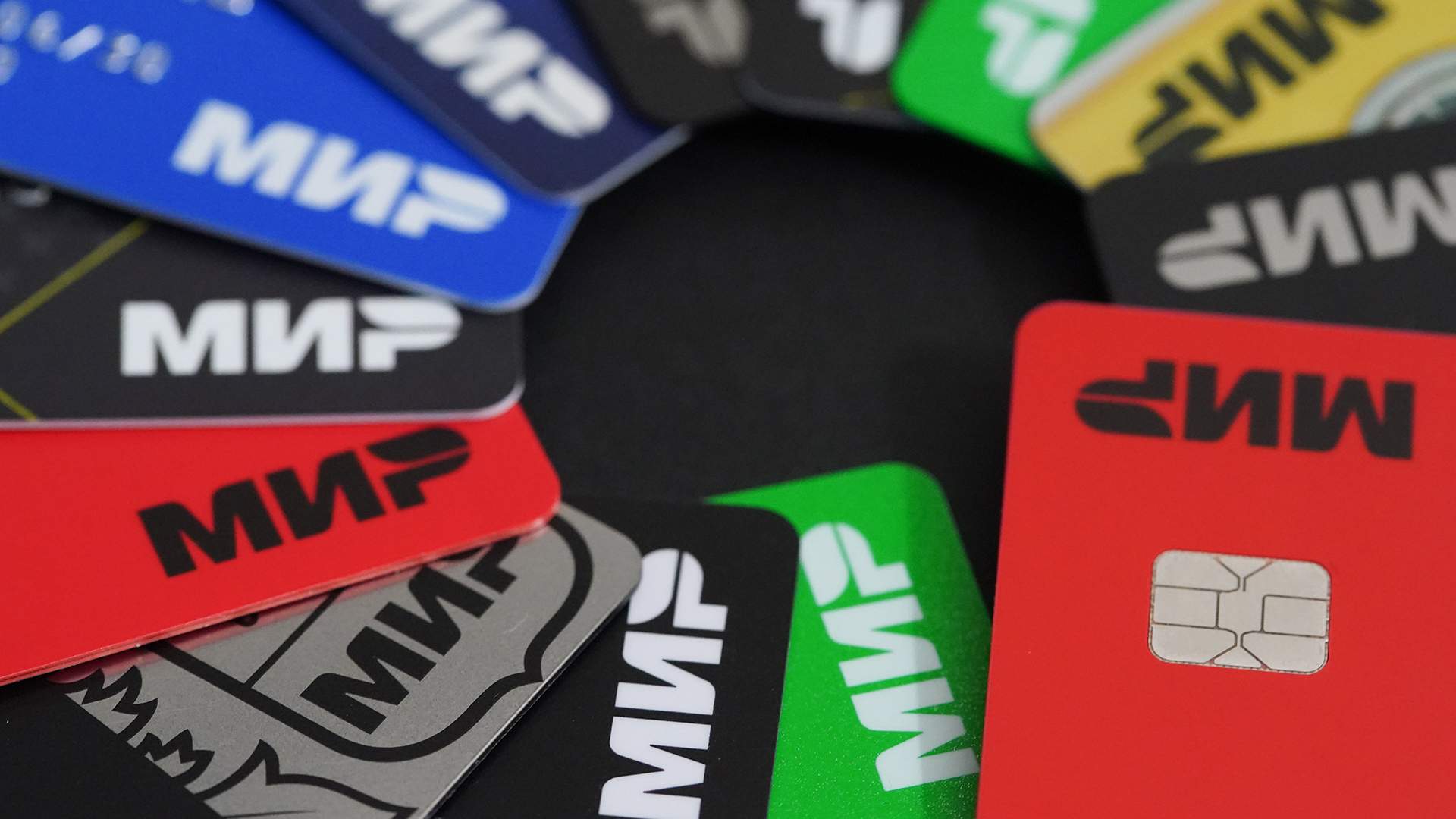
As early as autumn, a limit on the number of bank cards issued per person will begin to apply in Russia, Anatoly Aksakov, head of the State Duma Committee on the financial market, told Izvestia. It is assumed that everyone will be able to receive no more than 20 pieces, and in one credit institution — a maximum of five. The initiative was proposed by the Central Bank to combat droppers, where fraudsters create dozens of accounts and then use them to withdraw stolen money. However, this may hinder bona fide clients who actively use the services of various financial institutions in pursuit of favorable rates and cashback. How many of them are in Russia is in the Izvestia article.
Is there a limit on the number of bank cards per person in the Russian Federation
The number of bank cards issued to one individual will be limited to 20 this fall, Anatoly Aksakov, head of the State Duma Committee on the Financial Market, told Izvestia. According to him, the initiative is already planned to be submitted to the lower house in June and it will not take much time for its adoption.

The initiator of the innovation is the Bank of Russia: the idea was expressed by the head of the Central Bank, Elvira Nabiullina, at a meeting of the president with the government in early March. According to her, a normal person "does not need 100 cards from different banks," and therefore a limit is proposed — up to five cards in one bank and up to 20 cards in total.
— So far, the proposal is being made — only 20 cards and five in one bank, but it seems to me that this is excessive, we will discuss it. The number of banks is not discussed, only the number of cards," Anatoly Aksakov said.

Strengthening control over the issuance of new cards should become a tool in the fight against fraudsters. Under various pretexts, they persuade ordinary Russians — droppers — to issue an account for themselves and transfer data from it to intruders. Then the stolen funds are withdrawn through such accounts.
Currently, there is no legal limit on the number of cards in one person's hands — it is determined by the policy of banks. It is understood that this is convenient for both credit institutions and people. Customers can turn to different products to meet different needs: for example, one bank has more favorable deposit rates, another has credit cards, a third has mortgages, a fourth has high cashbacks, a fifth has benefits for access to business halls, and a sixth simply receives salary.

At the same time, a person can have several accounts in each financial institution: for example, a settlement account and a savings account. Even more is usually required if a person is registered as self-employed or sole proprietor.
However, a number of banks already have such restrictions. In particular, a customer can issue up to five cards at Sovcombank, depending on their type and purpose, Anna Kambulova, the bank's managing director, told Izvestia, adding that such a limit was set based on the experience of the organization. No more than five cards, including virtual, debit and credit cards, can be issued by yourself and at Absolut Bank, said Vitaly Kostyukevich, director of the Retail Products Department.

With all the variety, having more than eight cards is not optimal for the client himself, says Veniamin Kaganov, CEO of the Association for the Development of Financial Literacy. This is due to the fact that banks often change the terms of service, and inform about it after the fact — by posting new terms on the website, which customers rarely look at. As a result, a person may pay extra fees.
How many bank cards does one Russian apply for on average
According to the Central Bank, last year the number of settlement and credit cards issued in the Russian Federation increased to 515 thousand. If we divide their number by the entire population of the country (however, taking into account children), then there are three to four for each person.
In five years, the number of cards in the pockets of Russians has increased two to three times, VTB shared. According to the bank's survey, every second Russian uses two or three cards at the same time.
The proportion of customers with more than 20 active cards is about 0.5% or even 0.25% of the number of active customers, independent expert Andrey Barkhota estimated. Considering that there are about 100 million users of banking services in the Russian Federation, the new measure may affect several hundred thousand citizens.

"More often than not, such odious users are inexperienced cardholders who want to choose the one that gives them the most privileges," Andrei Barkhota explained.
Even fans of "bank marketing" do not have more than 10-12 plastic cards, said Veniamin Kaganov, General Director of the Association for the Development of Financial Literacy.
As for bona fide customers, for most of them, the established limit of five cards in one bank and 20 cards in total will not create significant inconvenience, said Anna Kambulova, Managing Director of Sovcombank. However, according to Mikhail Voronko, deputy director of the Retail Business Development Department at Zenit Bank, reducing to five units in one credit institution may not always be convenient, given that banks have different product lines, which are often updated.
At the same time, the new rules will require time to adapt banking systems and, probably, integration with credit bureaus (BKI) for control, Anna Kambulova emphasized. When it comes to information about all cards issued to the client, centralized services are essential, and these are always significant costs for finalizing processes on the part of each participating bank, agreed Veniamin Kaganov from ARFG.

Who are droppers and how do banks deal with them?
Credit institutions believe that the initiative will help reduce the number of droppers. However, in order for it to work more effectively, it is necessary to work out the details.
It is still unclear whether the limits proposed by the Central Bank for issuing bank cards will be extended "here and now" or, say, after a certain time, the cybersecurity company F6 explained. They assumed that the dropper would be able to take advantage of the gap in the bill by issuing the same 20 cards, and a week later, when they were blocked, return to banks and reopen several accounts.

The central Bank consistently strives to make the provision of droppers' services as difficult as possible. Since May 15, there is a limit on transfers of 100 thousand rubles for bank customers who are suspected of such activities. If a law-abiding citizen is on the blacklist, he can appeal this decision. In addition, a bill was passed in the first reading, according to which minor bank customers will be able to issue a card only with the consent of their parents.
In early May of this year, another measure was adopted for consideration — criminal liability for droppers, proposed by the Ministry of Internal Affairs. However, today the actions of intermediaries of scammers can fall under several articles at once. For example, under Article 159 of the Criminal Code ("Fraud"), one can be fined up to 1 million rubles or imprisoned for up to 10 years, and under Article 210 of the Criminal Code ("Participation in a criminal community"), one can be imprisoned for up to 20 years.
Переведено сервисом «Яндекс Переводчик»
