
High-voltage round: the conflict between India and Pakistan has entered a combat phase
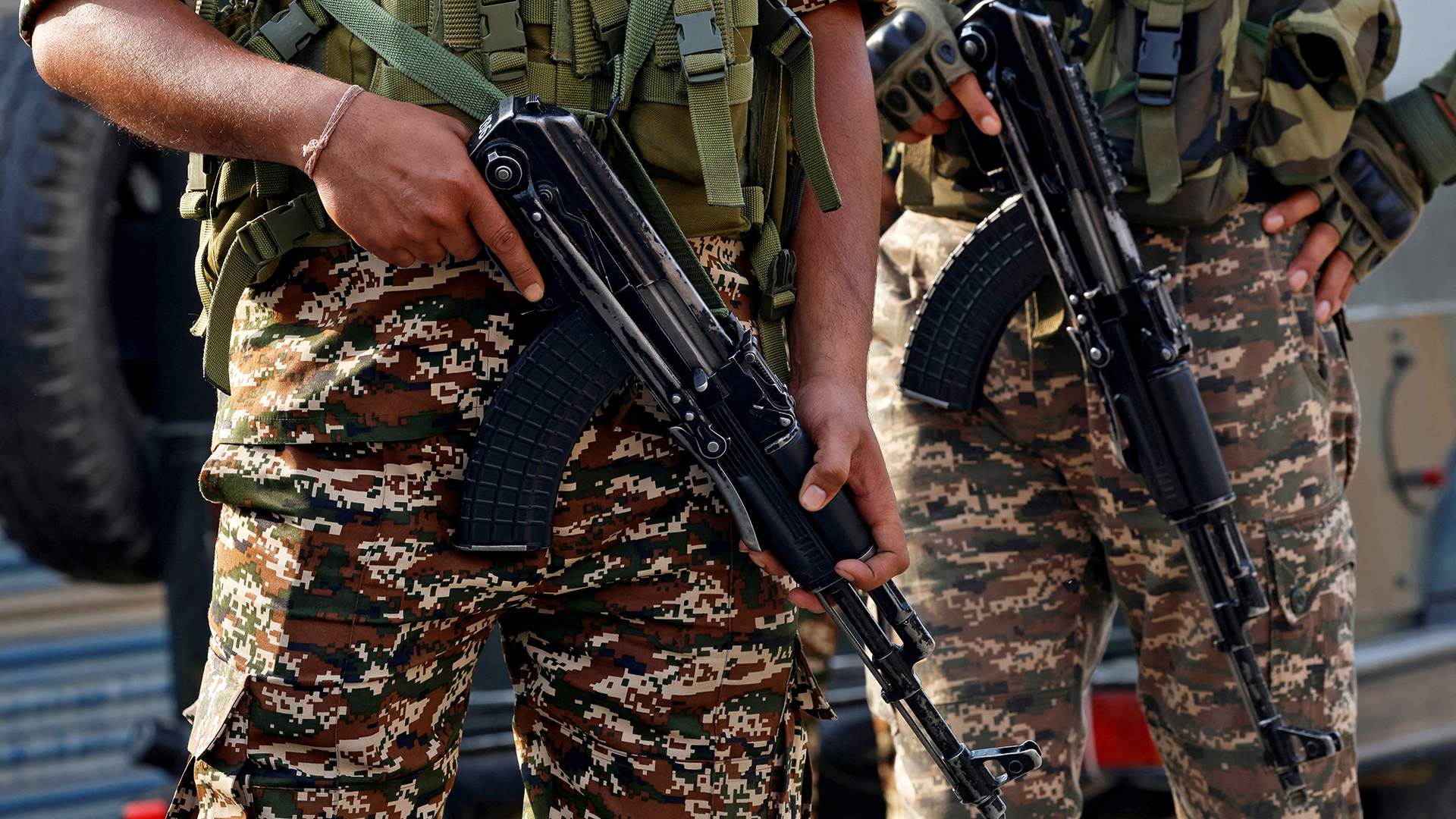
A new round of conflict between India and Pakistan will not lead to full-scale hostilities, the escalation remains controlled, experts interviewed by Izvestia believe. In their opinion, New Delhi is taking measures that will not provoke Islamabad to a nuclear strike, which will have to be responded to. On the night of May 7, the Indian Armed Forces attacked the positions of terrorists based in Pakistan. There are dead people, including children. There is no information about Russian casualties, the Russian Embassy in Islamabad told Izvestia. Indians support the government's decisions. The Russian Foreign Ministry and the US State Department are concerned about the intensification of military confrontation between the two countries and urge them to exercise restraint. The situation has already complicated air traffic in Asia — companies had to change flight routes. How the situation between the two nuclear powers will develop is in the Izvestia article.
India has launched strikes on Pakistani-controlled territory
Tensions between New Delhi and Islamabad have entered an active phase. On the night of May 7, the Indian army announced the start of Operation Sindoor. The armed forces attacked "terrorist infrastructure in Pakistan and Pakistan-occupied Jammu and Kashmir." In total, nine facilities were attacked, as a result of which about 70 militants were eliminated, the Indian side claims.
It was in this state that a terrorist attack took place on April 22, in which 26 people were killed, including 25 Indians. New Delhi continues to accuse Pakistan of supporting terrorists who have attacked civilians. Curiously, the operation was named after the ritual powder that married women apply to the parting and forehead. Thus, the Indians wanted to emphasize that many lost their husbands as a result of the terrorist attack.
The reason to launch a military operation, according to the Indian side, was another violation by Pakistan of the ceasefire agreement on the border. A shooting has been reported in Bhimber Gali in the Poonch Rajauri area. Thus, India exercised its right to prevent new terrorist attacks by Pakistani militants, the Foreign Ministry said. The department also noted: The authorities had intelligence about the planned new attacks.
The statement said the actions were "targeted, measured and non-escalatory" and that no Pakistani military installations had been attacked. "India has shown considerable restraint in choosing the targets and methods of execution." Official New Delhi informed a number of countries about the planned operation. Among them are Russia, the United States, the United Kingdom, Saudi Arabia and the United Arab Emirates.
The press service of the Pakistani army claims that eight people, including two children, were killed and 35 injured as a result of Indian strikes. According to Reuters, the death toll from Indian Air Force strikes in Pakistan has risen to 26 people, 46 more were injured.
The Russian Embassy in Pakistan is closely monitoring the situation. Russian diplomats called on the parties to exercise restraint to prevent further deterioration of the situation in the region.
— At the moment, we do not have data on the injured Russian citizens. In light of recent events, the embassy has taken additional measures to ensure the security of the Russian foreign office, the diplomatic mission in Pakistan told Izvestia.
Islamabad's reaction to the strikes was immediate. The country's defense ministry accused India of targeting civilians, although New Delhi claims that terrorists were the target. The authorities announced the closure of their airspace for all flights for 48 hours. A representative of the Ministry of Defense announced that aviation had been put on alert.
Pakistani Prime Minister Shahbaz Sharif said, "Pakistan has every right to respond decisively to this act of war imposed by India, and a decisive response has already been given." In connection with the operation, the Government convened the National Security Council. The Pakistani Foreign Ministry said that the country has the right to use the provisions of Article 51 of the UN Charter for the right to self-defense. According to available information from a number of Pakistani and Western media outlets, Islamabad has already retaliated.
The international reaction was also not long in coming. The Russian Foreign Ministry is concerned about the intensification of the military confrontation between India and Pakistan. "We call on the parties involved to exercise restraint in order to prevent further deterioration of the situation in the region. We hope that the existing differences between New Delhi and Islamabad will be resolved by peaceful, political and diplomatic means," the ministry said in a statement. This was stated earlier personally by Sergey Lavrov, having recently held telephone conversations with the foreign ministers of India and Pakistan.
Washington also disapproved of the escalation of the conflict: the head of the White House, Donald Trump, called it a "disgrace." The State Department confirmed that they are in direct contact with the governments of both countries and called for "maximum restraint." The Chinese Foreign Ministry called on both sides to avoid actions that could lead to escalation. At the same time, Turkey supported Pakistan, and Israel sided with India.
The escalation has already affected the lives of ordinary citizens, and not just the warring parties. More than two dozen commercial flights were diverted to avoid Pakistan's airspace, and airlines canceled 52 flights to or from Pakistan, data from the FlightRadar24 monitoring service shows. Russian airlines have also adjusted flight routes from Moscow to South Asian countries, including India, Sri Lanka, Maldives and Thailand. The flight time should increase by an average of one to two hours.
The aggravation also affected the Indian military-industrial complex. The market value of ten Indian defense companies has grown by more than $5 billion since April 22, Bloomberg estimates.
How can the escalation between India and Pakistan end?
It is worth noting that the media in both countries are whipping up hysteria. The Indian media field is full of loud statements that "India has woken up," strongly approving the government's steps. Curiously, the reaction on the streets is about the same. Residents of New Delhi, which is located just a few hundred kilometers from Jammu and Kashmir, are confident in the correctness of the decision of the authorities. At the same time, they are not at all afraid of Pakistan's retaliatory actions, at least in the capital. This applies to both the relatively older generation and the very young. Most repeat, "We have Modi."
— I am not afraid of retaliatory strikes, because I trust the Indian army. I can trust the Indian army. Given the recent terrorist attacks, I think this is the best solution. It is necessary to show Pakistan that we are not afraid of anyone," a native of Kerala told Izvestia.
After the strikes, information spread in the Pakistani media that the country's armed forces allegedly shot down two Indian Air Force fighter jets, this information is accompanied by phrases like "Pakistan has begun the process of retaliation." It later turned out that the photo evidence provided by Pakistan's SAMAA TV was the aftermath of the Indian Air Force MiG-29 crash in Rajasthan in September 2024.
Despite the decisive actions of the Indian side, a new round of conflict will not necessarily lead to full-scale hostilities, said Rakesh Bhadauria, Deputy Director General of the Center for the Study of Ground Combat Operations in New Delhi.
— However, the Pakistan Army may disagree with this, feeling the pressure and the need to respond. But it will be difficult for her to choose goals that justify retaliatory actions. If the response is only symbolic, India will not escalate. The responsibility for it clearly lies with Pakistan, and it is very likely that China may ask Pakistan to show restraint and lower the overall temperature," the expert told Izvestia.
Later statements by Pakistani officials demonstrate that Islamabad is not really interested in reaching the point of no return. The country has not shown hostility towards India and will end tensions if New Delhi backs down, Pakistani Defense Minister Khawaja Asif said in an interview with Bloomberg.
— It seems to be a controlled act. The statement from the Ministry of Defense also refers to non-escalation actions. Pakistan is likely to respond in non—escalatory ways," Ajay Dubey, a professor at Jawaharlal Nehru University in New Delhi, told Izvestia.
In general, the current escalation repeats the situation in 2019, when the Indian army, in response to another terrorist attack, attacked formally Pakistani militant training camps. In other words, New Delhi is taking actions that will not provoke Pakistan to launch a nuclear strike, and India, respectively, to respond in the same way, said Alexey Kupriyanov, head of the Center for the Indian Ocean Region of the IMEMO RAS.
Переведено сервисом «Яндекс Переводчик»
