- Статьи
- Economy
- The report comes out: The Ministry of Energy for the first time called trade wars one of the main risks for the Russian Federation

The report comes out: The Ministry of Energy for the first time called trade wars one of the main risks for the Russian Federation

The main external risks to the Russian economy will be the escalation of trade wars and tougher sanctions, according to the scenario conditions for the country's socio-economic development for the coming years prepared by the Ministry of Economy. Six months ago, the agency did not identify these problems as the most dangerous. In addition, the ministry continues to fear the consequences of a delay in lowering the key interest rate, which has been at a record high of 21% for six months. How to maintain economic growth in these conditions is in the Izvestia article.
What will the Russian economy look like in 2025
In 2025 and the next three years, the main external risks to the Russian economy will be the expansion of trade wars, tougher sanctions and a slowdown in global GDP. This follows from the main parameters of the forecast of socio-economic development of Russia, which were prepared by the Ministry of Energy (Izvestia studied the document). The agency attributed the imbalance of supply and demand (when people need more goods than manufacturers can create or supply), as well as the untimely transition to a reduction in the key rate to internal dangers for economic growth.

For comparison, in the previous September forecast, the Ministry of Energy, in addition to the slowdown in global GDP and tight monetary policy, also highlighted the shortage of personnel. In May 2025, the labor market is no longer a concern for the department. At the beginning of this year, unemployment in Russia, although still low, rose slightly to 2.4%.

Minek's focus has shifted, as global trade conditions have changed significantly over the past six months. On April 2, US President Donald Trump announced the introduction of import duties against 185 countries: the base rate is 10%, but it is higher for individual countries. However, on April 9, he postponed the entry into force of increased fees for some states for 90 days, as they turned to him for negotiations. China is the only one that has taken a tough stance in such relations. Since then, China and the United States have repeatedly announced an increase in mutual tariffs up to 145% (against China) and 125% (against the United States).

Our country does not depend on trade with the United States: its exports are largely focused on Europe and Asia. However, a new round of trade wars will slow down the economies of the world and, in particular, China — as a result, demand for energy resources will decrease. This is already reflected in the quotes: since the beginning of the year, the price of Brent has decreased by more than a quarter, to $59 per barrel. This is especially important for Russia, because energy resources are our main export product.
What will happen to the global economy in the coming years
In its document, the Ministry of Energy also predicted a slowdown in the global economy. According to the agency, it will lag behind the forecasts of the largest organizations by 0.2–0.3 percentage points. The expectations of the World Bank for this year are 2.7%, the IMF — 3.3%.
However, by 2028, the indicators will stabilize at 3.1%. In the next two to three years, the volume of trade that has fallen due to tariff wars will be restored as a result of import substitution, production transfers between countries and other measures to adapt to new conditions, Kirill Kononov, analyst at BCS World Investments, noted. According to him, only after that the economy will return to "standard" growth.

At the same time, the main risks to global GDP will be increased protectionism, inflation around the world and escalation of geopolitical tensions, according to the forecast of the Ministry of Economic Development.
At the same time, new non-economic shocks, such as epidemics and armed conflicts, cannot be ruled out, which will distract countries and entire regions from domestic and economic problems, independent expert Andrei Barkhota believes. Such processes will stimulate the growth of monetary emission and government spending.

When will the key rate be lowered
As the Ministry of Energy noted in its forecast, one of the main risks to the economy still lies in the delay in lowering the key rate. This opinion is shared not only in the department: deputies have repeatedly expressed dissatisfaction with the Central Bank's policy. For six months now, the rate has been at a record high of 21%.
— The main reason why the Bank of Russia is not moving to a rapid and intensive reduction of the key rate is the fear of a critical increase in household debt. If interest rates become lower, demand for loans will increase, while household incomes are not growing so fast. As a result, people may face problems with debt servicing," Andrei Barkhota believes.

In order to act, the Bank of Russia is waiting for positive inflation figures. But right now, the country is really not ready for a sharp easing of monetary policy - if this is superimposed on rising prices, it will make both the economy and the population worse, says Natalia Milchakova, a leading analyst at Freedom Finance Global. She clarified that a slowdown in inflation is possible in the second half of the year, which means that the key rate may begin to decline by autumn.
If the contraction of the global economy actually leads to a collapse in oil prices, then this will be an incentive for the Central Bank to further postpone reducing the key interest rate or even temporarily raise it again, Natalia Milchakova believes.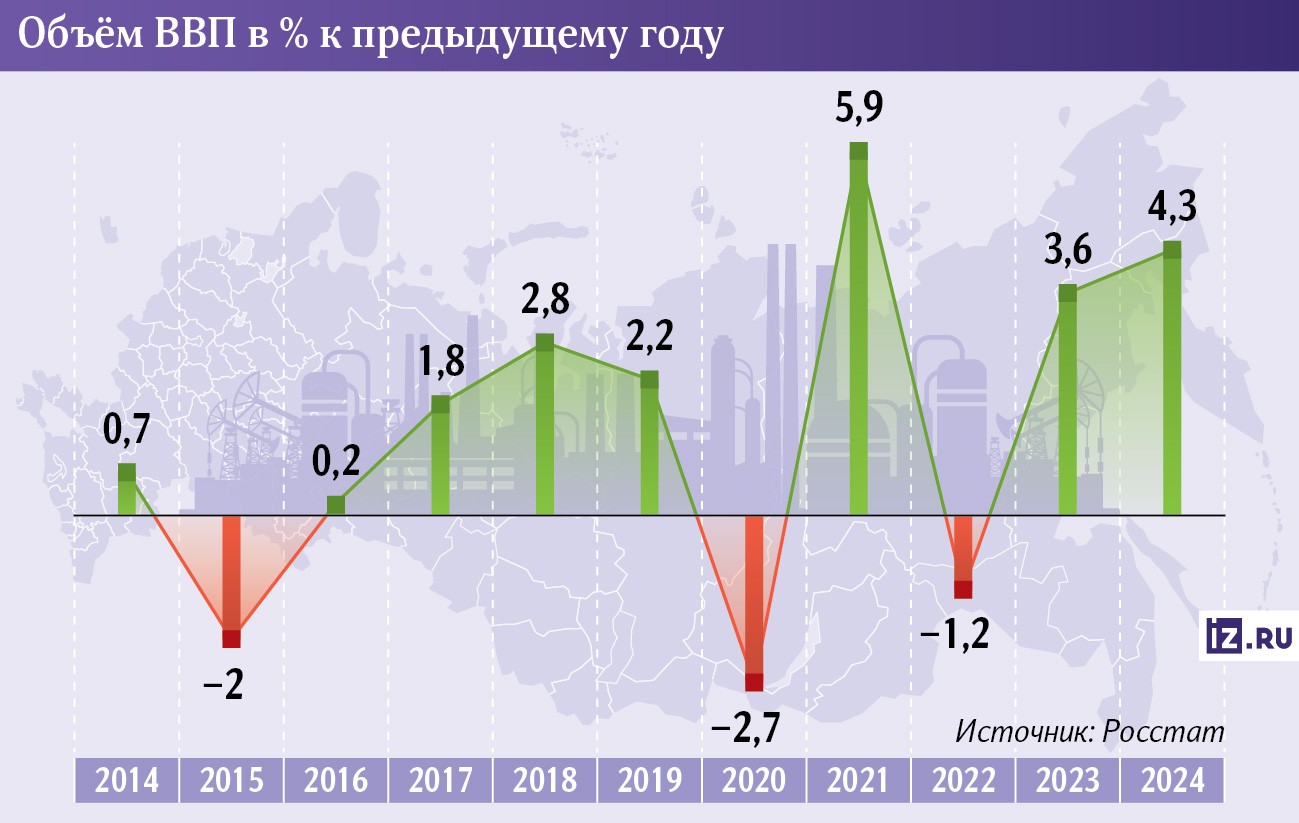
Under the current conditions, the main factor in supporting the Russian economy in the long term is the growth of investment activity, Andrei Barkhota believes. In particular, the president has repeatedly stated that it is necessary to double the capitalization of the Russian stock market by 2030. Other growth points are an increase in labor productivity and, in fact, the implementation of the doctrine of supply—side economics, the expert added. It is important to find a balance between the needs of citizens and the volume of goods and services that a country can produce.
Переведено сервисом «Яндекс Переводчик»
