
Introductory resources: Uzbekistan is counting on Russia's help in the Aral Sea region
Uzbekistan is counting on Russia's help in preventing a large-scale environmental disaster in the Aral Sea region. The parties are discussing the participation of Russian specialists in combating desertification and erosion, Deputy Minister of Ecology of the Republic Iskandar Kutbiddinov told Izvestia. Experts warn that the problem of drought could completely destroy agriculture in the region, which serves as the backbone of the Central Asian economy. Moscow is interested in resolving this issue, as desertification may affect Russia as well. The scale of the environmental problem and cooperation in the field of ecology is described in the Izvestia article.
Cooperation between Uzbekistan and the Russian Federation in the field of ecology
Uzbekistan hopes that Russia will help prevent a large-scale environmental disaster in the Aral Sea region. Iskandar Kutbiddinov, Deputy Minister of Ecology of the republic, told Izvestia that the parties are discussing the participation of Russian specialists in combating desertification and erosion.
— The restoration of the Aral Sea region is one of the most important priorities. This region is not only an ecological disaster zone, but also a territory of opportunities for international solidarity, scientific cooperation and sustainable development. Our country, together with international partners, is implementing large—scale projects aimed at greening the dried-up seabed, combating desertification, and preserving small bodies of water," he said. — The participation of Russian specialists in the fight against drought in the Aral Sea region and ecosystem rehabilitation projects is being discussed.

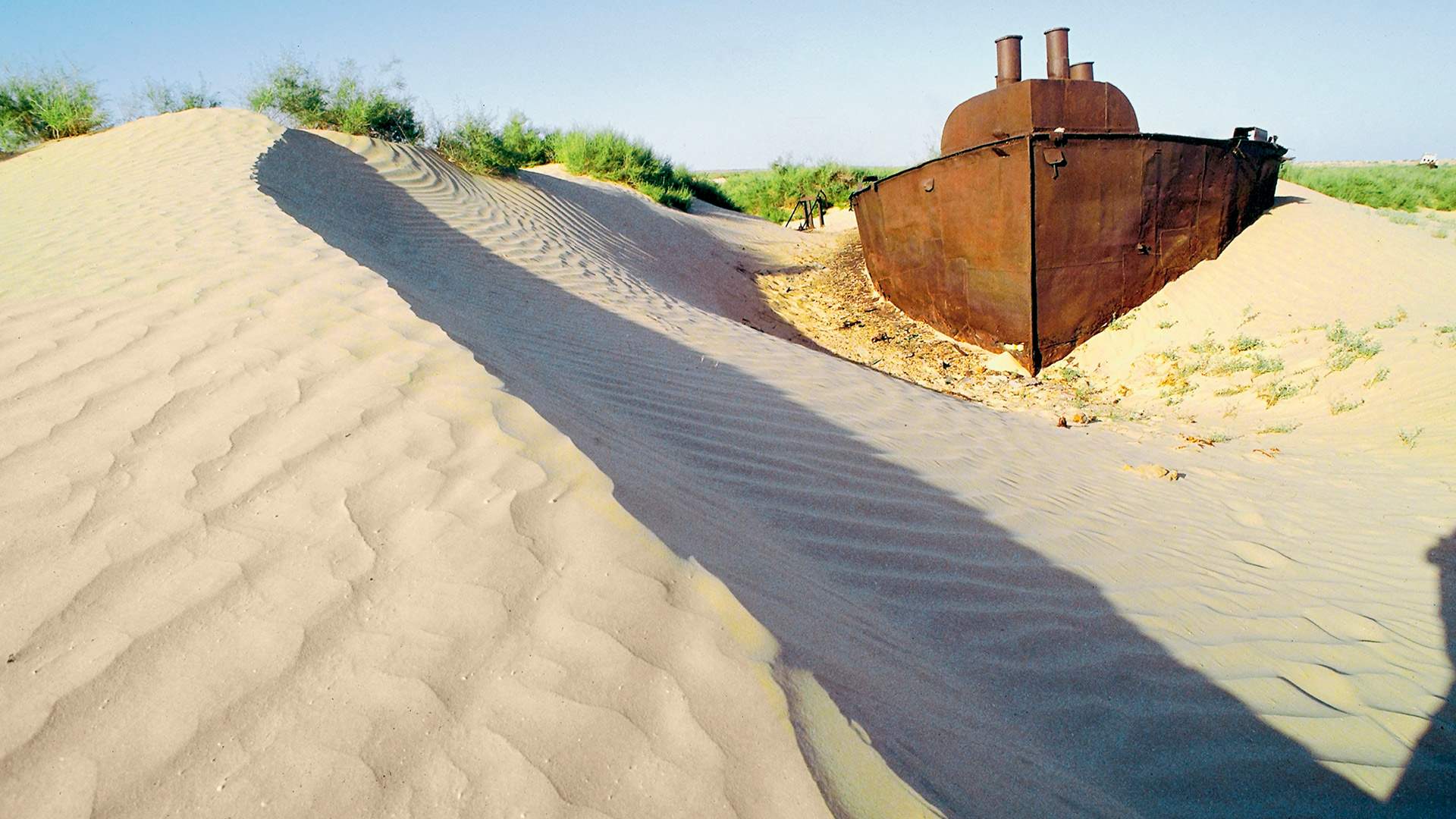
Shipwrecks at the site of the dried-up Aral Sea
Uzbekistan actively cooperates with a number of international organizations, including the World Bank, the United Nations Development Program (UNDP), UNEP, and the European Union. Special attention is being paid to projects on saxaul planting, restoration of the natural landscape and improvement of aquatic ecosystems, the minister added.
Tashkent, together with American, Korean, Czech, Chinese and Arab partners, is implementing an investment portfolio worth about $1.5 billion in the field of medical, solid household and electronic waste recycling.

Saxaul Bushes
Russia remains one of Uzbekistan's most important partners in the field of ecology. The parties are currently developing strategic cooperation in this area, as well as working on mutual visits of delegations in the near future.
Russia also participates in international events dedicated to solving environmental problems. For example, in 2025, its delegation will participate in the international environmental exhibition Eco Expo Central Asia, as well as in the CITES COP20 Conference of the Parties in Samarkand.
Also, within the framework of the cooperation agreement signed in 2024 between Uzbekistan and the regions of the Russian Far East for 2025-2030, the parties plan to implement initiatives, including the development of specially protected natural areas. This work involves face-to-face contacts between relevant departments, the scientific community and experts.
Uzbekistan has the highest proportion of degraded lands in the Central Asian region, totaling more than 3 million hectares. Now the Aral Sea region is the largest area of desertification that exists on the planet, Daria Saprynskaya, a researcher at the ISAA of Lomonosov Moscow State University, tells Izvestia.

The Aral Sea region
"This is a global problem, because the degradation of soils and pastures that occurs there threatens to cause quite large environmental disasters," the expert added.
The Russian Federation is particularly interested in solving the problem of drought, in particular in the Aral Sea region, as the climate is changing and in the future this problem may already affect the northern and southern regions of Russia, Honored ecologist of Kazakhstan Chingiz Lepsibayev tells Izvestia.
"If we don't fight desertification, for example in the Aral Sea region, it will spread to the southern regions of Russia," he emphasizes.
The Russian Federation and Central Asia also have a common river flow, so the fragmentation of reservoirs in the region is directly related to the saturation of water resources in Russia. The Russian Federation has experience in land reclamation and the reconstruction of individual reservoirs, which can help Central Asia, Daria Saprynskaya believes.

The shore of the drying Aral Sea
In the coming years, the region's partnership with the Russian Federation in the field of ecology will only strengthen due to the growing urgency of these problems, the experts concluded.

The problem of desertification in Central Asia
The topic of desertification is generally characteristic of most Central Asian countries. 80% of the region's territory consists of steppes and deserts. Land is being destroyed not only by drought and water scarcity, but also by deforestation, increased water intake for industrial and domestic needs, and increased strain on pastures.
The region is heavily dependent on cross-border rivers such as the Amu Darya and Syr Darya, which are under increasing pressure due to excessive consumption and inefficient irrigation methods.

The Amu Darya River near the Uzbek-Afghan border
The situation is also aggravated by problematic issues with neighbors: the Kosh Tepa irrigation canal is being built in Afghanistan. It will be saturated by the waters of the Amu Darya River. The Afghan authorities claim that this will allow them to improve the food situation in the country. However, additional withdrawal of water from the riverbed will lead to an even greater shortage of water resources in the region.

The Kosh Tepa irrigation canal under construction in northern Afghanistan
Uzbekistan, in particular Karakalpakstan and Navoi region, are currently suffering the most from soil degradation and desertification. The number of pastures and agricultural lands in the region is critically decreasing. The situation is particularly acute in Kazakhstan. Mostly in the Mangystau and Kyzylorda regions, says Daria Saprynskaya.
According to the UN Convention for 2023, about 12 million people live in high-risk areas of drought. It has already affected more than half of the region's inhabitants, that is, about 27 million people.
In Kazakhstan, Kyrgyzstan, Tajikistan, Turkmenistan and Uzbekistan, one fifth of the land is no longer suitable for growing crops and grazing livestock. Due to desertification in the region, agriculture is under threat, says Chingiz Lepsibayev.

Steppes near the city of Balkanabad, Turkmenistan
— The climate in the region has already changed for two months. That is, we have two months more summer. The temperature changes have become more dramatic," he says.
It is worth emphasizing here that agriculture plays a significant role in the economy of Central Asia. About 60% of the region's population receives their main income from this industry.
However, in recent years, the countries of the region have begun to implement large-scale policies aimed at increasing the number of trees and preserving pastures. In Uzbekistan, for example, 4,838 ultrasonic meters and about 3,000 transmitters will be installed by 2029 to reduce water losses by up to 5%. The Republic also holds international environmental forums to draw the attention of the world community to the problem of desertification.
Kazakh leader Kassym-Jomart Tokayev had previously set the task of planting new trees throughout the republic. In addition, Kazakhstan has a special program for the protection and conservation of forests. The parties are also working with Uzbekistan on greening the bottom of the Aral Sea, the president concluded.
Переведено сервисом «Яндекс Переводчик»
