
One course: Izvestia publishes memoirs of frontline doctors for the first time

For the first time, Izvestia publishes memoirs of front-line doctors about the first week of the Great Patriotic War. In the summer of 1941, students of the military faculty of the 2nd Moscow State Medical Institute (MGMI) were preparing for state exams to receive medical diplomas. The announcement of the beginning of the Second World War on June 22 changed their fate forever. The path of the young military medics now lay to the west, to Belarus, where the Red Army was trying to stop the enemy. Nikolai Ignatov, Director of the Museum of History of the Russian National Research Medical University named after N.I. Pirogov, collected the memories of some of them especially for Izvestia.
The first issue
From 1939 to 1944, the military faculty worked at the 2nd Moscow State Medical Institute, which is now called Pirogov University. He trained doctors for the Air Force. Many of its graduates took part in the Great Patriotic War and shared their memories after its end. Nikolai Ignatov, director of the Museum of History of the Russian National Research Medical University named after N.I. Pirogov, studied these materials and specially for Izvestia collected their impressions of the first seven of the 1,418 days it took the Soviet people to achieve Victory.

Students of the 2nd Moscow State Medical Institute named after N.I. Pirogov
The narrators' data was only partially recovered. It is not known which specific units they served in. Names and surnames have been preserved from some, initials and surnames from others, and only surnames from others. About 60 graduates of that course did not return from the war.
Day one
June 22, 1941 was an ordinary summer day in the capital. The students of the 2nd MGMI had lunch in the dining room on Smolensky Boulevard, were preparing for exams, and were going to go to the Dynamo stadium to play sports. However, the news of the outbreak of war divided their lives into "before" and "after."
"The announcer interrupted the broadcast and announced Molotov's speech. The voice is agitated. Everyone was quiet. "Comrades! This morning Germany treacherously violated..." We learned that German planes bombed Minsk, Kiev, Sevastopol, and our other cities. There are civilian casualties. The march began. First thoughts: "There will be no exams. You need to get yourself in order and hurry to the boss for instructions. War means going to the front," recalled student Vladimir Dunin.
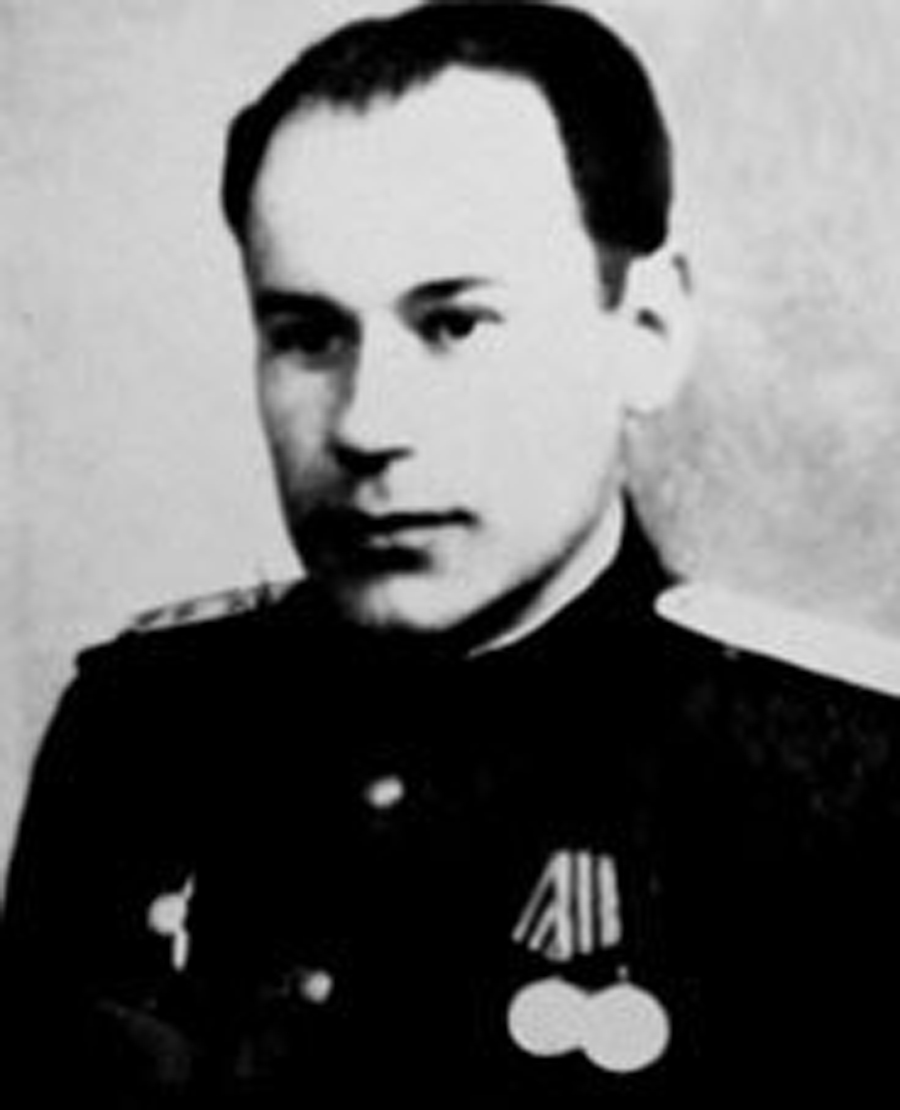
A classmate of Dunin's, Vsevolod Zvorkin, also heard Molotov's speech in another part of the city.
"I'm preparing for the psychiatry exam. After him are the "gos", and after them I am the doctor. I dream, maybe, they will leave me in the adjunct program at the Department of Aviation Medicine. 12:00. Molotov's speech is loud on the speaker. The war! I quickly got dressed in full uniform and ran to the faculty, ready for anything. How did I feel in those days? The only thing I remember is the feeling of an urgent need to act, and to act as needed now, during the war," he said.

Day two
The realities of the war are already appearing in the memories of the second day: the air raid, saying goodbye to relatives, arriving at the assembly point, train stations, people in uniform.
"On Tsvetnoy Boulevard, I suddenly hear: "Citizens! I wasn't afraid, but I hurried to the dorm. I knock on the wide glazed doors. No one opens it. I tap my foot. The sleepy face of the fourth—year student on duty appears. I shout to him, "Open up! Air alert!" wrote Vladimir Dunin.
For a long time, the conscripts remembered the scenes of saying goodbye to their relatives. Many have seen them for the last time.

"Most of us weren't sad, unlike those who saw us off. Many of them—fathers, mothers, wives - were crying. After all, they saw some of us for the last time... We waited at the train station for a long time, both us and our relatives. We were given loan bonds. At 18:00, it became clear that there would be no train," said student Vladimir Bavastro.
Day three
This day was spent on the road for most of them. Trains from Belorussky railway Station were carrying yesterday's students to the west. They were supposed to help stop the enemy. Someone was cheering up, joking, someone was singing. Some, on the contrary, were scared because there were rumors about the escape of the Red Army.
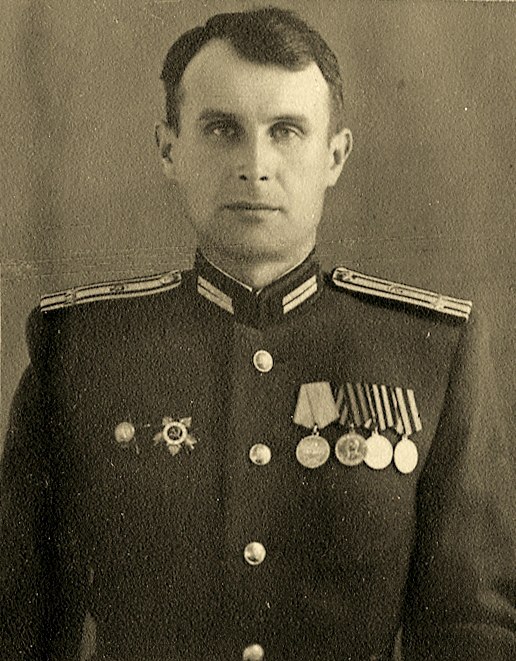
"The war promised to be big. Between Vyazma and Smolensk we meet the first trains with refugees. Women, children. Pale, frightened faces. Many people don't have clothes. They ride in their underwear. We will arrange the transfer of our belongings to them. Our underwear will be useful for those who do not have bandages on their wounds," Vladimir Dunin describes.
The medics, like other military personnel, were on their way to Belarus.

"Let's go. There are a lot of military personnel returning from vacations to Belarus. Units with families. The chief quartermaster of the district and his family are also with us. Our relatives are escorting us. There are a lot of girls from the Faculty of Civil Engineering. Wives of listeners. We are accompanied by "Father Shub" and Regimental Commissar Rosenberg. I remember saying goodbye to our wonderful quartermaster Lebedev. A sad farewell to his wife. She's trying to cheer me up with a smile," Mikhail Maksimov said.
Day four
Military medics were approaching the front line. Anti-aircraft guns were working, burning planes were burning all around. German fighters swooped over railway trains. Bombing was heard, officers detain a fascist saboteur.

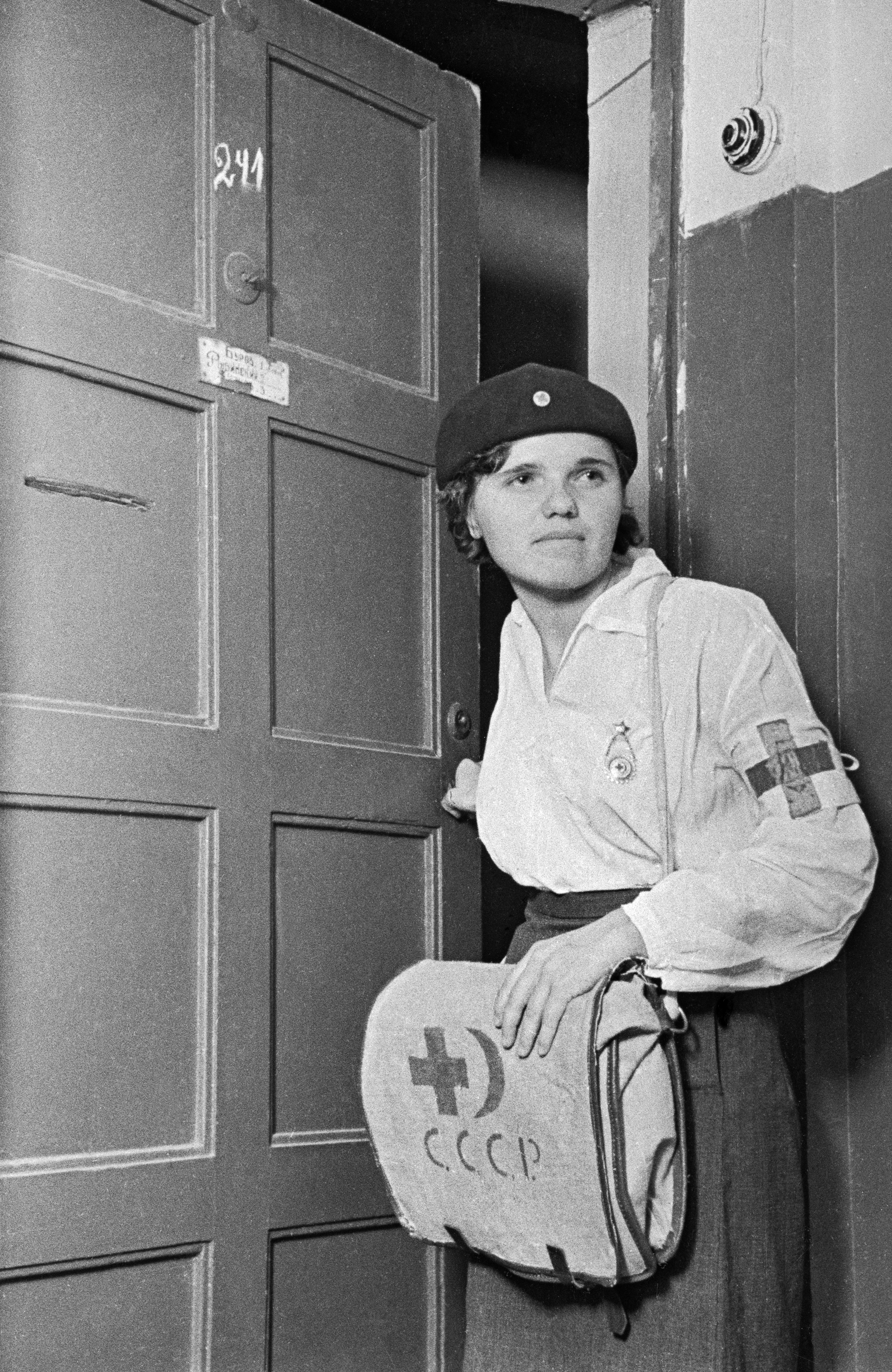
Women from the medical and sanitary battalion of the People's militia
"After Smolensk, stops are becoming more frequent. We've been behind schedule for a long time. Beyond Orsha, we can see the raised barrels of anti-aircraft guns. Several planes flew over the forest. The anti-aircraft guns opened fire. German, then! Downed planes and their individual parts begin to appear on the sides of the road. Probably German. I really want to believe in it. The only thing that bothers me is the red color of the spots on the roof and fuselage. The train is crawling like a turtle," Vladimir Dunin wrote in his memoirs.
An infiltrator was shot in front of one of the doctors — this is the reality of the war.
"In the area of the Krupki station, warehouses behind the triple wire went. Suddenly, a machine—gun burst from there in the direction of a man who was trying to climb over the warehouse territory by throwing a padded jacket over the wire. The man shuddered several times and froze. The train stopped in a hollow where a small river meandered," Vladimir Bavastro said.

Day five
Military trains arrived in Minsk, and the city was engulfed in flames. Bridges were blown up, trains could not pass further. German pilots bombed train cars.
"We are heading to the Minsk —Moscow highway. We meet a crowd of refugees. They ask us, "Where to go?" We don't know anything ourselves. The Red Army soldiers are marching in full gear. They're heading east, only east. Away from Minsk... There is no district headquarters in Minsk. Groups of German bombers are flying back and forth. Without cover. From time to time, one or more bombs are dropped, but the movement does not stop," wrote Vladimir Dunin.
A flight of Fascist bombers attacked the train, but unsuccessfully.

"Six planes bombed our compound from a height of 200-300 m. Black crosses were clearly visible on the fuselage and planes of the aircraft. Even the outlines of the pilots' faces could be seen. Most of them ran into the woods. My comrades and I stayed in the carriages. We saw the bombs detach and fly towards the ground. Fortunately for us, the fascists missed the train," recalled student Peter Leontiev.
Day six
The medics arrived at the war zone. There was confusion everywhere: Some units retreated, while others, on the contrary, tried to "hold the front." The refugee columns were heading east. The German air force did not let them relax for a second.
"Someone said that German light tanks were lining up with our retreating columns in the dark, and then suddenly opened fire, crushing people and cars with tracks. The Germans paid great attention to creating panic. The saboteurs snatched people from the crowd and dragged them off the road into the bushes. The unarmed crowd moved on without delay, without trying to rescue the screaming people in trouble," wrote Vladimir Dunin.
Despite the chaos, many units carried out their tasks in a disciplined manner.
"In the afternoon, we met military units coming towards us. It was the first time that someone was coming towards them. The units belonged to the famous Moscow Proletarian Division, which we later got used to seeing during parades on Red Square. The division was organized here, too, and made a good impression. To our question, the junior commander replied: "We are going to hold the Berezina front!" It was said without drawing, with simplicity and deep conviction in the strength of his division," recalled V.A. Lunin (name could not be identified).

Seventh day
The heroes of the story have reached their destination. In Mogilev, they were to be divided into parts and given titles.
"We are going to Mogilev in freight wagons. We are not being bombed. It's nice. In Mogilev, we camp on suitcases under a fence. It feels like there are big bosses here. Our fighters are patrolling the air all the time. Three bombers are coming at us from the west. One of our fighters "falls out" from somewhere and, like a needle to a magnet, attaches itself to the tail of the bombers. It's drizzling. We are waiting for a fur coat. He shows up and reads the assignments to us. All in aviation!" wrote Vladimir Dunin.

The commander speaks in front of a line of women from the medical and sanitary battalion of the People's militia
Yesterday's students officially received the ranks of military doctors.
"The train is rushing to Mogilev very fast. Most of us slept on bunks and hay for the first time these days. We arrived in the city early on the morning of June 28. It's quiet and empty. Red-star airplanes flew by in the sky, which we saw for the first time these days. Shub, Noskov, and I went to headquarters to get the appointment order. We returned to the audience. The order to award us the rank of military doctor of the third rank was read out," Vladimir Bavastro said.
All these memories were recorded from the narrators' words many years after the Victory.
Переведено сервисом «Яндекс Переводчик»
