From the first gas: "white graphite" will help electric cars to drive three times longer
- Статьи
- Science and technology
- From the first gas: "white graphite" will help electric cars to drive three times longer

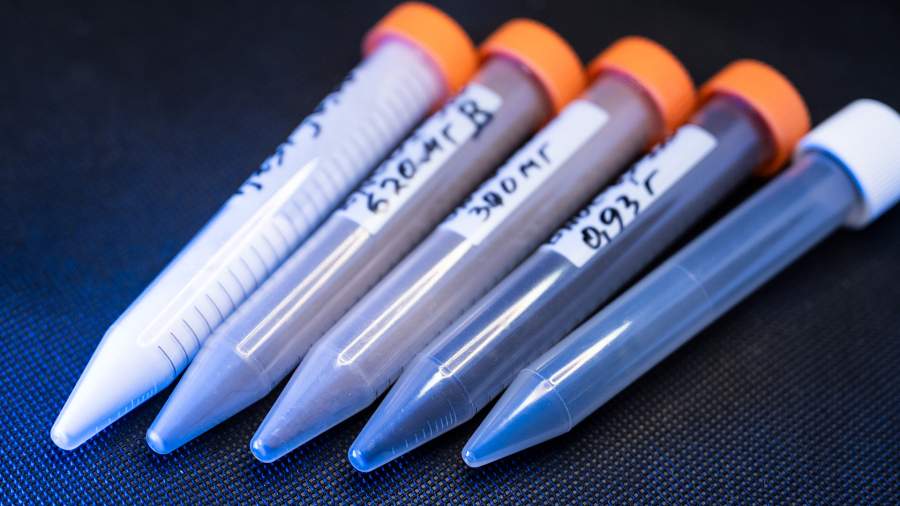
Russian scientists have developed a new material that holds three times more hydrogen than the porous analogues currently used for this purpose. It consists of boron nitride, the so-called white graphite, in the structure of which defects have been specially created to accommodate the gas. The technology allows you to store more fuel in a hydrogen car, which means that you can significantly increase its power reserve. According to experts, the development brings closer the practical use of hydrogen energy. However, for now it is much cheaper to place gas in a car in cylinders, so the technology is likely to be in demand only for special tasks.
What is "white graphite"?
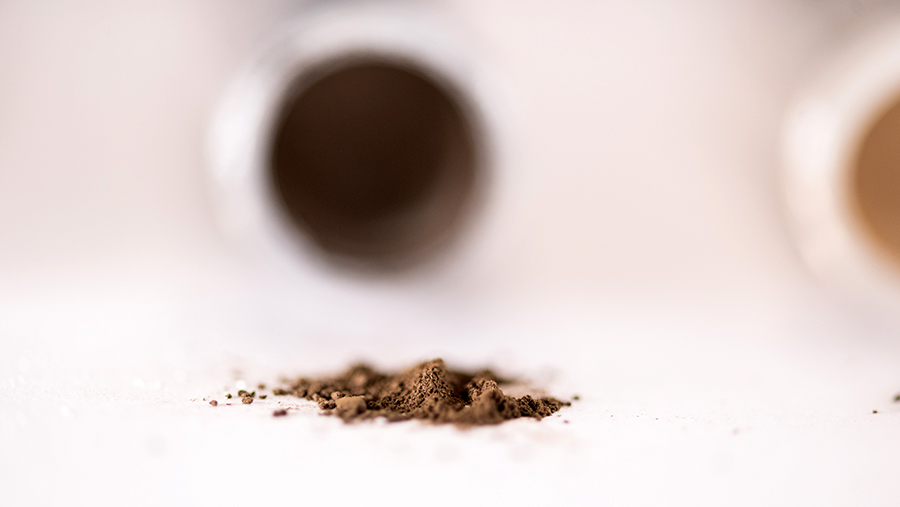
MISIS specialists have developed a new material based on boron nitride, which is also called white graphite. It contains three times more hydrogen than the most capacious organometallic frameworks (porous polymers) and is almost an order of magnitude larger than activated carbon, which is also used for these purposes. The new development will allow filling more hydrogen fuel into the car, which will increase its power reserve. At the same time, "white graphite" does not require expensive reagents and it is easy to start producing it on an industrial scale. In order to increase the absorption capacity of boron nitride, scientists deliberately created defects in it, where hydrogen was located.
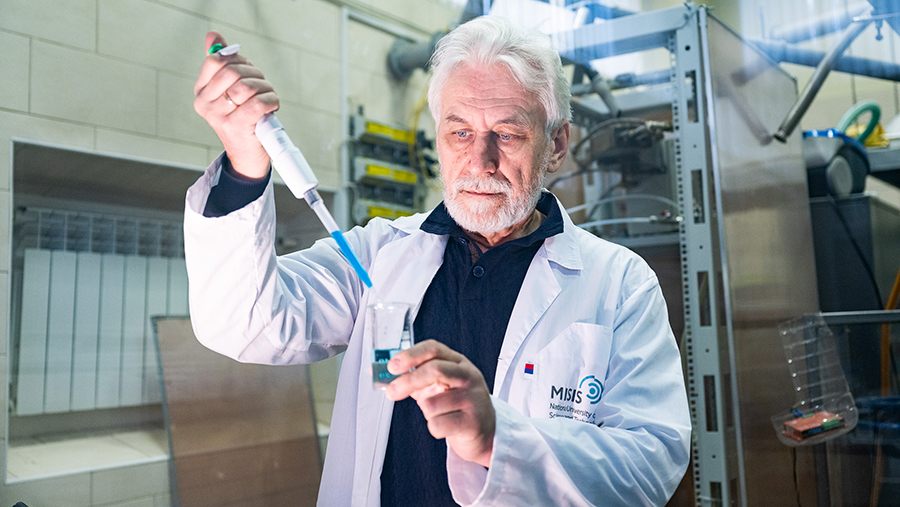
— Previously, it was believed that the greater the hydrogen sorption, the greater the specific surface area of the material. We found out that there is another parameter that affects the absorption of hydrogen — atomic vacancies, that is, structural defects. To create them, we synthesized boron nitride nanoparticles along with carbon and oxygen atoms, and then removed some of these atoms from the structure by processing in hydrogen at high temperature," said Andrey Matveev, senior researcher at the NUST MISIS Inorganic Nanomaterials Research Center.
Hydrogen energy is an environmentally friendly alternative to traditional hydrocarbon energy. According to the concept of its development, up to 10% of passenger transport in the Russian Federation should be converted to hydrogen by 2030. However, one of the main problems that needs to be solved is to find an efficient and safe way to store and transport fuel. Currently, most electric cars store hydrogen in cylinders, but they have too much mass and volume.
Porous materials are better suited than others for creating energy-intensive portable batteries of a new generation. At the moment, organometallic frameworks (IOCs) have the largest capacity for hydrogen retention, but they are expensive to manufacture. Carbon-based materials, such as activated carbon, could be an affordable alternative, but it absorbs two times less hydrogen than IOC. In addition, its production produces a large release of carbon dioxide, which is harmful to the environment. The approach proposed by the MISIS scientists has no such drawbacks.
New materials and technologies for hydrogen storage
The proposed fuel storage technology in the field of hydrogen transport can only find niche applications, as it is unable to compete with gas cylinders in terms of its cost, says Anton Kovalevsky, head of Cryogenmash's hydrogen business.
— This technology allows you to concentrate a large volume of hydrogen in a very compact size, but the problem is its high price and a sufficiently large weight of such elements. So far, compressed gas in a cylinder is best suited for use in commercial vehicles. There is already an infrastructure for this. However, it is certain that the "white graphite" approach will be in demand for various special applications. Now, for example, its analogues are used in radio—controlled car models," he said.
In the future, it is possible to use "white graphite" storage devices in charging stations for electric vehicles remote from power grids.
— For us, as a manufacturer of electric charging infrastructure, such technologies may be interesting in the future, for example, in modular autonomous storage devices for charging hubs that are installed in places with limited network access. But if we talk about today, lithium—based solutions are much closer," said Daniil Sivolozhsky, Director of Business Development at Yablochkov Charging Stations, market expert at NTI Energynet.

The development now has more scientific potential than commercial applicability in the next three to five years, the expert noted.

However, according to experts in the field of hydrogen energy development, the approach of MISIS scientists is already bringing the mass transition to a new type of fuel closer.
— The issues of hydrogen storage are currently acute. It is especially interesting that the proposed material demonstrates excellent performance at low temperatures and without the use of expensive components. This study brings closer the moment when the production of portable batteries can become scalable and even commonplace for potential consumers," said Elena Mukhina, a leading researcher at Skoltech's Center for Science and Technology of Hydrocarbon Production.

The search for new materials and technologies for hydrogen storage is necessary, since modern solutions are not as effective and safe for implementation in everyday life as modern systems require, said Ekaterina Gosteva, Senior researcher at the NTI Photonics Basic Department of Nanotechnology and Microsystem Engineering at RUDN University.
— The development demonstrates a new approach to the choice of materials based on the study of the interaction of oxygen and carbon vacancies. Structural defects directly affect the capacity of portable devices, which allows not only to increase the volume of accumulated hydrogen, but also to describe the physico-chemical processes occurring in the material, as well as to learn how to control and manage these processes.
First of all, the materials are interesting for miniature devices — motherboard batteries, low-power devices for electronics, but with further study of the processes, it is possible to scale the technology, the expert concluded.
Переведено сервисом «Яндекс Переводчик»
