"Our juniors are eligible for the World Cup team championship"

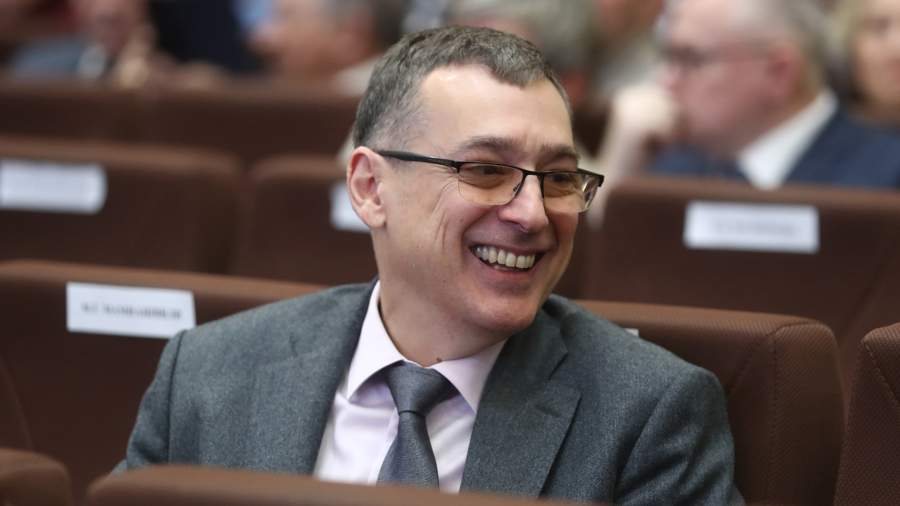
Russian fencers formally received the opportunity to compete in international competitions in a neutral status back in 2023, but this affected only second-tier athletes. Olympic champions Sofya Velikaya, Yana Yegoryan and many others were not allowed to start because of their membership in CSKA and, as a result, their military rank. At the end of 2025, there were rumors about the lifting of this ban. But so far, our best fencers compete only in domestic competitions. In an interview with Izvestia, the president of the Russian Fencing Federation, Ilgar Mammadov, assessed the chances of an early lifting of the ban from the leaders of our national team, explained why he was critical of the idea of going to the Olympics in a neutral status and why he calmly perceives a similar story with juniors.
— Are you satisfied with how the competitions are going inside Russia?
— Yes, I am very glad that the Moscow Sabre tournament is traditionally held at the highest level in the capital. Our colleagues from St. Petersburg came to the last draw, who are watching how the tournament is being organized in order to use this experience in their city, where they want to hold the Rapier of St. Petersburg competition.
Such events are not just sports competitions, they also have show elements that we have taken from other sports. For example, cheerleading, which is present at the Moscow Saber between fights, as well as during a one-minute break and a 30-second break in team competitions. It is very important to combine the elements of sports and shows to give the audience and television a beautiful picture.
— Do you have similar separate tournaments among skewers?
— About a month ago, we conducted a "Sword" on the federal territory of Sirius. There is a wonderful Sirius Arena complex with a great gym. But there were problems with attendance. Although we held competitions on Friday, Saturday and Sunday, as well as the Moscow Sabre. But if the Irina Viner Sports Palace in the capital was well filled all three days, then there was a problem with this in Sirius, although admission was free. But you're not going to drag people by force, so you need to think about how you can attract an audience.
— After all, this is a place near the resort in Sochi, where visitors mostly come, and locals don't go to football very actively.
— Yes, a lot depends on the city. And both in Russia and in Europe. For example, in Moscow, the stands are always full at fencing. Venice and Paris are full. But there are problems with attendance in the federal territory of Sirius. As, for example, in Madrid and Barcelona.
Here it is necessary to instill a culture of pain in fencing. Each city has its own specifics. After all, fencing is quite an aristocratic and private sport. That's why there are cities where people didn't really go even to international tournaments, when we didn't have any suspensions or covid restrictions and many strong athletes came to us.

— And how are you going to solve this problem?
— We try to make a good picture for television and a varied entertainment program for the audience coming to the stands. I've already talked about cheerleading on the Moscow Saber between fights and during breaks inside them. We introduced it at the Russian Championship. Still, when beautiful girls perform some acrobatic elements, it's better for the audience than when there's silence and nothing happens. Yes, athletes have something to do during the break — the coaches give them instructions. But the audience just sits there and does nothing. It is necessary for them to take this pause with something interesting.
— At the last Moscow Sabre, the women's individual semi-final between Sofia Velikaya and Yana Yegoryan caused a special stir, as usual. It ended with an advantage of one shot — 15:14 in favor of Yegoryan. Why is this confrontation so popular?
— This is not the story of the confrontation between Yegoryan and Velikaya or Velikaya and Yegoryan. It's just two of our girls, leading athletes, with their team of fans. Half the stands are buzzing for her. But it's great when there's such an atmosphere of sports confrontation in the hall, it's great when children shout: "Yana, we're for you!", "Sonya, go ahead!" That's what attracts. And another thing is that in sports, besides competition, there is also beauty.
— Some Russian fencers began to receive permits in a neutral status before international competitions back in 2023. But not Yegoryan, Velikaya, Olga Nikitina, Sofia Pozdnyakova and other Olympic medalists who are listed in CSKA. A separate ban has been imposed on the athletes of this club due to their connection with the Armed Forces of the Russian Federation. Do you think that your leaders may return to the international arena this year?
— The first step has already been taken — in the first half of March, we received a letter from the International Fencing Federation that our juniors will be able to compete at the World Championships, which will be held in April in Wuxi, China. Moreover, they will be able to compete in team competitions, although, as you know, a year ago the International Olympic Committee (IOC) allowed our athletes to participate only in individual disciplines. But at the end of last year, there were changes — we remember that the swimmers at the World Championships competed in the relay. Now our juniors will be able to compete in the team competition.
— Even the juniors from CSKA?
— In principle, the juniors had a big problem with getting a neutral status. It did not depend so much on their affiliation with CSKA or Dynamo, because at that age they still do not have a military affiliation.
— But if we take adult competitions, the sanctions against the athletes of CSKA and Dynamo have hit Russian fencing the most.
- yes. Since Soviet times, we have had a tradition — those who are strong wear army shoulder straps when playing for CSKA, or shoulder straps of law enforcement agencies when playing for Dynamo. Because besides the fact that there are world championships, European Championships and Olympic Games, there are also military competitions. For example, you are facing the first winner of the World Military Games in the individual championship among rapiers. It was in Rome in 1995.
The World War Games are like the Olympic Games, but among military personnel, they are also held every four years. And I will tell you that these competitions are very large and significant. And in the 1990s, the IOC recognized such a structure as the CISM (International Council of Military Sports). And such a status made it imperative to take the competition seriously. That's why many strong athletes from all over the world participated in them — at least that's how it was in fencing. And many of our leaders participated there, who wore or are wearing shoulder straps.
For example, I am already a former serviceman— a colonel in the reserve. And current fencing athletes wear shoulder straps of the Russian Armed Forces, without which they would not be able to participate in the same World Military Games. And here a conflict arises: on the one hand, the IOC recognizes CIZM as an organization that conducts such competitions, but on the other, it blocks the way to the international arena for athletes because of their membership in the armed forces of their country.

— Mikhail Degtyarev, after being appointed Minister of Sports of the Russian Federation, openly supports the practice of our athletes participating in a neutral status. Prior to his appointment to this position, you were very critical of such an idea. Have you softened your position now?
— The question here is not who said what from above. Just don't forget that I am not only the president of the Russian Fencing Federation, but also the head coach of the Russian national team, who is also suspended from international competitions. And even from these positions, I have no right to divide my athletes into good and bad ones. If some athletes, like the head coach, can't go anywhere, but some can, then it would be wrong to separate them.
On the other hand, it is also wrong not to give someone at least the opportunity to take a sip of international competitive air. Because they can't do it alone yet, at least let those who can get international practice.
This is a very difficult dilemma. Moreover, in my opinion, it is still possible to agree with the trip of individuals to some international tournaments, but the Olympic Games... If we had agreed to the conditions of admission to them, we would have betrayed those athletes who brought medals to Russia from previous Olympics for many years. They would have stayed at home.
— Is the situation with the Junior World and European Championships different?
— These are children, you know. The main thing is that they get the practice of fighting with the best peers in Europe and the world, develop the psychology of the winner. But real fencing, real competitions begin already at the adult level.
— At the end of last year, Alisher Usmanov was re-elected president of the International Fencing Federation. But a few days later, he suspended his tenure in this position, as he had already done after February 2022. How much does your federation depend on his position in the fencing world?
— He returned to his post as a result of a resounding victory. What happened four days later is a consequence of the understanding of the head of the international federation of his responsibility to the organization.
Personally, back in 2022, I was sure that sooner or later Alisher Burkhanovich would return to his post. And his new election showed the attitude of the world fencing community towards him, even during such a difficult period in the field of international relations.
I can only say one thing: it is a great honor for us that 120 national federations voted for Usmanov, the former head of the Russian Fencing Federation, at the congress of the international Federation. We are pleased that a Russian is heading an international federation.
But at the same time, we understand that the organization is led by more than one president. Therefore, in any case, it will take time to fully return to the international arena. And it's not because of a good life that a person has suspended his tenure — he understands that now this will lead to great difficulties in the work of the entire structure. And this cannot be allowed.
Переведено сервисом «Яндекс Переводчик»
