With a tribute to the opera: the Wagner Marathon was launched at the Bolshoi Theater

The theater audience of the capital has been waiting for this for a long time: the Richard Wagner Festival has begun at the Bolshoi Theater. The audience will be presented with one of the most striking events of recent decades: the Mariinsky Theatre will play all the operas of the Ring of the Nibelung cycle on the Historical Stage of the GABT. The tetralogy is preceded by screenings of the Bolshoi's "Lohengrin." Izvestia appreciated the grand scale of Wagner's productions and music.
"Lohengrin" at the Bolshoi
Opening the 249th season of the GABT in September 2024, Valery Gergiev, CEO of Bolshoi and Mariinsky, announced ambitious plans. The People's Artist promised to lead the country's main stage in returning masterpieces to the repertoire. It was also said that several Wagner operas were waiting for the audience. Six months later, five awe-inspiring titles appeared on the poster. Wagner is always about scale, serious duration, and music that appeals to the deepest recesses of the soul, sometimes to the horror of the listener himself.
In the last days of February, Lohengrin was shown on the Historical Stage as part of the Wagner Festival. This opera returned to the Bolshoi's repertoire three years ago (and the previous version was staged 100 years ago). In April 2022, when Russia had already been subjected to all possible sanctions, it was an event to play the premiere, created in collaboration with the Metropolitan Opera.
An international team worked on "Lohengrin": director Francois Girard, consultant Serge Lamothe, Tim Yip was responsible for the set design and costumes, David Finn was responsible for the lighting, Evan Rogister was the conductor. Of the compatriots in the production group, there was only the chief choirmaster, People's Artist of Russia Valery Borisov. Now the relations between the theaters are frozen. But there is an opportunity to see a grandiose spectacle. Maestro Valery Gergiev is at the conductor's desk.
The creators of the play, Francois Girard and Serge Lamothe, are confident that "Lohengrin" is a great excursion into the expected future. There we see a society that has fallen into complete decline, torn apart by strife and living in hope for the coming of a redeeming hero. Wagner himself wrote the librettos for all his operas. Even during the composer's lifetime, Lohengrin was recognized as one of his main masterpieces and became, among other things, his first opera staged on the Russian stage. The premiere took place in 1868 at the Mariinsky Theatre.
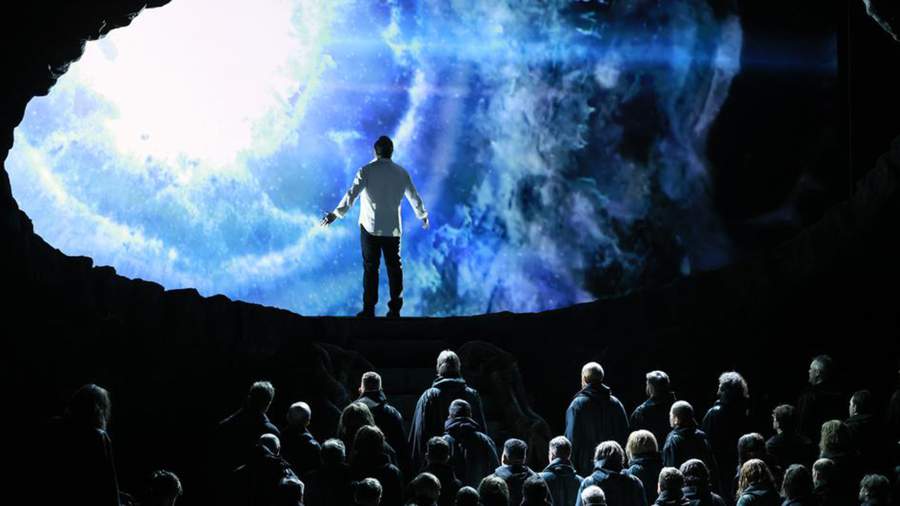
In the modern production, the actors sing in the original language, German. The story of the legendary knight of the Holy Grail is told in a fantasy-style interplanetary space. The audience is greeted by an open curtain, and a blue moon shines on them from the depths of the stage. A game of imagination takes you to the Milky Way, where the stars are exploding, and the Andromeda Nebula is visible. Meanwhile, on the banks of the Scheldt River near Antwerp, under the oak of Justice , King Henry the Fowler (Mikhail Petrenko) solves a fateful issue. The unity of the German Empire is in danger. The Brabant nobility is restless. Friedrich Telramund (Alexander Krasnov) blames Elsa (Irina Churilova) for this, who, according to him, killed her brother, Duke Gottfried of Brabant, in order to seize power. And her secret lover pushed her to do it.
The King's herald (Nikolai Kazansky) summons Elsa of Brabant to court. The fate of the girl will be decided by a duel. The knight Lohengrin will come to her rescue. In Wagner, he appears on a boat pulled by a swan, and in Bolshoi's production, the defender seems to descend from heaven. He's not like everyone else. He is not wearing armor or armor. Lohengrin seems to be from another world, more like an office clerk in black trousers and a white shirt. Elsa is naive and vulnerable. She is waiting for someone to protect her from slander and false accusations. The mysterious knight announces that he is ready to fight for Elsa's honor, and after the duel, marry her, but sets a condition: She shouldn't try to find out what his name is, where he's from, or what family he's from.
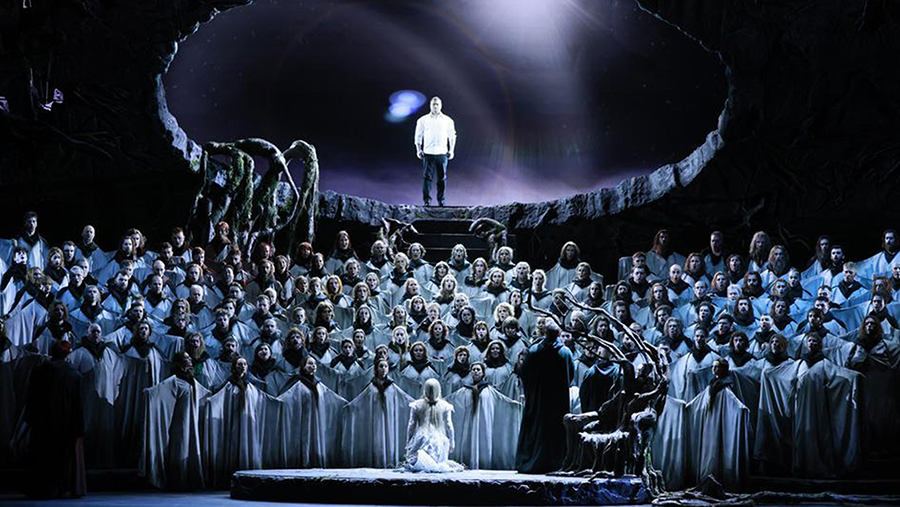
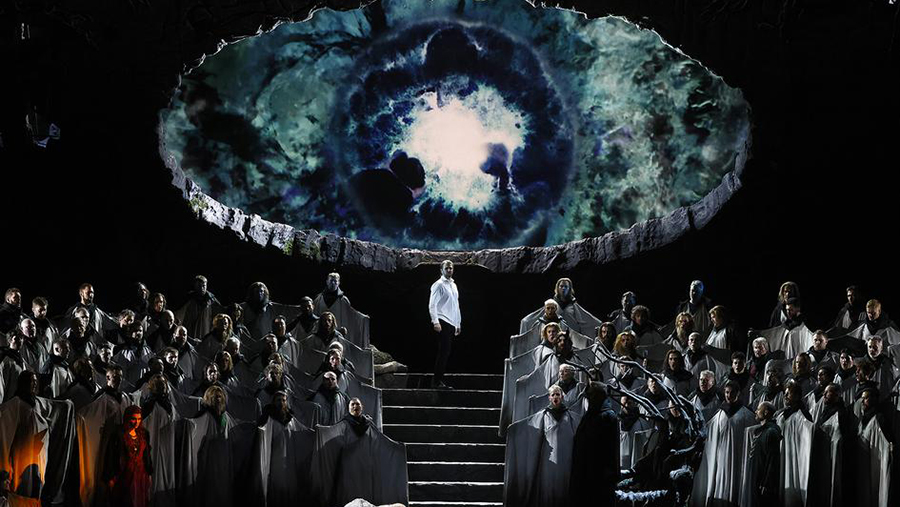
The opera is famous for its powerful choral parts. The directors have found an interesting solution: the entire first act of the choir is on stage, but the singers hide under black cloaks with voluminous hoods. They represent the inhabitants of Brabant. When the power is on the side of the king, the choristers open their green-lined cloaks in the color of the nobleman's outfit, inspiring hope for justice. The envious Frederick is dressed in red robes, and the townspeople open their black cloaks with red lining as soon as the force is on his side. Well, the approach of Elsa and Lohengrin is evidenced by the white lining of the choristers' veil.
The part of Ortruda, Friedrich's wife, is performed by the soloist of the Mariinsky Julia Matochkina. A powerful mezzo-soprano voice that can be heard from anywhere in the hall. Her character appears spectacularly— descending like a valkyrie, spreading her red wings. The part of Lohengrin is performed by Sergei Skorokhodov, who sang it at the premiere at the Bolshoi. He first came across this material in 2009. At that time, Valery Gergiev was at the conductor's desk, but the opera was performed in concert. Now the maestro is back at the controls. An army of his fans has formed in the Bolshoi, who go not to look at the stage, but into the pit. This is understandable: watching Gergiev conduct an orchestra is a separate performance.
Tetralogy "Ring of the Nibelung" in the GABT
Not everyone could stand the five-hour opera. Someone did not understand the power of Richard Wagner and left in the first intermission, someone was not hooked by the music and what was happening on stage in the second act. But still, there were a lot of music lovers who made it to the finals. Some in the wardrobe admitted that they had discovered the music of the German composer and would also go to the "Ring of the Nibelung". This tetralogy of four epic Wagner operas — "Gold of the Rhine", "Valkyrie", "Siegfried" and "Death of the Gods" — will be brought to Moscow in early March.
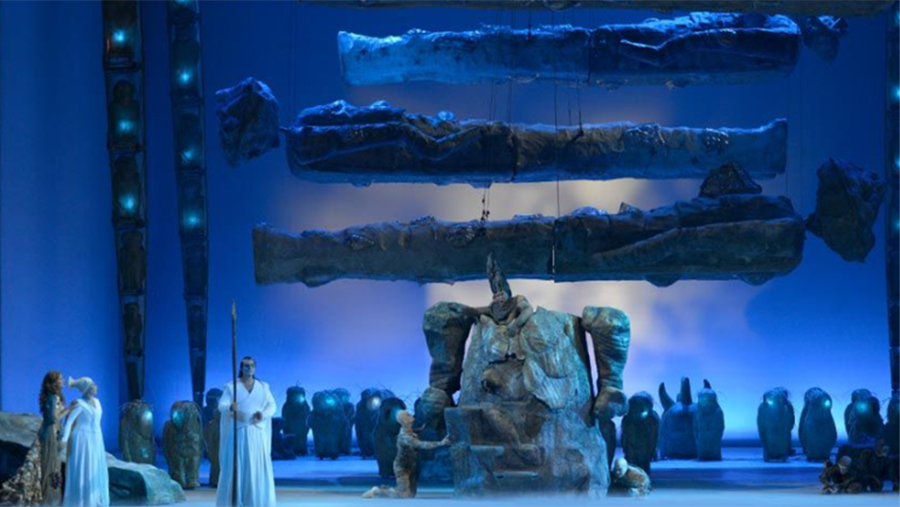
"It is well known that Richard Wagner wrote 10 operas that are constantly being performed in many theaters around the world," said Valery Gergiev, opening the 249th season. — It seems to me that Moscow definitely claims to be the world capital. This can be done through the joint efforts of the two teams. Learning the "Ring of the Nibelung" will take a year and a half. It seems to me that the resources of the two theaters will allow us to cope with this during one season."
The Ring of the Nibelung was first staged at the Mariinsky Theatre from 1900 to 1905 under the direction of the legendary conductor Eduard Napravnik. Then the operas were performed in Russian. The tetralogy was present on the posters of the theater before the First World War — after its outbreak, all German operas were excluded from the repertoire.
Two years ago, Valery Gergiev updated his production of The Ring of the Nibelung, which he performed at the Mariinsky back in 2003. The grandiose composition became a real breakthrough of the Russian musical theater and confirmed the status of the Mariinsky Theater as one of the best opera houses in the world. The production was shown with great success in many countries, and also received recognition in Germany, the birthplace of Richard Wagner.
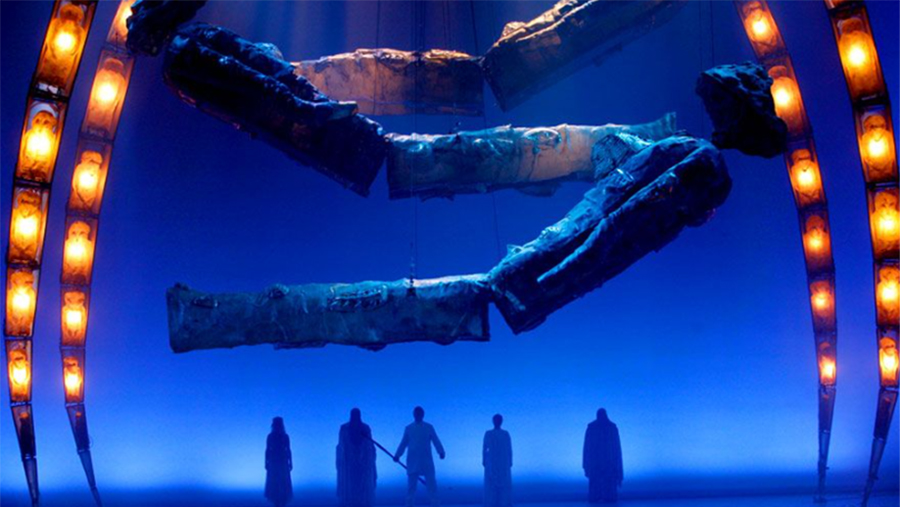
In March, the audience will see all the operas of the Ring of the Nibelung cycle twice — "Gold of the Rhine" (March 5 at 20:00, March 13 at 19:00), "Valkyrie" (March 6 and 14 at 18:00), "Siegfried" (March 8 and 15 at 17:00) and "The Death of the Gods" (March 9 and 16 at 17:00). Leading soloists of the opera company and the orchestra of the Mariinsky Theatre will take part in the performances. Valery Gergiev is the conductor of all the performances. However, there have been no tickets for a long time, we can only hope for a broadcast.
Переведено сервисом «Яндекс Переводчик»
