Career survey: graduates of four universities become managers most often

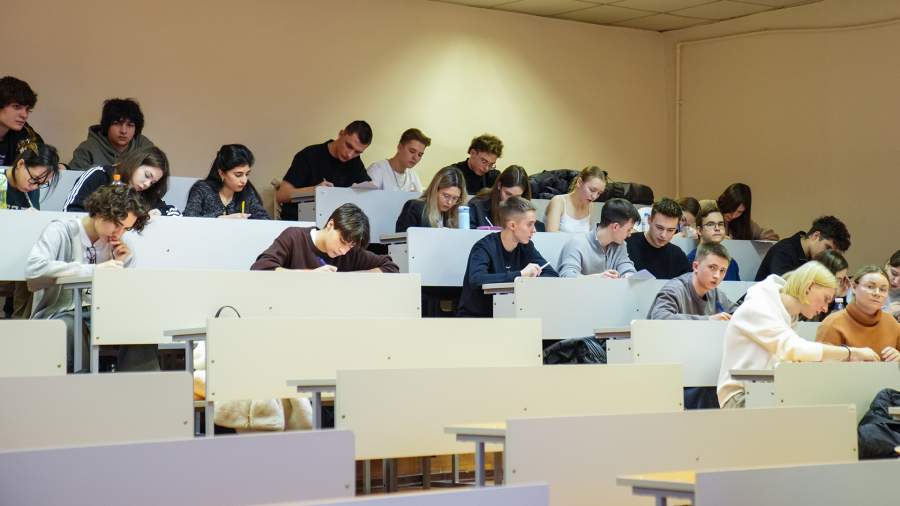
Graduates of Moscow State University, Russian Academy of National Economy and Public Administration, Higher School of Economics and Plekhanov Russian Economic University are the fastest and most frequent managers in Russia. Such conclusions were reached by experts of the Russian Academy of National Economy and Public Administration who analyzed data for 13 years. The career is influenced not only by the choice of higher education institution, but also by the first organization in which a young person starts his or her professional path. The third factor of success experts named the personality and abilities of the graduate himself. About who and how goes to the big bosses - in the material "Izvestia".
How many years does it take for a university graduate to become a manager?
The fastest and most successful managerial career in Russia is made by graduates of four universities: Lomonosov Moscow State University (MSU), the Russian Presidential Academy of National Economy and Public Administration (RANEPA), the Higher School of Economics (HSE) and Plekhanov Russian University of Economics (REU). This follows from the study of experts of the Russian Academy of National Economy and Public Administration, who have studied the career dynamics of graduates of universities from the top 15 subject ratings of the RAEX agency with the highest indicators in the specialties of "economics" and "management" in 2010-2023.
The researchers judged the career success by two indicators: the level of the highest possible position for the entire time of the graduate's work and the speed of movement on the career ladder - the time it took to take a position after graduation. Data from such resources as the LeaderID platform and "Work in Russia" were analyzed.
- Traditionally, such an indicator as salary growth of graduates is used to assess career success, but we were interested in finding another, no less objective, indicator of career success," said Ilya Sheburakov, Dean of the Faculty of Management Staff Assessment and Development of the Higher School of Management of the Presidential Academy.
The indicator of the average maximum level of the position (from 2.98 to 2.5) was the highest among graduates of the Higher School of Economics, Moscow State University, Russian Academy of National Economy and Public Administration, St. Petersburg State University and Russian Economic University. And the lowest - among those who graduated from the Mining University (1.73), Tomsk State University (1.87), St. Petersburg Polytechnic University (1.91) and Siberian Federal University (1.95). The authors of the study attribute this to the specifics of these universities and the choice of graduates in favor of industry-specific, expert careers.
"Graduates of Moscow State University, Russian Academy of National Economy and Public Administration, National Research University Higher School of Economics demonstrate consistently high indicators of the level of maximum position from year to year, graduates of Finance University, Plekhanov Russian Economic University and SPbHPU have unstable values of the indicator," the researchers note.
The fastest climb up the career ladder were graduates of Plekhanov Russian Economic University (1.78 years to a managerial position since graduation), RANEPA (2.11 years) and HSE (2.36 years). Former students of the Far Eastern Federal University (4.06 years), Tomsk State University (3.86 years), Ural Federal University and St. Petersburg State University (3.47 years each) took the longest time to reach such a position.
The authors of the study note: career growth of graduates, especially in the managerial sphere remains one of the most important indicators of the quality of higher education.
"It reflects not only the level of specialist training, but also the ability of universities to adapt their graduates to the requirements of the labor market and stimulate their professional development," the document says.
The experts of the Presidential Academy also noted that in addition to the university from which a graduate graduates, the second most important factor of success on the way to a managerial position is the first organization in which a young person begins his professional path.
The third factor experts named the personality of the graduate: a set of knowledge and skills, cognitive, social and other abilities that influence the choice of university and the probability of getting a dream job after graduation.
How headhunters look for managers
But when looking for top managers, companies rarely pay attention to the university, said "Izvestia" partner of the consulting company Kontakt InterSearch Russia, headhunter Anastasia Staseva.
- And a diploma from the "wrong" university is rarely a cut-off criterion," she said. - The presence of additional education, the logic of obtaining it, and sometimes the presence of an MBA come to the forefront. This is important from the point of view of assessing the top manager's understanding of the need for continuous development and improvement in the profession, as well as obtaining the necessary "soft" skills.
But, she noted, when hiring young specialists, the university is indeed often of great importance.
- For internship and development programs, employers often tend to invite students from brand-name universities, as this is considered some sort of guarantee of the quality of their undergraduate education. In addition, the ability to enroll in such an institution already serves as a certain indicator for the employer of a young specialist's determination and competitiveness," explained Anastasia Staseva.
Anna Anisimova, an economist and director of the Merchant CRM service, noted that the RANEPA study confirms the trend observed by experts.
- This pattern is based not so much on the formal quality of education as on the infrastructure of professional opportunities built around these universities," she believes. - Access to a strong professional environment, participation in internship programs with the best employers, formation of useful connections - all this gives graduates a competitive advantage.
At the first contact with a candidate, graduation from a prestigious educational institution is a plus, says Faina Lerner, Director of Organizational Development at Reksoft Group.
- A conditional "Fiztech" in a resume is an indicator that a person has a strong base, he has strong-willed qualities, if he was able to successfully complete such a complex university, and an analytical mindset. However, if you weigh the university and the candidate's serious experience in business, the latter is definitely outweighed," he said.
A diploma from a prestigious university does serve as a kind of a pass to the professional environment, admitted Taisiya Veprentseva, an economist and founder of the Delomant Group law firm.
- The key reason for this correlation lies not so much in the quality of education itself, but in the system of opportunities offered by leading universities," she said. - Employers are more likely to trust graduates of such institutions, expecting a certain level of training, structured thinking and the ability to adapt in a highly competitive environment.
However, the first job is even more important than a diploma in a career trajectory - it shapes the further trajectory of movement, added Taisiya Veprentseva.
- And here the influence of a university on a manager's career is manifested primarily through the system of professional connections and start-up opportunities it provides. Leading universities do not just provide theoretical knowledge - they embed students in the professional community, facilitating their access to the best internships, mentoring programs and corporate recruiters," she said.
According to the economist, this is especially important because the first point of entry into the profession shapes the future trajectory: a graduate who starts his or her career in a large company with an established mentoring system gets an early insight into industry standards, strategic management and corporate culture.
Переведено сервисом «Яндекс Переводчик»
