"People moved out with their kids, and now they're rushing back."

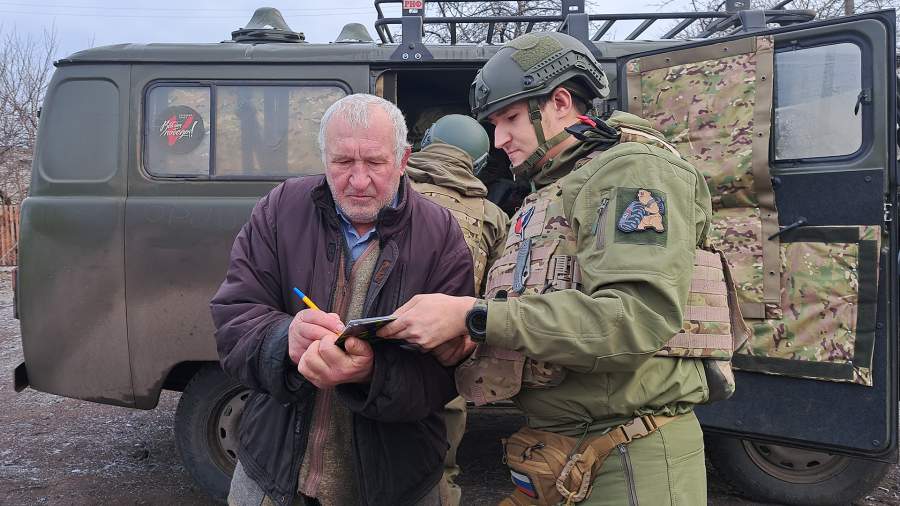
In many towns and villages of the Donetsk people's republic, there are still civilians who decided to wait for the Russian military to arrive, risking their lives during the fierce fighting. Some later evacuated to relatives in the rear areas, while others continue to live in their native places. They are being helped by our servicemen and volunteers. "Izvestia visited Galitsinovka in the Pokrovsky district of the DNR during the delivery of humanitarian aid there.
How food is delivered to the frontline towns of the DNR
Now about 70 people live in the village of Galitsynovka. Recently, a "stall" - a small store where one of the residents, who still has his car on the road, risks delivering goods from Donetsk for fellow villagers and passing military personnel. Despite the fact that the village was liberated in the early fall of 2024, the road to it still remains in the range of enemy drones.
Volunteers from the Popular Front Youth Front use a four-wheel-drive minibus covered with anti-UAV nets and equipped with powerful electronic warfare equipment to travel to the village. The windows and sides are covered with anti-shock blankets, and the volunteers themselves travel in a full set of personal protective equipment: bulletproof vests and helmets. The road to Galitsynivka is broken, and Ukrainian militants attack any targets on the roads of the DNR, without distinguishing between military and civilians.
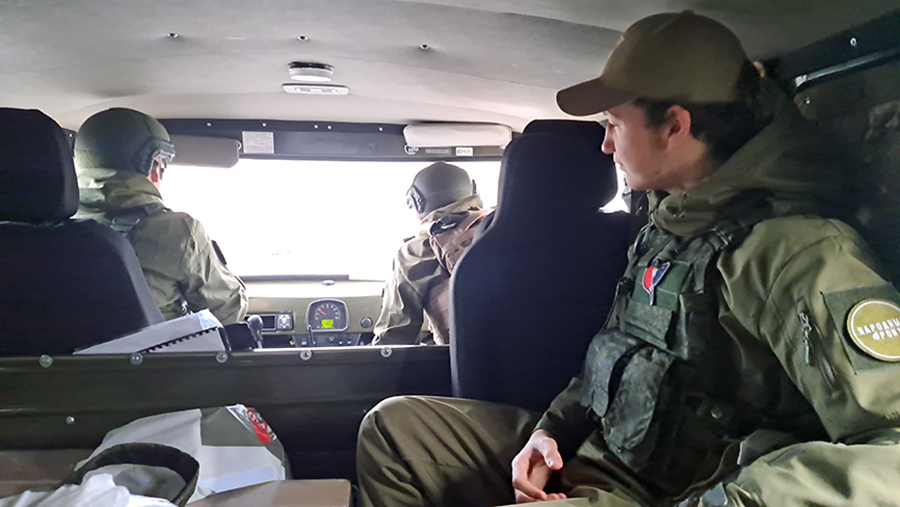
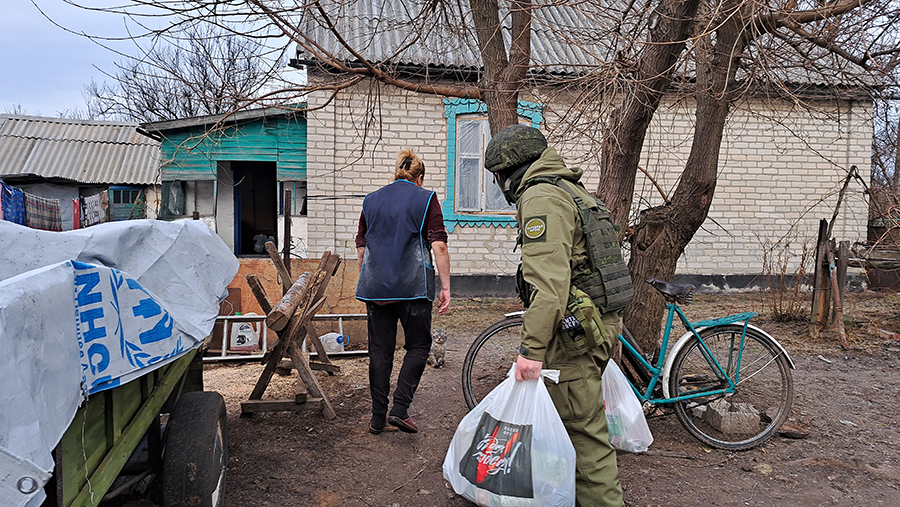
It is not safe to gather residents in one place, so they try to distribute the cargo in a targeted manner, at the same time finding out people's needs.
We saw the first resident at the store. Alexander Shvets receives a food kit and personal hygiene products, which he jokingly calls "soap and linen".
- People are suffering, of course, the elderly in the first place. There are practically no young people, well, maybe ten.... It's probably a drone," Alexander interrupts his story when he hears active machine-gun fire from the outskirts.
He has already managed to get a Russian passport and draw a pension, unlike those fellow villagers who, for health reasons, cannot travel to other cities to draw up documents.
- Ukrainians did not communicate with us much. Not like you - stopping and asking questions. How come they were waiting for us, you ask?! People like my wife were leaving. She had a "kondrashka" back in 2014 near the airport (the place of the heaviest fighting before the SWO), and we left here. When it started again, she had another "condrada", so I sent her away from here too. People also left with their children, and now they want to go back, but to go through Europe..... - Alexander shows an eloquent gesture with his hand, estimating how much money it will cost the poor locals to return home by a roundabout way through third countries.
Making bread in the backyard
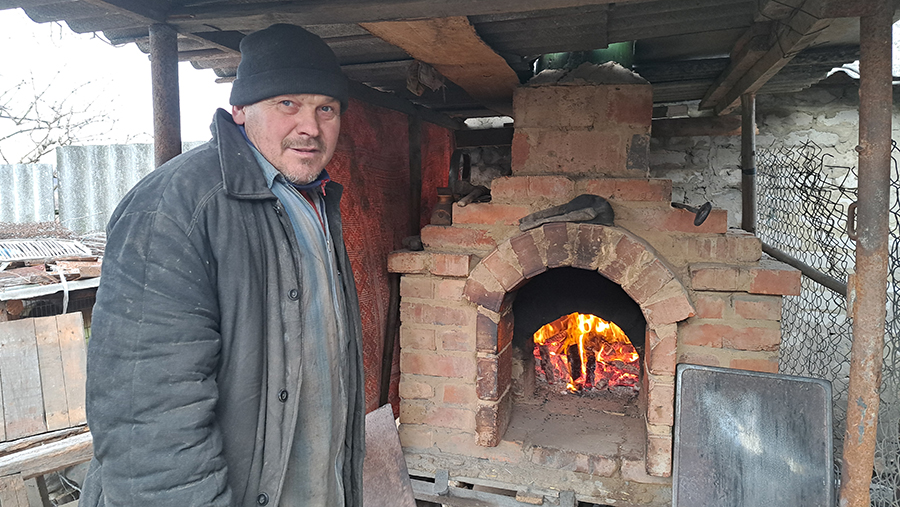
Despite the lack of light and water, there is fresh bread in the village. It is baked by locals in a homemade Russian oven built right on the plot. The oven has become a kind of center of attraction for everyone in the ruined village. We are heading there too.
- Built a Russian mini oven on the street. Sometimes the military bring flour, then we make it for the whole village, there are people here. And the military take fresh bread, they help us, and we help them as much as we can, - Victor shows his farm.
His wife Lyudmila at this time shows the volunteers where to stack food bags for all those neighbors who regularly come to her for bread. And although the sight of a good yard has a calming effect, one should not forget about safety, it is better not to create unnecessary crowds and not to keep cars in one place for a long time.
- I'll be handing out to my locals, helping them out. Many are absent, trying to make documents. And many people just go to each other, we don't have phones, and we try to communicate with each other in this way. We will distribute them all," assures Ludmila.
White traces of flour are clearly visible on her work coat. Lyudmila says that in addition to bread she already makes pies and pastries, but this is primarily for the soldiers. "We help the boys," she smiles.
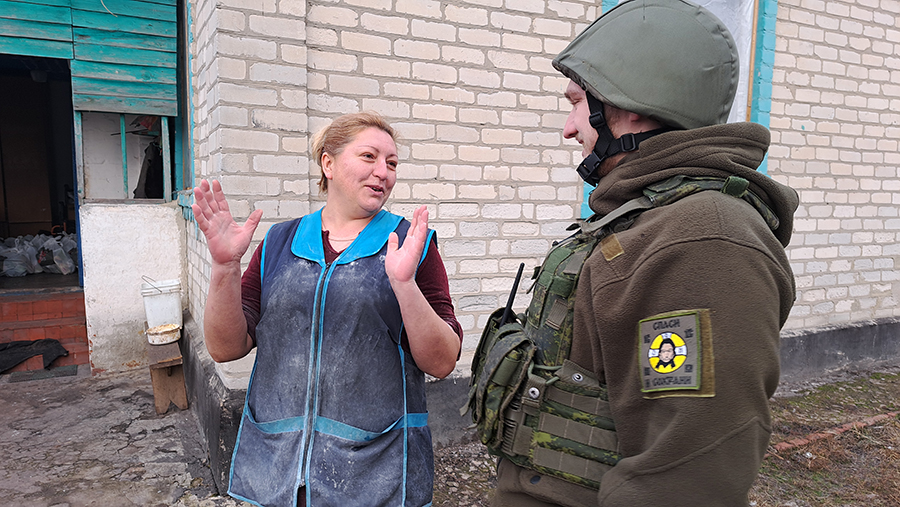
- Stores closed, and in Selidovo no longer went out, there was fighting there. And we made an oven for three buns, and then where there were three, there were five, eight, now nine. The military, of course, helped with food and medicine as much as they could. Because I'm hypertensive, I need medication all the time, my son needs sedatives, my sister is a first-group invalid. We have a lot of people like that here. The military are good, they help us. And now it's our turn to help them," Lyudmila says.
She has not left her house since 2014. She and Victor have no basement, and all the battles they hid in a one-storey house, using the place behind the stove pipe for shelter. The woman says that some residents are being evacuated from the village as the road is being fixed. But, according to her, there are also lying invalids who cannot be taken out without special transportation, and simply lonely people who have no one to go to the "big land".
What people need
At several well-preserved houses on the outskirts, volunteers unload electric generators, food and hygiene kits. The latter are the sign of experienced humanitarian workers. Such trifles as hygiene products are often forgotten by those who bring aid for the first time, unaware of the peculiarities of life in the frontline zone without the benefits of civilization.
- We try to go once a week, sometimes twice, not to forget people. There are no communications here, so we come, find out what we need and help. In the warehouses of the "People's Front" collect kits, and our volunteers bring to people in need, - explained the coordinator of "Molodezhka" in the new regions Roman Shelegeda.
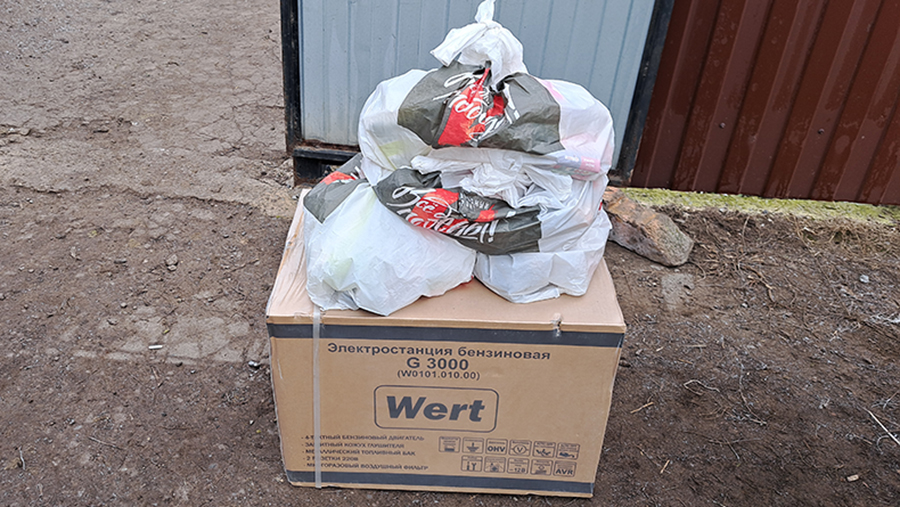
In addition to the already experienced team of volunteers from the DNR, young activists from the humanitarian mission from Arkhangelsk and Orel also came to Galitsinovka for the first time.
- It is always dangerous, even in Donetsk. Our cars have not been hit, but we have been hit by some. We are also engaged in trips to shelling - to get survivors, to clear the rubble. The worst situations were when HIMARS came through the building. We all know medicine, we know how to provide first aid to others and ourselves. More than once I had to help people who suffered from shelling. There were also broken arteries and shrapnel wounds," says Nikita Cherepin, coordinator of the "Youth of the Popular Front" of the DNR.
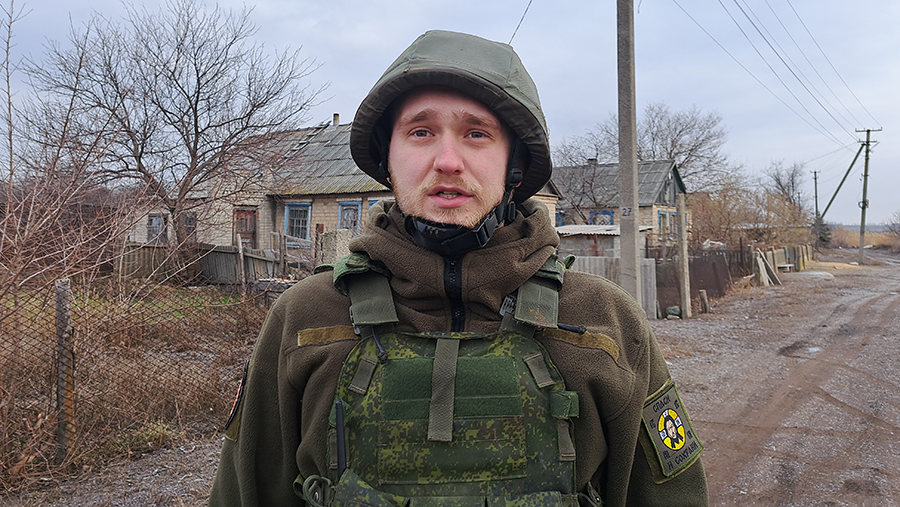
He, as well as many of those working with him, have been involved in helping in frontline areas for 4-5 years, even before the NWO they were helping the disabled and elderly on the front line in Donbass.
Переведено сервисом «Яндекс Переводчик»
