
Preemptive strike: why Russia suspended participation in the Start Treaty
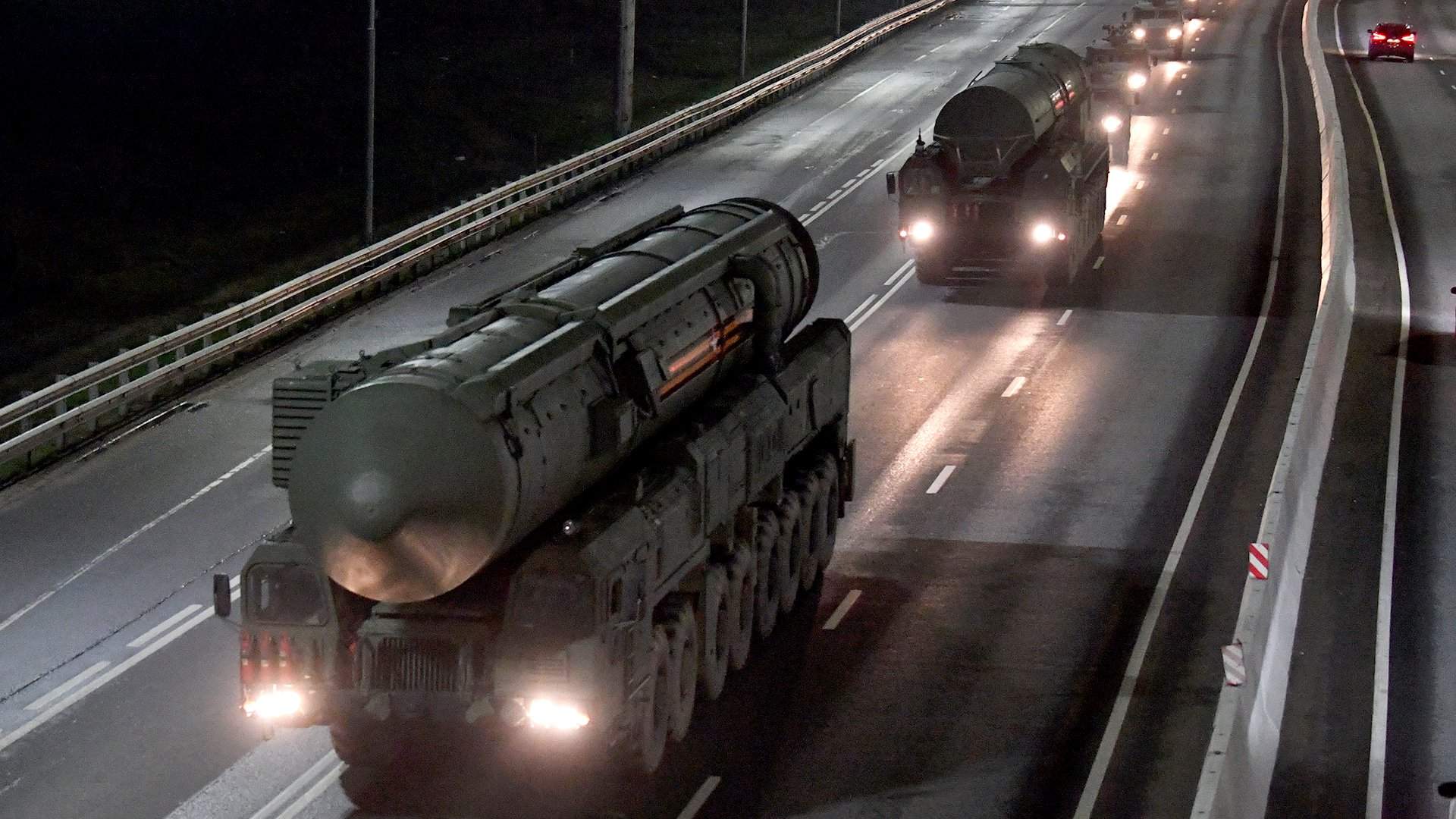
Russian President Vladimir Putin, during an operational meeting with permanent members of the Security Council on September 22, said that Russia was ready to adhere to the central limitations of the Strategic Offensive Arms Treaty (START Treaty) for a year after February 2026, when the agreement expires. According to him, reneging on the contract would be a mistake. Vladimir Putin also stressed that the solution will be effective only if the United States acts similarly and does not take steps that undermine or violate the existing balance of deterrence potentials. The President instructed relevant agencies to monitor the actions of the American side.
In February 2023, Russia suspended its participation in the START Treaty. This treaty provided for the mutual reduction of nuclear weapons by Moscow and Washington, but did not include the increased nuclear arsenals of France and Great Britain. The United States called on Russia to return to the implementation of the document, but Moscow made it clear that a number of conditions must be met for this. Izvestia investigated what the START Treaty is, what the essence of the disagreement is, and whether a new arms race will begin now.
What are the START Treaty, the INF Treaty and other treaties designed to curb the arms race?
The first arms deterrence treaties between the United States and the USSR began to be developed after the Caribbean crisis. Among them are the 1972 ABM Treaty and the indefinite Treaty on the Elimination of Intermediate—range and Shorter-Range Missiles (INF) signed in 1987, under which the USSR pledged to destroy 826 RSD and 926 RMD, and the United States - 689 RSD and 170 RMD.
The first Offensive Arms Reduction Treaty was signed in 1991, six months before the collapse of the USSR. He ordered each country to reduce its nuclear arsenals from more than 10,000 warheads to 6,000 units. Each side had to reduce the number of nuclear weapons carriers by a third, to 1.6 thousand units. The contract was extended several times, it expired in December 2009. In parallel with the START-1 Treaty, START-2, the Treaty on Further Reduction of Offensive Arms, was initiated in 1993, but it never entered into force and was replaced by a more compromise START, the Treaty on Strategic Offensive Reductions, better known in the West as the Moscow Treaty. According to it, the number of nuclear warheads on combat duty on each side was supposed to be reduced to 1.7–2.2 thousand units.
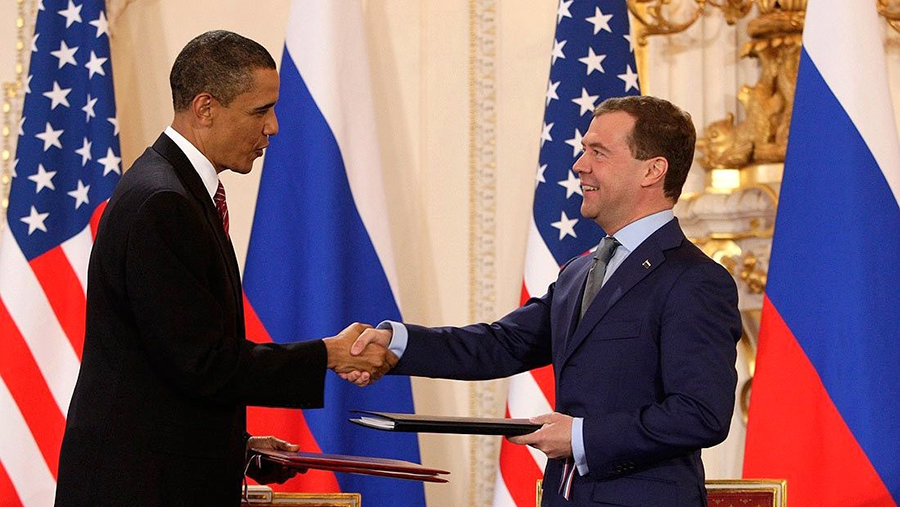
Four months after the expiration of START-1, in April 2010, the Presidents of Russia and the United States, Dmitry Medvedev and Barack Obama, signed the START-3I. According to this agreement, the parties undertook to reduce the number of deployed intercontinental ballistic missiles, submarines and heavy bombers to 700 units over seven years and leave no more than 1,550 warheads for them.
Upon ratification, both Russia and the United States made a number of reservations. Thus, Washington noted that "the new treaty does not impose restrictions on the deployment of missile defense systems, including in Europe," and Moscow reserved the right to withdraw from the treaty if the US missile defense system poses a threat to the Russian Federation. It was also pointed out that the provisions of the preamble, which prescribe the relationship between START and missile defense, are legally binding and must be fully taken into account by the parties. In February 2021, Vladimir Putin and US President Joe Biden extended the agreement for five years during a personal meeting.
Why did Russia decide to suspend its participation in the START-3
Explaining the decision to suspend participation in the START-3 treaty, Vladimir Putin clarified that the first agreement in 1991 was concluded "in a fundamentally different situation, in terms of reducing tension and strengthening mutual trust," and nowadays "the West is directly involved in attempts by the Kiev regime to strike at our strategic aviation bases."
The suspension of Moscow's participation in START-3 sends a signal to the West: Russia's patience is coming to an end, Oleg Karpovich, vice rector of the Diplomatic Academy of the Russian Foreign Ministry, added in the Izvestia column. "Russia made an unexpected move that clearly disarmed our geopolitical opponents" and "played the lead, gaining an advantage over the opponents and forcing them to hastily reconsider their approaches to waging a hybrid war against our country."
Moscow's decision primarily stops the exchange of data on the strategic nuclear arsenal, which has been conducted over the past decades. Mutual inspections of the nuclear facilities of the parties to the treaty are also excluded. However, the wording on suspension means that the decision can be reversible. This has already been announced by the Russian Foreign Ministry. Our country remains open to negotiations.
Will Russia return to the START Treaty?
During an operational meeting with permanent members of the Security Council on September 22, 2025, Vladimir Putin stated that Russia was ready to adhere to the central limitations of the Strategic Offensive Arms Treaty (START Treaty) for a year after February 2026, when the agreement expires. According to him, reneging on the contract would be a mistake. Vladimir Putin also stressed that the solution will be effective only if the United States acts similarly and does not take steps that undermine or violate the existing balance of deterrence potentials. The President instructed relevant agencies to monitor the actions of the American side.
Despite the suspension of participation in the START Treaty, Russia and the United States discussed the topic through closed channels, Russian Deputy Foreign Minister Ryabkov told Interfax. However, Russia's return to the treaty is possible only after the United States changes its behavior towards Ukraine, confirms its readiness to listen to Moscow and renounces rivalry.
In addition, according to the Russian side, the main drawback of the current treaty is that it does not take into account the nuclear arsenals of Great Britain and France. Thus, the new formula of the treaty should be Russia–NATO parity, not Russia–USA. Moscow has already invited Paris and London to the negotiating table to discuss the nuclear potential of these powers.
What is known about the nuclear arsenals of France and Great Britain
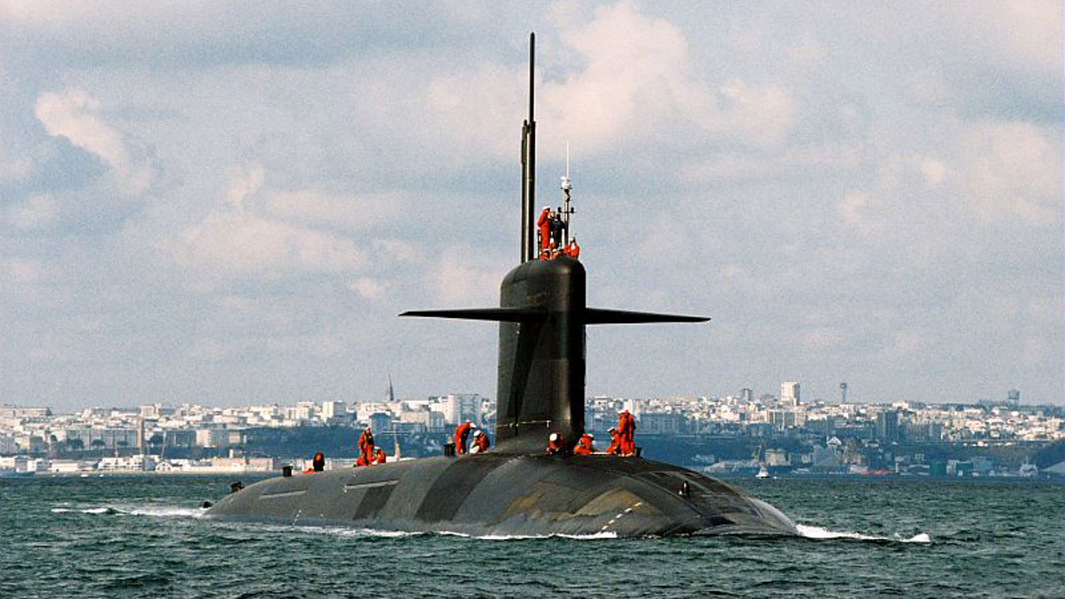
Compared to Russia and the United States, France and the United Kingdom have a fairly limited arsenal of strategic offensive systems. Dmitry Kornev, a military expert and founder of the Military Russia portal, analyzed it in detail for Izvestia. These countries no longer have long—range ballistic missiles and heavy bombers, but there remain 515 warheads based on one of the most stable and difficult to destroy carriers - nuclear-powered submarines. The main threat is posed by US weapons, but Russia has a sufficient counterweight to respond.
Is the world facing a new arms race
By suspending participation in the START-3 Treaty, Russia could go beyond the limits on the number of warheads, but so far it does not plan such actions. As explained in the Ministry of Foreign Affairs, "Russia intends to adhere to a responsible approach and will continue to strictly comply with the quantitative restrictions on START provided for by it within the life cycle of the Treaty. In addition, the Russian side will continue to participate in the exchange of notifications of ICBM and SLBM launches with the American side on the basis of the relevant agreement between the USSR and the USA in 1988."
At the same time, as Oleg Karpovich emphasized in his column, "the United States has long believed that it is above its once-assumed obligations. Having withdrawn from the Anti-Ballistic Missile Treaty, sabotaged, together with the allies, the entry into force of the adapted Treaty on Conventional Armed Forces in Europe, and consigned the Treaty on the Elimination of Intermediate-Range and Shorter-Range Missiles and the Open Skies Treaty to the dustbin of history, Washington consistently led the case for the start of an arms race and prepared for a clash with Russia. The world is once again standing on a dangerous line, only now the responsibility for crossing it lies entirely with American leaders."
It should be noted that Western countries plan to significantly increase the defense budget in 2023. For example, the United States announced that it would allocate $857.9 billion to the defense industry, a record 13.9% more than last year. France is increasing its military budget by 7.4% to €43.9 million, while the UK plans to increase military spending by at least 20% in the next two years. In 2023, expenses will increase from 8 billion pounds to at least 11 billion ($13.2 billion).
Переведено сервисом «Яндекс Переводчик»
