
The hryvnia is in shock: Ukraine sets records for the size of the national debt

Ukraine continues to increase its public debt at a record pace. According to analysts' forecasts, by the end of the year, the volume of borrowings will reach $240 billion, the burden on one Ukrainian is approaching $ 10 thousand. According to experts, the country is increasingly sinking into debt, and Western partners are giving money for military operations, and not a penny more. Details can be found in the Izvestia article.
What happened
The Ministry of Finance of Ukraine has provided statistics on the volume of government debt. According to published data, at the beginning of autumn, the total volume of borrowings is 9.6 billion hryvnias ($215 billion). During the month, compared to the end of July, the figure increased by $ 1.3 billion.
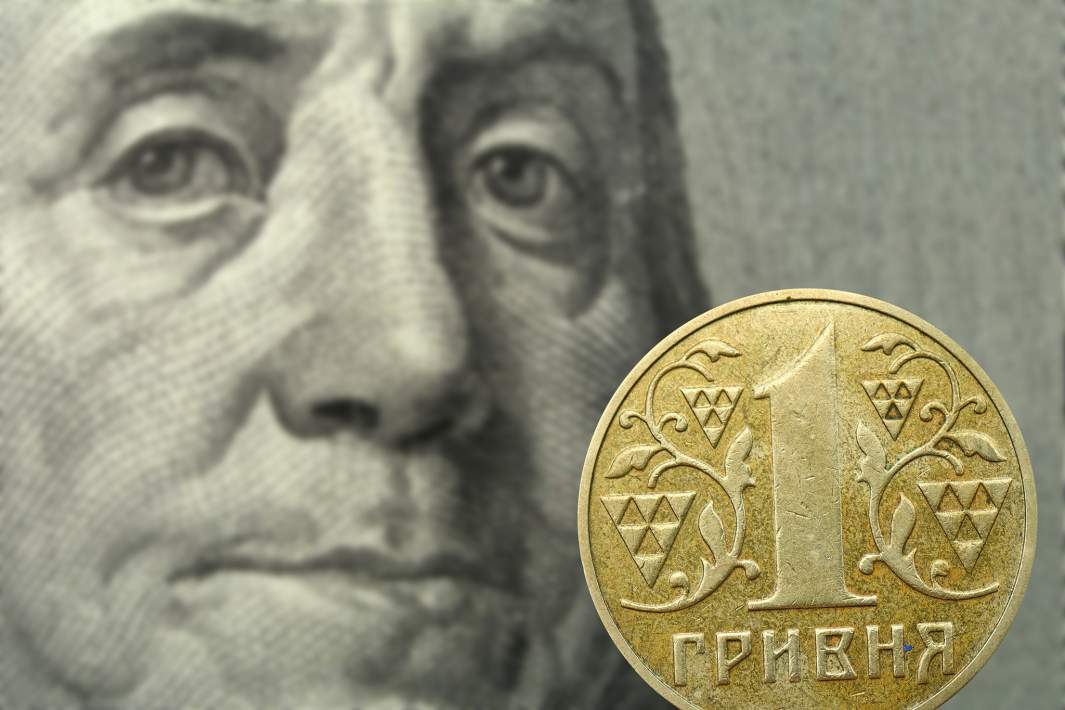
The Minister of Social Policy of Ukraine Denis Ulyutin said this spring that 22-25 million people live in the territory controlled by Kiev. Based on the figure of 22 million, it turns out that every Ukrainian owes $9,5 thousand, and if we focus on the upper limit, then every Ukrainian has $8,600 in debt.
The volume of government debt exceeded the entire annual size of the Ukrainian economy. By the end of 2025, Ukraine's real GDP - the value of all goods and services produced in the country — amounted to $214 billion. Obviously, the difference between the two indicators will increase in the future.

It is also important that large amounts are already being spent on debt servicing. According to the Ukrainian Ministry of Finance, Kiev will transfer $4.8 billion to creditors this year. Half of this money will be used to cover the debt itself, and the other half will have to be spent on paying off interest. Next year, $6.6 billion will have to be transferred.
Economists say that the situation will only get worse. Ukrainian analyst Alexey Kushch believes that by the end of next year, the national debt will grow to $ 300 billion. "I don't see any prospects for improving the situation. But there is also good news: neither we nor our children will have to repay the money, because it is physically impossible to repay such a debt," he notes.

Oleg Berlinsky, another Ukrainian economist, emphasizes that the national debt has increased eightfold in 15 years. "The key feature is not even in volume, but in pace, because the current level has been reached in just a few years," he complains. The average Ukrainian, according to Berlinski, needs to work for more than a year to conditionally cover his part of the loans.
What is important to know
During Vladimir Zelensky's tenure in power, the Ukrainian national debt has increased 4.5 times. According to statistics, as of the end of May 2019, when he was inaugurated, the volume of borrowings in terms of the current dollar exchange rate was $47.1 billion.
Before the start of the SVR, the Kiev authorities even tried to reduce this figure. At that time, the government bought Eurobonds and GDP warrants from investors, that is, securities for which payments depend on how much the country's GDP grows. In addition, in order to reduce dependence on external financing, they began to rely on domestic borrowing.

And immediately before the start of the special operation, the Ukrainian Ministry of Finance tried to take advantage of the panic in the markets and began buying up the state's external obligations at discounted prices. Thus, officials wanted to save money on repayment of the principal amount of debt and interest payments.
The situation has changed dramatically since the start of the SVR. It turned out that Ukraine is not able to independently pull military spending, so Kiev found itself critically dependent on external creditors. At first, they were quite willing to allocate money, so there were no problems.

Currently, about half of the Ukrainian budget is formed by foreign aid. In the budget for 2023, total expenditures amounted to 2.58 trillion hryvnias ($70 billion), half of which accounted for defense and security. His own income was $34 billion, the rest of it was the same foreign loans.
In the future, the financing situation worsened because the West became less willing to sponsor the Kiev regime. There are several reasons for this. On the one hand, the fighting dragged on, and the widely announced Ukrainian counteroffensive in the summer of 2023 failed. On the other hand, numerous corruption scandals began to rumble, in which it turned out that Zelensky's entourage was stealing aid.

As a result, problems arose already at the junction of 2023 and 2024, when the approval of aid packages for Kiev was blocked in the American Congress for about six months. And after Donald Trump came to power in the United States, the American administration stopped allocating new tranches to Kiev altogether, transferring only what former President Joe Biden had promised.
As a result, the main donor is now the European Union, which this spring approved the allocation of €90 billion to Ukraine over two years. It would seem that the amount is huge, but the Ukrainian authorities say that there is still not enough money, so additional tranches are needed.
The country's Prime Minister, Sergei Koretsky, called the situation critical. Finance Minister Sergei Marchenko said that the country had reached its limit, so the Ukrainian parliament should vote for the reforms demanded by the European Union. In turn, Rada deputy Olga Vasilevskaya-Smaglyuk complained that there was so little money in the budget that it was only enough for military needs and social benefits.
At the same time, the voices of politicians opposing the financing of Ukraine are becoming louder in Europe. For example, Marine Le Pen, the leader of the parliamentary faction of the French right-wing National Unification party, noted that Paris does not have money to help Kiev, so such support should be stopped.

Austrian Chancellor Christian Stocker said he was surprised by the new financial deficit in Ukraine, as the EU recently agreed to allocate €90 billion to Kiev. "Now there are a huge number of figures, they need to be systematized, clarified and made transparent — to show where this deficit came from," he urged.
And Czech Prime Minister Andrei Babis promised that Prague would not provide guarantees for the EU loan to Ukraine. "This money should be, as I think, outside [the community budget]. In any case, the Czech Republic will not be responsible for this," he said, calling for an early peaceful settlement of the conflict.
At the same time, representatives of the European bureaucracy demand to maintain and even increase the volume of aid. The head of EU diplomacy, Kaya Kallas, noted that Ukraine is facing a harsh winter, so it needs additional air defense systems. "The situation is really difficult," she stressed.

And Latvian Prime Minister Andris Kulbergs called on the Europeans to reduce the cost of their own comfort in order to support Ukraine. According to him, EU residents should give up at least one glass of beer a year. "We drink less — their lives are saved. It's simple," he explained.
What the experts say
The size of the national debt does not affect the stability of the Ukrainian state, says economist Ivan Lizan. In his opinion, the Western elites have invested too much in the Ukrainian project, trying to defeat Russia with it, and they will not back down.
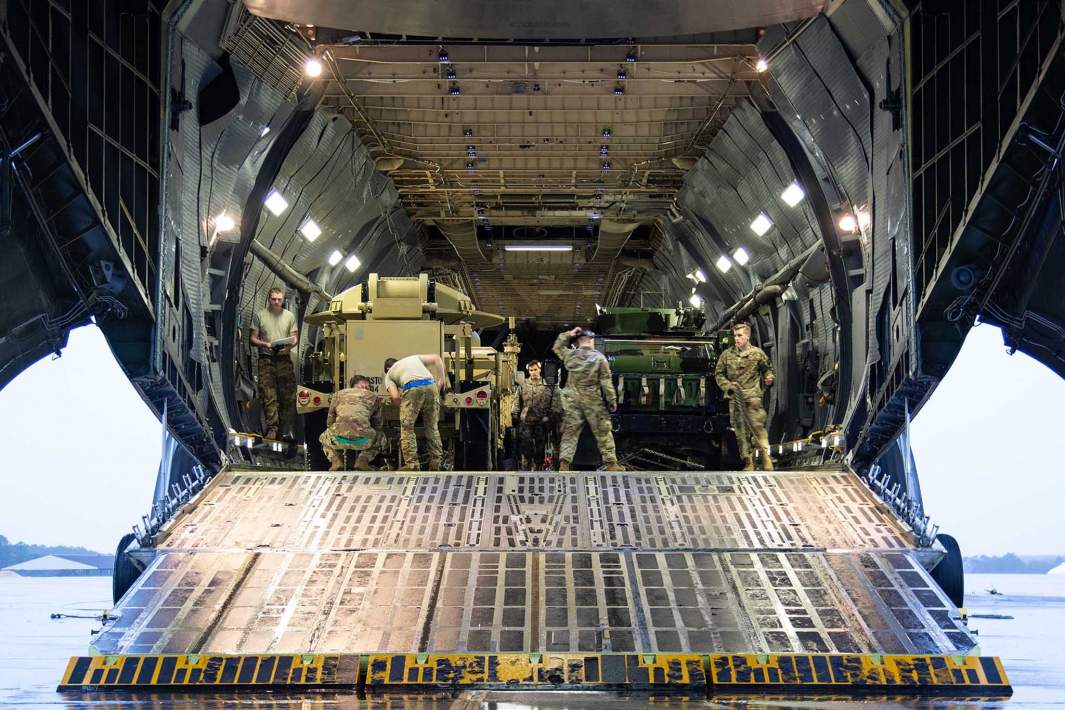
— Obviously, this plan has failed, but they can no longer turn it back, so they will continue to pour in money and, together with Zelensky's team, earn on their development. Funding can only stop for two reasons — in the event of a military defeat of Ukraine or after a change of Western elites during one or two election cycles. The size of the national debt does not affect anything, the money will be found one way or another," the expert is convinced.
Denis Denisov, director of the Institute of Peacekeeping Initiatives and Conflictology, an expert at the Financial University under the Government of the Russian Federation, confirms that Ukraine has a huge national debt, but this will not affect the functioning of the state and its defensive potential.
— Creditors will help Kiev while it is in progress. After the end of hostilities, there are two scenarios. Western sponsors can restructure and write off most of the debt. This is quite likely. In another scenario, they will demand a refund, then there is only one way — default, that is, declaring the state bankrupt," he explains.
Переведено сервисом «Яндекс Переводчик»
