Sales have been boosted: why Russians choose domestic electric vehicles


Electric vehicles in Russia increased in 2026, with half of the cars sold being of domestic production. In fact, the market is growing at the expense of one Russian brand. Izvestia found out the secret of his success.
Half of them belong to us
From January to July, 3,178 electric vehicles were sold in Russia, which is 20% more than last year, according to the analytical agency Autostat. Moreover, according to the Ministry of Industry and Trade, the share of Russian-made electric trains has reached 50%, whereas in the past it accounted for only 20% of total sales of new passenger cars in Russia.
The leading position is occupied by the Russian "green" brand Evolute, which was launched in October 2022. So, in April, he sold 409 cars, which is 45% of total sales in the segment. Evolve began to grow back in 2025, and by the end of 12 months, it was able to increase sales by 47% amid a 30% drop in demand in the electric segment. Thus, according to the analytical agency Autostat, the brand ranks first in terms of sales of new electric passenger cars in 2025.
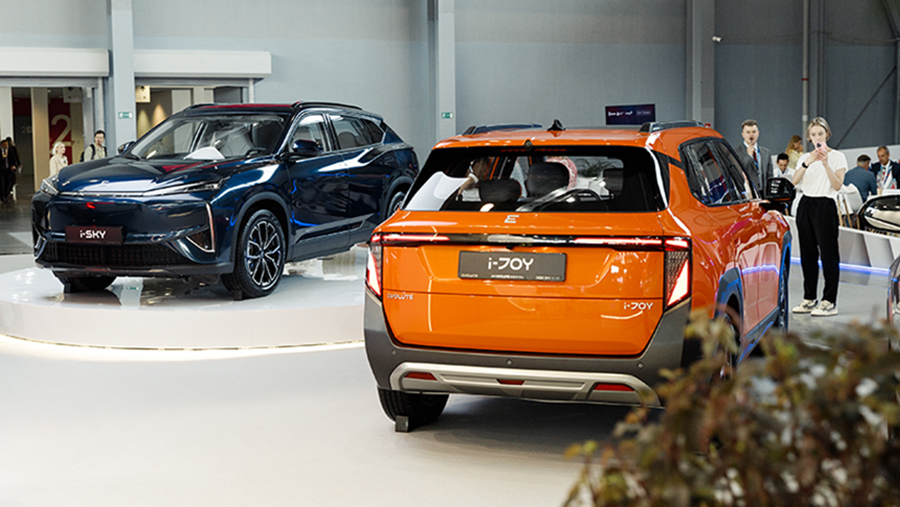
Evolute's successes are also noticeable outside the niche segment of new energy vehicles (NEV). So, according to the results of four months, electric cars and hybrids of the Russian brand are selling better than gasoline cars Moskvich, Skoda and Bestune.
The market is transforming
In 2025, three factors were simultaneously pressing on the market, the CEO of Frank Auto told Izvestia. First, the abolition of zero recycling for electric vehicles from January 2025 and the subsequent indexation of the rate. Prices for popular imported electric vehicles increased by millions, despite the fact that these cars were already more expensive than their counterparts with an internal combustion engine.
Secondly, the saturation of early demand. Enthusiastic buyers and corporate customers who wanted an electric car for the sake of saving on fuel or for environmental reasons have already purchased their cars in 2023-2024. Thirdly, the general decline in the car market in the first half of 2025. Rising loans and rising prices against the background of recycling have hit electric vehicles harder than cars with internal combustion engines.
Have you played enough "electric trains"
The growth in 2026 is explained not so much by the low base of 2025, but by the general transformation of the market structure, experts interviewed by Izvestia note.
There is a shift in demand towards more affordable electric vehicle models such as the Evolute. On the contrary, the demand for expensive "electric toys" has decreased. Thus, sales of the once very popular Zeekr electric vehicles in 2025 immediately collapsed by 61% and remain negative.
Increased recycling and new import rules have made the Zeekr models more expensive by several million rubles at once, depending on the modification.
Advantages of the Russian assembly
Having its own production base makes it possible for the automaker not only to provide jobs for employees, but also for workers in related industries engaged in the production of local components for electric vehicles. An increase in the level of localization, in turn, gives the automaker the right to receive state support for products that are presented to the buyer at a discount for the purchase of an electric car under a preferential car loan — 35%, but not more than 925 thousand rubles.
—Imported electric vehicles are more dependent on the growth of recycling and the rise in logistics costs, and therefore localized models gain a price advantage," Dmitry Kozlov, founder of The12 Group, emphasizes.
In addition, the presence of an official dealer network from domestic manufacturers in the narrow market of electric vehicles, understandable service and guarantees removes some of the buyer's risks when choosing a car, Dmitry Kozlov noted.
Buyers of Russian electric trains can also take advantage of transport tax benefits, free parking in some regions, and free passage along federal toll roads.
There has been a request for budget electric vehicles before, if you look at how many used Nissan Leafs were bought, said Ruslan Tarasov, editor-in-chief of the Russian electric vehicle portal EV-Start.
"The time for very cheap used cars has passed, less used ones have become more expensive, competition from their side has weakened — we can say that the clearing has been slightly "cleared" for domestic NEV manufacturers," he believes.
The demand for affordable electric vehicles in Russia is formed by two groups of buyers. The first is private individuals, usually residents of large cities, who have access to charging infrastructure and who want to save on fuel and maintenance.
— When a person lives in the suburbs, let's say he has his own garage with an outlet, and you need to travel to the city regularly. This is an ideal situation," Igor Morzharetto, partner of Autostat, told Izvestia.
The second group consists of legal entities and sole proprietors: taxis, carsharing, and corporate parks interested in reducing operating costs and using preferential leasing.
Betting on crossovers
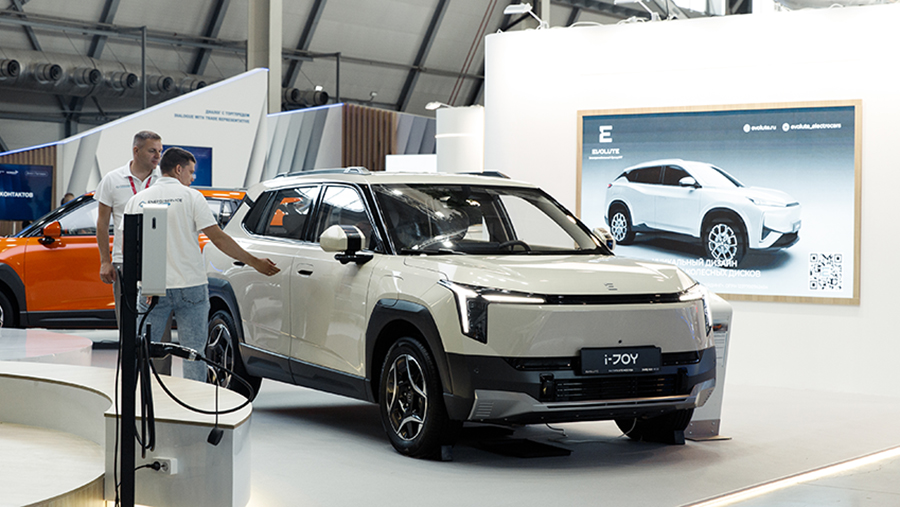
At the same time, consumer preferences have changed in the mass segment: crossovers are becoming more popular than sedans due to their versatility and adaptability. When updating the model range, Evolve relied on an inexpensive and technologically advanced crossover. The second-generation i-Joy was introduced at the end of last year and has become the leader of the electric vehicle segment over the past months of this year.
In particular, in April it sold 409 units and occupied 45% of the market volume. Next, by a wide margin, is the Yandex Umo 5 project (184 units). According to the April sales results, it is followed by the premium Avatr 12 and Avatr 11 (47 and 38 units, respectively), and the imported Geely EX5 crossover closes the top five (37 units).
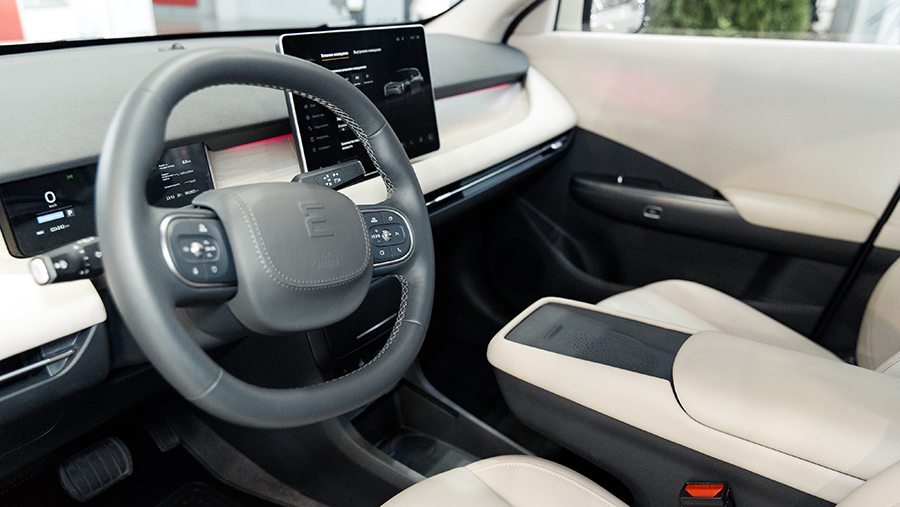
— The success of the Evolve is due to a combination of three factors: an affordable price due to government support, the right choice of body type — a crossover, and an update of the model range. The new i-Joy, with a power reserve of up to 386 km according to the international classification and a price starting from 1,899 million rubles with a subsidy — cheaper than the top—end Lada Vesta, has become a truly massive offer, Irina Frank believes.
In the hybrid segment, Evolute has also relied on a mass—market model, the i-Space crossover, and is constantly improving it. So, the car introduced in 2024 underwent a major upgrade a little over a year later, which improved its characteristics, and then got an all-wheel drive version.
There are mainly premium-positioned models on the hybrid market. To launch an affordable hybrid, you need a Russian assembly, otherwise the scrap collection will "eat up" all the price appeal. In addition, localized hybrids built according to a sequential scheme are subject to the same state subsidy as electric vehicles.
— All companies talk about the desire to produce hybrids. But so far, only Evolute has been able to organize the release of an affordable model," notes Igor Morzharetto.
According to Autostat, the Evolve i-Space has become the most affordable hybrid officially available on the Russian market.
— The success of the Evolve i-Space shows that the market is ready to accept such vehicles at the right price. Due to government support, the model becomes competitive — in fact, at the level of mass—produced Chinese crossovers, while the car is larger and more technologically advanced," says Rolf New Car Sales Director Nikolai Ivanov.
He also suggested that the recently announced Evolve i-Sky, in addition to the electric version, also has a hybrid version: it could seriously expand the audience.
— A clean electric car remains a niche product, and a hybrid is perceived as a more universal solution, — says Nikolai Ivanov.
I need more charges
From 2024 to 2026, the number of ads for the sale of Russian electric vehicles on Avito doubled, while demand increased 2.5 times.
— By the end of April 2026, the share of eco-friendly cars (electric cars and hybrids) among all offers with new cars exceeded 5%, which is almost twice as high as in the summer and autumn of 2025. At the same time, we see how the development of infrastructure affects the market: for example, in Moscow their share is above 10%, in St. Petersburg - 8%. There is a fairly high level of their presence in warm regions where the climate is more favorable for their operation," said Artem Khomutinnikov, head of sales at New Cars in Avito.
The further growth of the segment of electric vehicles and hybrids in Russia will be determined by affordability, infrastructure development and the degree of localization, Dmitry Kozlov believes.
— Without scaling the charging network, electric vehicles will remain predominantly urban for the largest agglomerations. Therefore, in the coming years, the share of hybrids is likely to grow fastest, which remove the main risk for the buyer — to remain without charging on a long route, he believes.
Irina Frank agrees with him: without a large-scale development of the EHS, the "clean electric" segment is unlikely to exceed 2-3% of the market in the next two to three years.
Despite the fact that the infrastructure for electric vehicles in Russia is still developing relatively slowly, Associate Professor of the Department of Strategic and Innovative Development of the Financial University, Candidate of Economics Mikhail Khachaturian notes positive trends.
Thus, a significant increase in the number of charging stations is planned as part of the strategic initiative "Electric Car and Hydrogen Car". Subsidizing the installation of chargers in parking lots of apartment buildings and near commercial buildings also helps to expand the availability of infrastructure.
According to the expert, a significant factor is also the fact that Russian—built electric vehicles are becoming more profitable to operate compared to cars with internal combustion engines, which is especially evident in the commercial sector - taxis, carsharing, courier services.
"Despite the higher initial cost, electric vehicles are cheaper to maintain: no oil and filter changes are required, pads and discs wear out less, and electricity costs less than fuel," Mikhail Khachaturian summed up.
Переведено сервисом «Яндекс Переводчик»
