The astronomer shared tips on observing and photographing the June full moon.

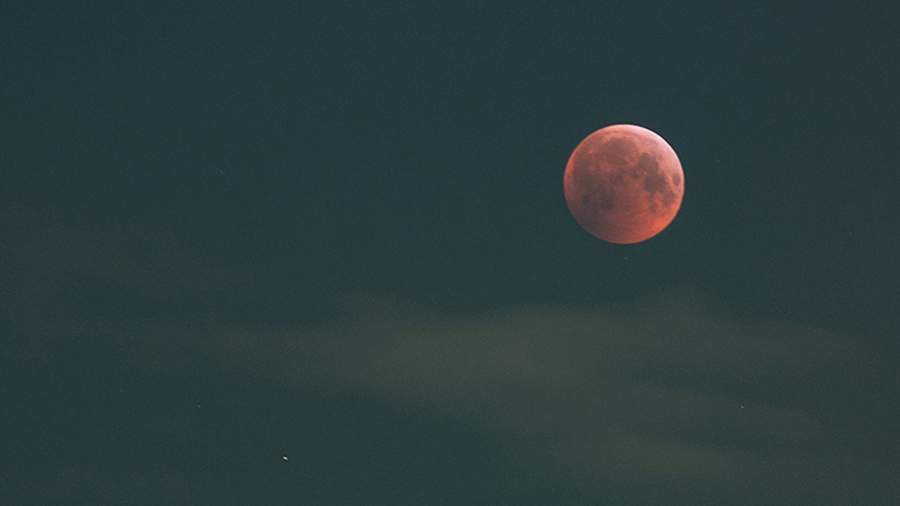
The full moon, which will occur on June 30, does not require special conditions for observation, as it will be clearly visible to the naked eye. Moreover, the use of a telescope during this period is not recommended due to the high brightness of the moon. Lyudmila Koshman, an astronomer and researcher at the Moscow Planetarium, told Izvestia about this.
"The full moon is usually observed with the naked eye. If you look at it through a telescope, you can even damage your eyesight, because the fully illuminated lunar disk strongly reflects sunlight," the expert explained.
However, she noted that professional astronomers often study the Moon not during the full moon, but during other phases. According to her, the most favorable time for observations and filming is considered to be the period when part of the Moon is in shadow and the details are most pronounced along the terminator, the boundary between the illuminated and dark parts.
"It is in this zone that the lunar relief is best seen: shadows, mountains and craters are clearly visible. On a full moon, the surface is illuminated evenly, which makes it more difficult to distinguish the details," Koshman said.
The astronomer added that the period shortly before and shortly after the new moon is also considered favorable, when one can notice the so—called ashen moonlight - a faint glow of a part of the lunar disk that is not illuminated by direct sunlight.

The expert also noted that the full Moon appears larger when it is near the horizon. This is what attracts observers.
"However, this is just a visual effect known as the "moon illusion." If you take a picture of the Moon near the horizon, and then shoot it higher and compare the images, the Moon's disks on the horizon and near the zenith will be the same," the astronomer noted.
Earlier, Doctor of Sciences, educator and teacher Sergey Chumakov, in a conversation with Izvestia, denied the existence of such a phenomenon as a "micromoon".
Переведено сервисом «Яндекс Переводчик»
