Medicine for the future: the capital's healthcare raises the standard of services

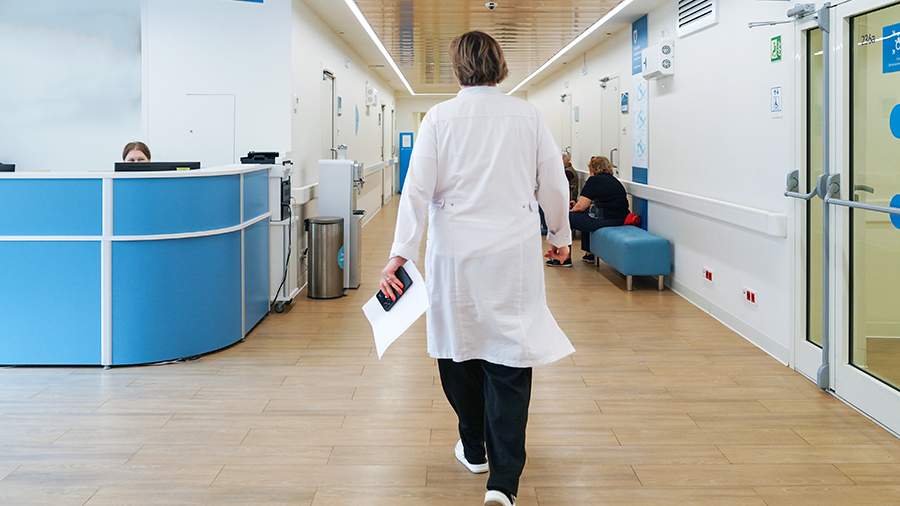
Quantity inevitably turns into quality, and the campaign launched several years ago in the capital to repair and modernize city clinics is increasingly bearing fruit. Modern clinics with high-tech equipment create the most comfortable working conditions and continuous development of employees, so that they always have a wide range of resources and opportunities at their disposal to provide the most effective medical care, and working with state-of-the-art equipment of renovated hospitals and polyclinics requires doctors to constantly improve their skills and knowledge of modern technologies. Izvestia reports on the complex changes in Moscow's medical institutions.
To the doctor without waiting in line
According to Anastasia Rakova, Vice Mayor of Moscow, the city is seriously engaged in updating the social infrastructure.
"Last year, we finished updating the city's polyclinic system. In total, more than 360 buildings were built and repaired," said Rakova.
Thus, the modernization program of the primary level of urban healthcare has been completed in the capital. Now all clinics comply with the latest city standard.
What does this mean? Firstly, Moscow polyclinics are convenient for both patients and doctors. Secondly, Muscovites can now do any necessary research without waiting long and close to home. Last year alone, more than 11,000 units of the latest high-tech medical equipment were delivered to Moscow polyclinics. Among them are magnetic resonance and computed tomographs, X—ray diagnostic devices, mammographs, and densitometers. As a result, the availability of research using modern technology is higher than ever before. At the same time, the average waiting time for a scheduled appointment by a district therapist or pediatrician is 1 day, and by a specialist doctor is 2 days. The average waiting time for a routine X-ray examination is 2 days, CT examinations are 3 days, and MRI examinations are 5 days.
The situation in Moscow hospitals is also actively changing: hundreds of thousands of square meters of medical space are being built and upgraded in the city every year. In 2011-2025, 28 new buildings were built and 144 existing buildings of urban hospitals were reconstructed. In total, according to the plans of the metropolitan government, more than 40 new clinical buildings will be built and more than 175 existing ones will be reconstructed in the city by 2030. These are the real hospitals of the future, which offer patients not only enough places so that they do not have to wait long for a planned hospitalization, but also modern standards of medical care, including high-tech operations and research.
Updating the funds of the capital's clinics makes it possible to provide high-tech medical care to an increasing number of patients. Today, such interventions are performed by doctors from 32 city hospitals, including 7 children's hospitals. In 2025, more than 200,000 people received high-tech assistance in the capital. At the same time, the list of available types of high-tech treatment is constantly growing: for example, last year new treatment methods were included in the list, including such complex techniques as joint replacement using individual structures made using additive 3D technologies.
More simply, in the "figure"
The digital transformation of Moscow healthcare began in 2011 with the creation of a Unified medical Information and Analytical System - EMIAS. which has become the technological core of the capital's medicine. Among the key services of EMIAS are electronic registry, centralized laboratory and unified radiological information services, electronic medical record and a number of others.
"EMIAS connects all stages of medical care — outpatient clinic, ambulance and hospital. Thanks to EMIAS, we can see what is happening at every stage. That is, when an ambulance doctor goes to a call, he sees everything that happened to the patient at the outpatient stage. And if a patient is discharged to a polyclinic after hospitalization, the polyclinic sees everything that happened to him in the hospital," explained Andrey Tyazhelnikov, chief freelance specialist in primary health care for adults at the Moscow Department of Health.
Today, EMIAS has created more than 25 million electronic medical cards — everyone who has received medical care at least once in Moscow medical institutions has them. Electronic cards are available not only to doctors, but also to patients. Last year, users accessed their electronic medical records more than 660 million times. Last year, more than 165 million people signed up for a doctor's appointment through EMIAS, while over 127 million (77%) appointments were made online.
Last year, Moscow polyclinics launched a new AI service. From the patient's electronic medical record, it analyzes all information about his previous visits, studies, prescribed medications and ambulance calls related to complaints transmitted by the patient during online recording and collects a summary from them. All this data is received by the doctor before the appointment, which helps him to quickly collect an anamnesis and make a preliminary diagnosis. Another AI assistant, the medical decision support system, helps internists and general practitioners in diagnosis. The system analyzes the patient's complaints and, based on them, offers the doctor the three most likely preliminary diagnoses. It has already provided more than 15.6 million preliminary diagnoses.
"Naturally, the doctor has the right not to follow the prompts of the system, because he makes the final decision anyway. But at the same time, the system significantly reduces the time that the doctor spends on performing routine functions," explained Andrey Tyazhelnikov.
AI services are particularly useful in radiation diagnostics, where they help doctors analyze images. To date, they have processed more than 35 million studies. Neural networks help to find signs of lung cancer, pneumonia, osteoporosis, aortic aneurysm, coronary heart disease, stroke, pulmonary hypertension, hydrothorax and other pathologies in 45 clinical areas on mammograms, computer and magnetic resonance images. The accuracy of diagnostics of AI services in certain areas exceeds 95%.
Cadres decide everything
Today, medicine is developing at an unprecedented rate. New diagnostic and treatment methods are emerging, digital technologies are being introduced, clinical guidelines are being updated, and approaches to organizing medical care are being improved. In these conditions, the training of medical professionals becomes not just an important part of professional development, but a necessary condition for high-quality and safe work with patients.
In order to give the capital's doctors the opportunity to constantly improve, the Personnel Center of the Moscow Department of Health was established in 2021.
"It is not enough for a modern doctor or nurse to get an education once — it is important to constantly improve knowledge and skills. For this purpose, a comprehensive system of professional development of medical workers has been created in Moscow, in which the Personnel Center of the Moscow Department of Health plays a key role. Today it is a single platform where competence assessment, training and further development of specialists are combined. This approach allows not only to maintain a high level of staff training, but also to respond promptly to changes in healthcare, helping medical professionals to master new technologies, methods and formats of work," said Anastasia Kamasheva, Director of the Personnel Center of the Moscow Department of Health.
The basis of the training system operating at the center is the development of practical skills. They use modern simulation technologies that allow them to simulate real clinical situations without risk to the patient. Specialists can practice both individual operations and complex clinical scenarios, improve algorithms for emergency situations, team interaction and decision-making skills. More than 1,100 pieces of high-tech equipment make it possible to conduct training courses in almost all areas of modern medicine. The simulators reproduce the anatomy of internal organs down to the smallest detail and simulate the main body functions as realistically as possible — breathing, seizures, body temperature, heart tones and pulmonary noises.
Since the opening of the Personnel Center, more than 170 trainings have been developed here and 70 additional professional education programs have been implemented — in general medical practice, perinatology, cardiopulmonary resuscitation, oncology, palliative care, and emergency ultrasound. In 2025 alone, over 160,000 trainees from among the doctors and nursing staff of the capital improved their qualifications, of which 115,000 were trained at the Personnel Center of the Department of Health.
"A full—fledged system of continuous professional development has now been created in Moscow, which accompanies a specialist at all stages of his career — from employment to confirmation of the highest level of skill," Anastasia Kamasheva summarizes.
Переведено сервисом «Яндекс Переводчик»
